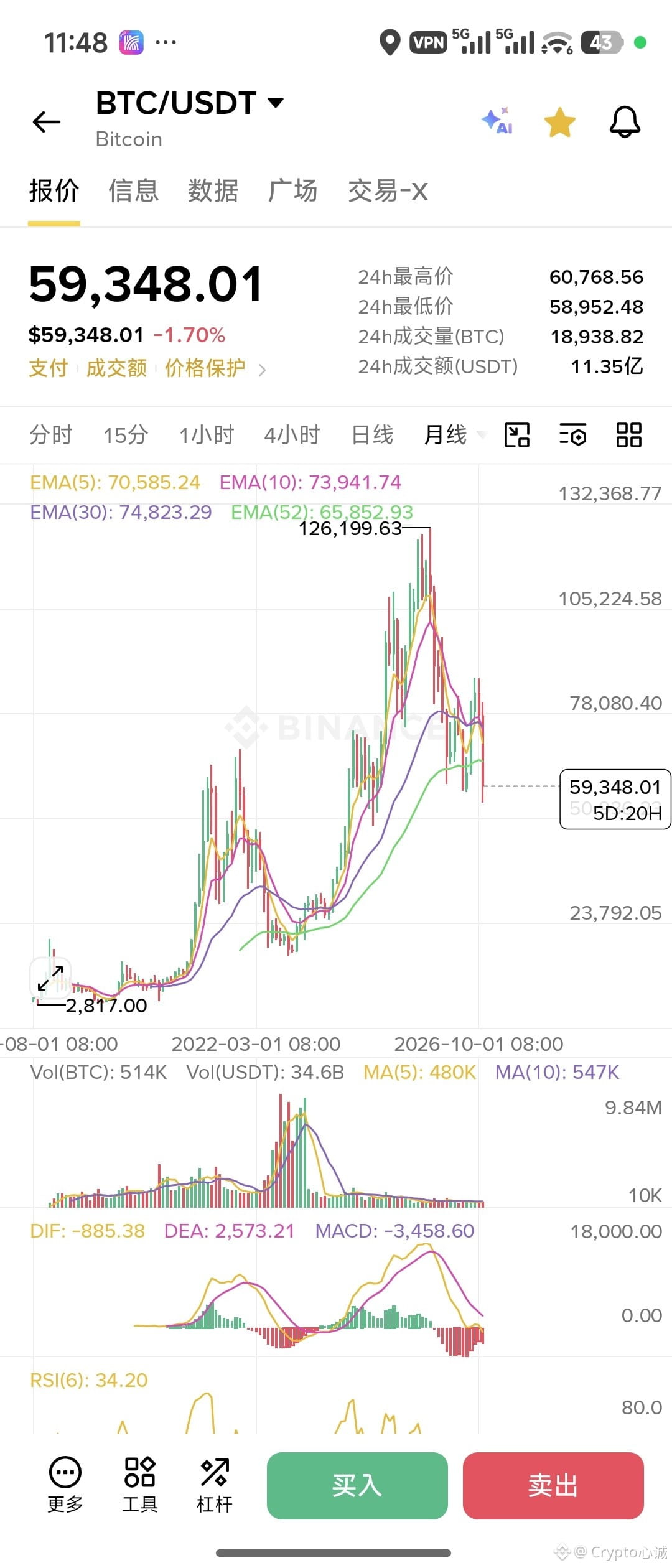
I think that before trying to buy the dip in BTC, you absolutely need to look at U.S. stocks first. Crypto’s correlation still mainly depends on U.S. stocks right now. I’ve summarized a few reasons below for everyone’s reference 👇
1️⃣ BTC is no longer digital gold; it’s a high-beta sidekick to the Nasdaq. The 30-day correlation is about 0.69, with a 73% rate of moving in the same direction—but its beta tightens on the way down, while it can’t keep up on the way up.
2️⃣ Why wait for U.S. stocks to stop falling first?
They draw on the same pool of risk capital. When U.S. stock futures drop, institutions sell the easiest asset to liquidate—BTC—to meet margin calls.
They share the same macro anchors: real interest rates, the dollar, and Fed expectations weigh on both at the same time.
Crypto trades 24/7 and reacts first, but for a real directional signal, you need to wait for U.S. spot markets to confirm. A fake rally in futures that lifts BTC is just short covering.
3️⃣ Why is BTC more sensitive?
It has no cash flow, pays no interest, and has no central bank backstop. A rise in real interest rates hits its valuation harder than that of tech stocks.
It’s heavily leveraged: a 1% drop in the Nasdaq often means a 2–3% drop in BTC, amplified by cascading liquidations.
ETF redemptions can trigger same-day selling, much faster than before 2020.
4️⃣ Three confirmations that U.S. stocks have bottomed:
Nasdaq futures retest and hold above the previous low, while the spot market closes above its 5-day moving average; VIX falls from elevated levels; and the 2-year yield/real interest rates don’t make new highs for two consecutive days.
My view: The order has to be: U.S. stocks stop falling → the dollar/real interest rates turn lower → ETFs see consecutive net inflows → only then add to BTC. Doing it in reverse means betting that a high-beta asset won’t fall before a low-beta one does—a very low-probability trade.
$BTC
$ETH
$BNB