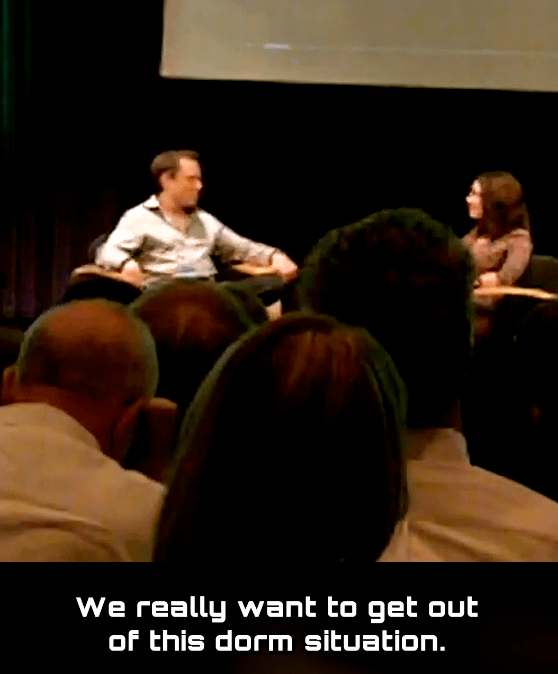


In 1992, 21-year-old Musk transferred from Canada to the University of Pennsylvania in the United States and rented a run-down, ten-bedroom old house off campus in Philadelphia with his roommate, Adeo Ressi.
The house had once been a fraternity hangout. The rent was astonishingly cheap, but it was still a significant expense for two struggling students working their way through college.
So the two of them turned the living room into an underground weekend party venue, set up a table by the door, and charged each person five dollars for admission.
At an age when beer and hormones were flowing freely, Musk did something profoundly against the grain: he didn’t touch a drop of alcohol at the parties he hosted.
In his own words later, someone had to stay completely sober and keep an eye on the place and the cash register. As a result, they made enough in one night to cover a whole month’s rent.
On reflection, this detail is more intriguing than the rockets he built later.
A successful party depends precisely on the person running it not joining in. This calm insistence on “never getting hooked on your own product” would later run through nearly all his business ventures.
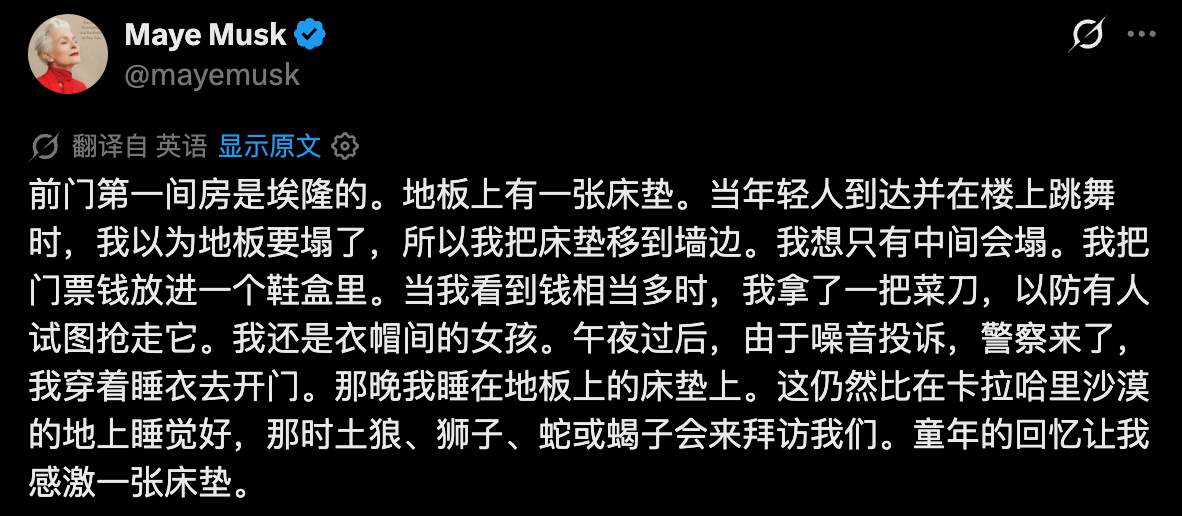
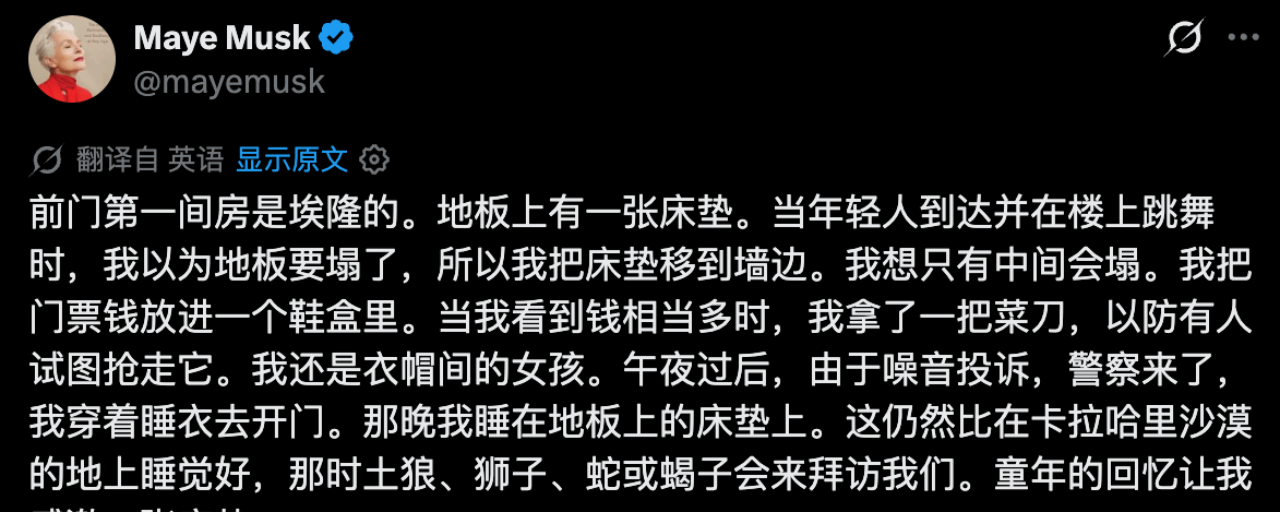
One weekend, Maye Musk went to Philadelphia to visit her son, and was stunned the moment she opened the door.
Elon lived in the first room by the front door on the ground floor. There wasn’t even a bed frame—just a mattress on the floor.
Upstairs, a crowd of young people were dancing wildly to the music, making the ceiling shake violently. Maye even wondered if the floor was about to cave in.
An ordinary parent might have called the police on the spot or even ordered their child to drop out. But Maye’s reaction was worthy of a self-taught structural engineer: she figured the floor was most likely to give way in the middle, so she calmly dragged the mattress into a corner.
Then she took over the coatroom and the cash register, stuffing the five-dollar bills they collected into a shoebox.
As she watched the cash pile up in the box, she simply grabbed a knife from the kitchen and clutched it in her hand in case anyone tried to rob them in the chaos.
After midnight, the neighbors had had enough and complained about the noise. When the police came knocking, Maye, still in her pajamas, calmly answered the door.
That night, she slept on the floor mattress against the wall and, remarkably, felt quite content.
Maye later explained this composure in her memoir: as a child, she camped in Africa’s Kalahari Desert with her parents, who were pilots. At night, lions, hyenas, poisonous snakes, and scorpions would often prowl around outside the tent.
Compared with the predators of the African savanna, the noise and potential risk of a floor collapse caused by undergraduates at the University of Pennsylvania hardly seemed like a big deal.
Many business analyses like to attribute Musk’s radicalism to first-principles thinking, while overlooking the generational inheritance of risk tolerance within his family.
Someone willing to stake his entire fortune and life on Falcon rockets and the colonization of Mars has often seen, in his early twenties, that even with the ceiling about to collapse overhead, his mother could sit beside a shoebox clutching a kitchen knife and calmly tally the accounts.