$BTC
The biggest change in Bitcoin is that the logic behind its pricing is changing!
I. Fundamentals: Why am I still bullish on Bitcoin?
I believe Bitcoin’s true moat isn’t the number 21 million, but the combined advantages of global consensus, network security, and liquidity.
It’s no longer just a coin in the crypto market; it’s gradually becoming a digital asset that traditional financial institutions can allocate to.
But there’s one change worth noting:
In the past, the market mainly speculated on the supply contraction caused by halvings. Now, ETFs and institutional funds are becoming important marginal buyers.
In the third quarter of this year, U.S. spot ETFs bought a net approximately 79,800 BTC, while about 41,300 bitcoins were mined over the same period.
Long-term holders, however, reduced their holdings by about 248,000 BTC over the same period.
This points to one thing: Bitcoin’s scarcity is a long-term thesis, but what truly determines its short-term price is still the balance of buying and selling pressure.
So I’m bullish on Bitcoin’s long-term value, but I won’t assume that any price is worth paying just because it’s scarce.
II. Current Market and Spot Positioning
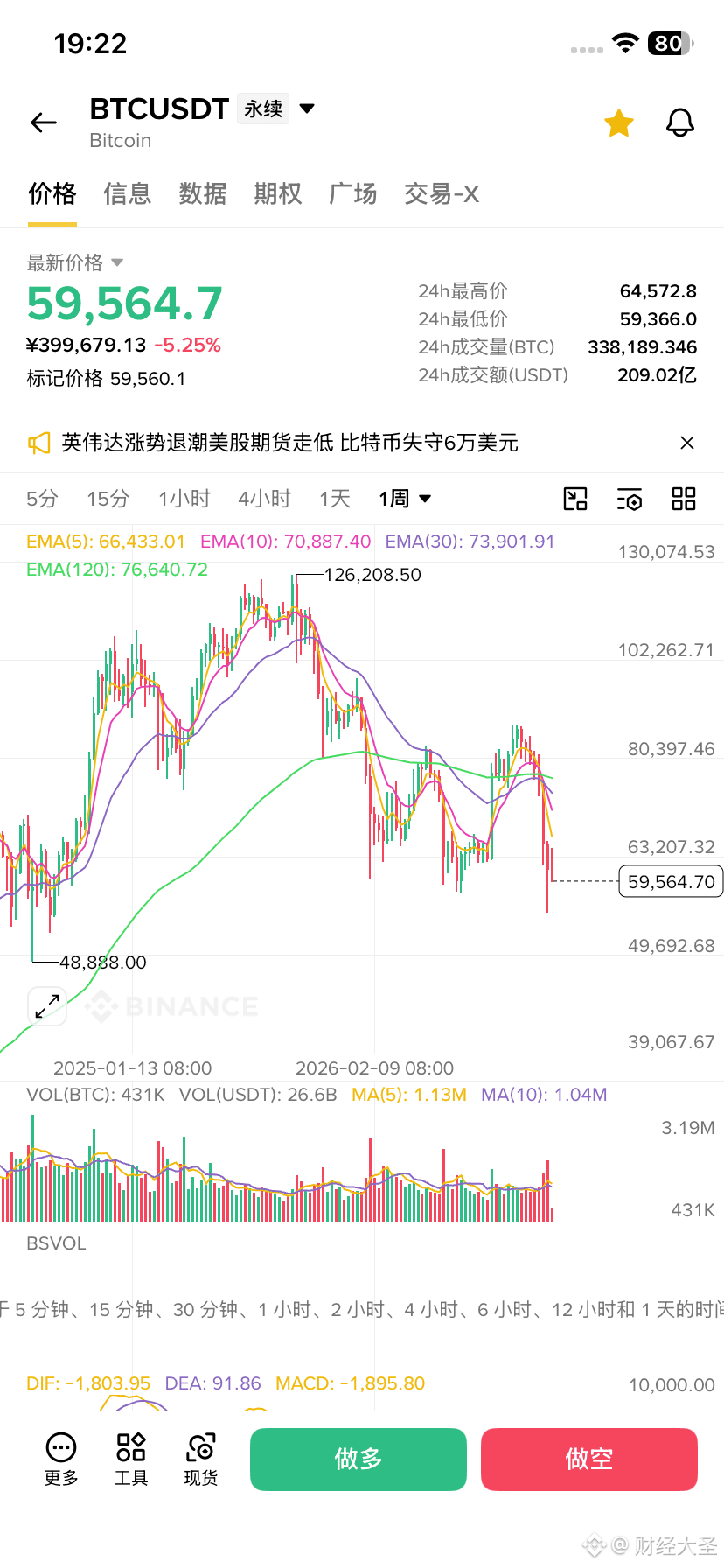
Current reference price: approximately $59,500.
Stage 1: $58,500–$60,000
The observation range around the current price. If the price pulls back and stabilizes, with selling pressure easing as it finds support, you could consider testing the waters with a small position.
Stage 2: $55,000–$56,500
Near this cycle’s low. If the price dips again but shows clear buying support, watch closely for a second entry opportunity.
Stage 3: $50,000–$52,000
A contingency zone in case of a deeper correction. Wait for signs that the price has found support; don’t blindly try to catch a falling knife.
Signs of strengthening: Regaining and holding above $62,000 could improve the short-term structure; a breakout above $64,600 on strong volume would make a rebound more convincing.
Risk level: A decisive break below $55,000 would call for reassessing the market.
My view:
If I were to allocate to BTC, ETH, SOL, and BNB, I would still make BTC the core holding.
But what I’m more focused on isn’t the next halving—it’s whether traditional financial institutions will continue buying Bitcoin.
That’s because Bitcoin’s long-term value rests on consensus, while its price performance in the next phase will depend on real capital flows.
If you had $100,000 to invest in spot assets, what percentage would you put into Bitcoin?