



I just saw the data Metric officially announced,
I think this project is becoming more and more worth following
🔥 Metric has just shared another impressive data point! More than 75% of the $ANTB trading volume on BNB Chain went through Metric
It touches on three areas worth examining:
RWA asset trading, competition for DEX market share, and early-stage points incentive mechanisms.
Metric’s signals so far are fairly clear: the platform hopes to attract users through real-asset trading, then bring in traders and liquidity providers through its Points program.
But it’s important to distinguish between two concepts:
Product growth: ANTB's trading volume and Metric's market share indicate that the platform has gained some trading demand.
User returns: It is currently impossible to determine whether Points can be exchanged for tokens or how much a potential future airdrop might be worth.
Therefore, this project is worth studying as an early-stage RWA DEX and points opportunity.
I. What do the key figures actually tell us?
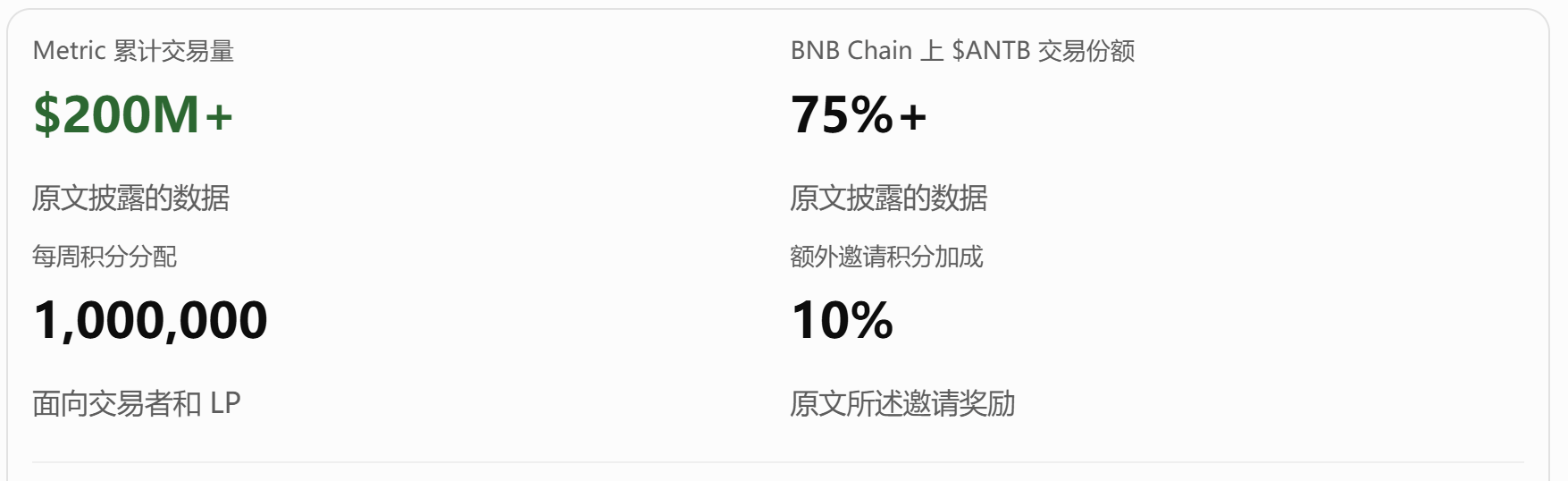
1. Cumulative trading volume surpasses $200 million
This is a growth signal worth paying attention to.
Trading volume driven by sustained, genuine user demand indicates that Metric has developed some capacity to facilitate asset trading and organize liquidity.
However, cumulative trading volume is not the same as platform revenue, nor does it equal the number of genuine users.
It's also necessary to monitor:
Whether daily trading volume continues to grow.
Whether the number of unique trading addresses is increasing.
Whether large trades are concentrated among a small number of addresses.
Whether the same funds are being traded repeatedly or volume is being artificially inflated.
Whether trading volume can translate into sustained fee revenue.
What really matters is not the trading volume on a single day, but whether trading activity can be sustained.
2. Metric accounts for over 75% of ANTB trading volume on BNB Chain
This figure is more informative than cumulative trading volume alone.
If the data is measured accurately, it means Metric has already gained a significant share of the trading activity for ANTB.
This indicates that it has certain advantages in trade routing, liquidity, and user habits.
However, note that 75% refers to the trading share of the specific asset $ANTB , and does not mean Metric accounts for 75% of the entire BNB Chain DEX market.
There is a fundamental difference between the two.
II. Why is Metric worth paying attention to?
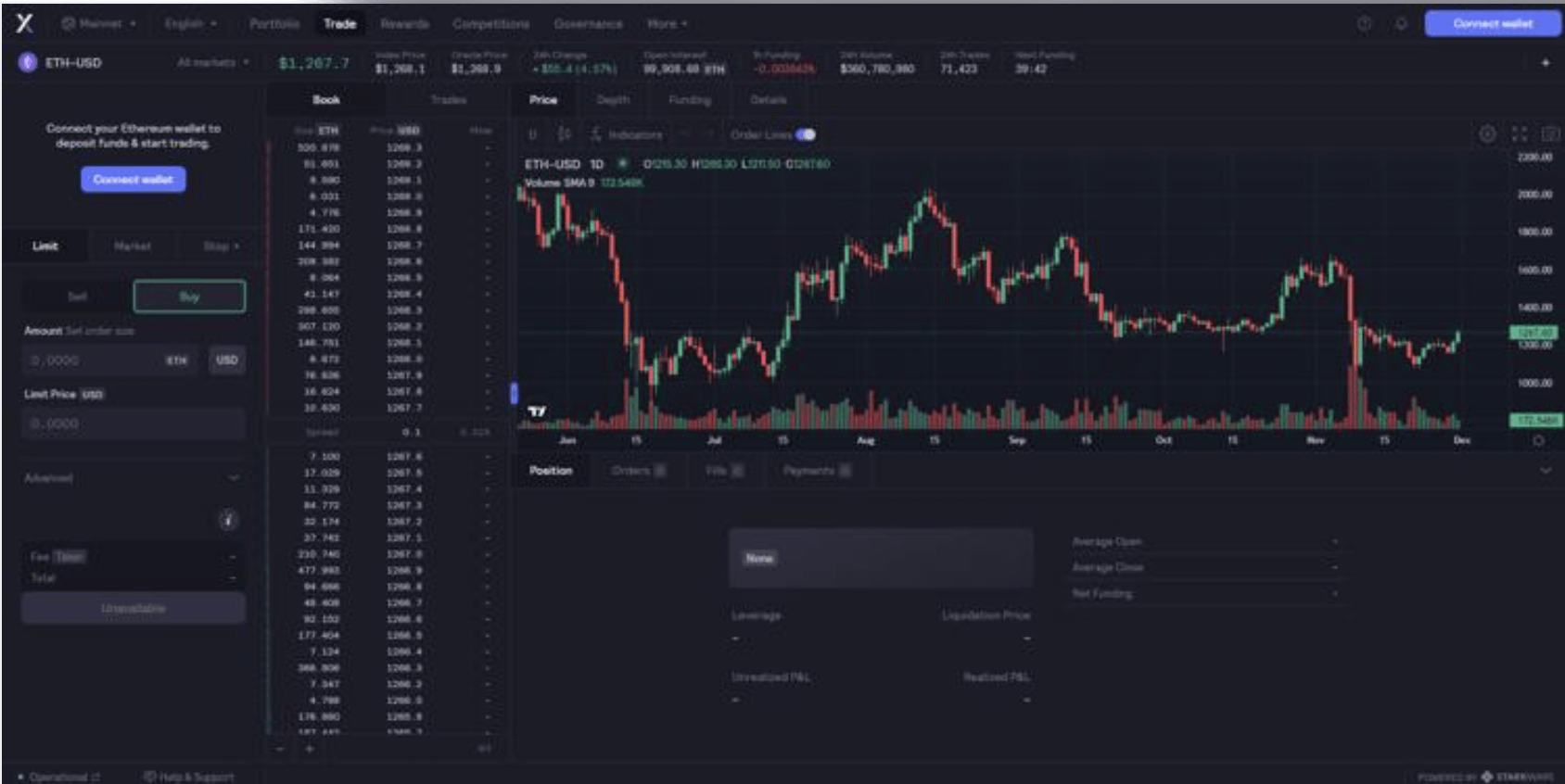
Metric is not simply a regular Swap trading platform. It is a DEX built around on-chain RWA assets and liquidity trading.
A few of its key features are worth examining separately.
1. RWA trading is currently a key entry point for the platform
RWA refers to the tokenization of real-world assets.
Traditional financial assets enter the blockchain in tokenized form, allowing users to trade on-chain products linked to the prices of real-world assets.
For example:
Tokenized stocks.
Tokenized ETFs.
Tokenized commodities.
Other tokens that provide exposure to the prices of real-world assets.
$ANTB is an Anthropic-related tokenized securities product issued by bStocks, not an ordinary cryptocurrency officially issued by Anthropic.
This distinction is very important.
According to Binance's announcement about ANTB, the tokenized securities are intended to provide exposure to the price performance of the underlying stock. However, holding the token does not mean directly owning Anthropic shares or having shareholder rights such as voting rights.
Therefore, by choosing to build trading liquidity around these types of assets, Metric is effectively competing for a new on-chain trading market.
2. A multichain strategy can help expand its user base
The networks that Metric officially says it supports include:
Ethereum: the Ethereum ecosystem.
BNB Chain: trading assets on BNB Chain.
Robinhood Chain: an on-chain ecosystem focused on tokenized asset trading.
The benefit of a multichain strategy is that it doesn't confine all trading demand to a single network.
However, multichain support does not mean that all assets have the same liquidity across different chains, nor does it mean that cross-chain transfers are cost-free.
3. The points system gives both traders and liquidity providers room to participate
Metric's Points program currently covers two main activities:
Swap: Earn points through trading.
LP: Earn points by providing liquidity.
Distributing 1 million Points each week means the platform has established a recurring points incentive program.
One important thing to note: distributing 1 million points each week does not mean every wallet will receive a fixed amount, or that every trade will earn the same number of points.
What really needs to be examined is the points calculation weights, eligible trading volume, LP capital utilization, and how rewards are distributed across different pools.
My assessment:
Metric's growth strategy is gradually shifting from a simple points campaign to competition in RWA trading infrastructure.
If it can continue attracting asset issuers, market makers, and genuine traders, its points program could become a channel for acquiring early users rather than just a short-term marketing tactic.
However, one issue should not be overlooked: rapid growth in trading volume does not necessarily mean that liquidity depth, fee revenue, and user retention are growing at the same pace.
IV. How should ordinary users participate?
I recommend thinking of participation in Metric as two separate paths, rather than simply churning trading volume for points.
Path 1: Earn Points through Swap trading
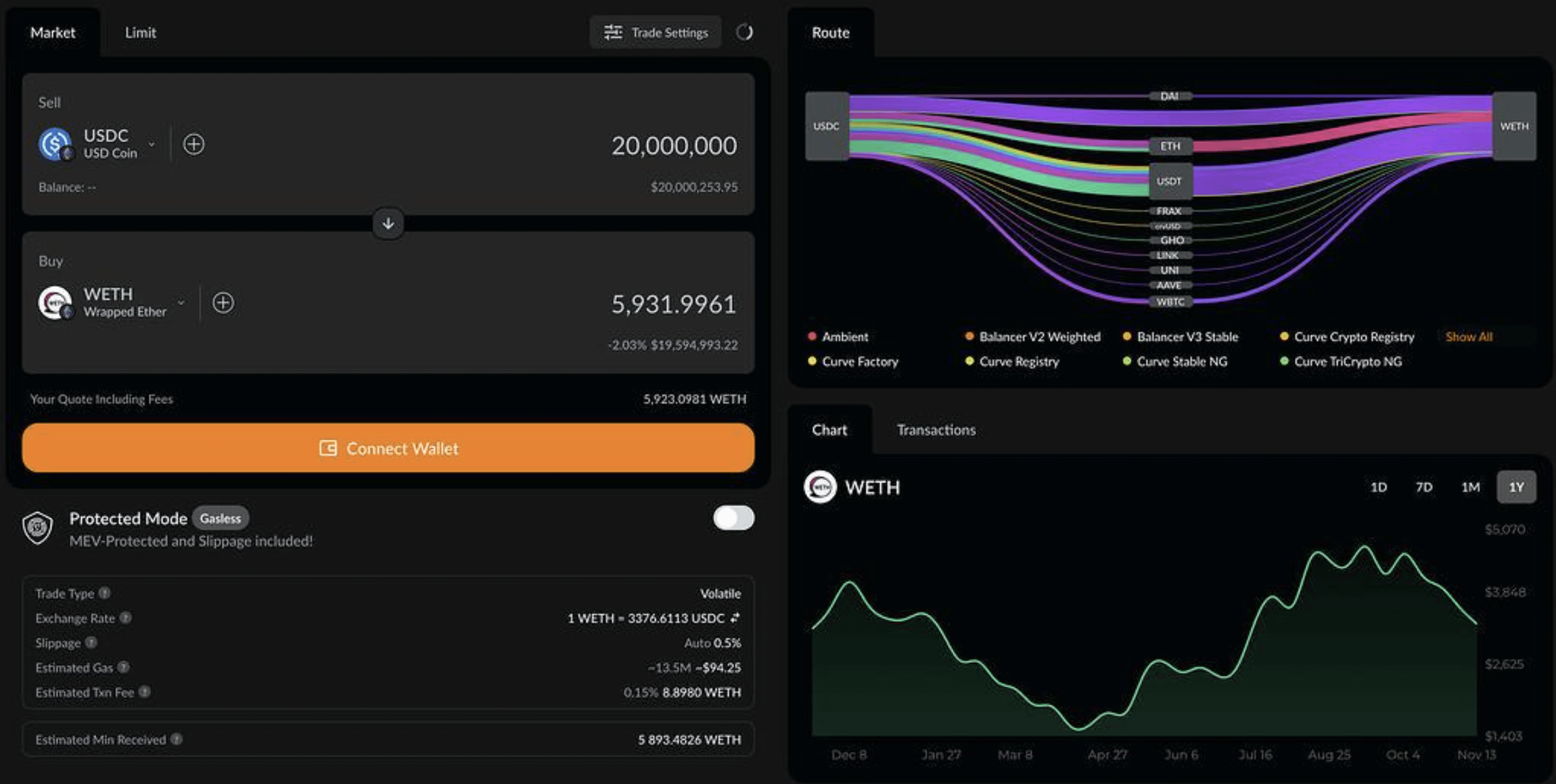
Suitable for users who already have a genuine need to trade RWAs.
Suggested steps:
Open Metric's official trading platform.
https://app.metric.xyz/r/welinkbtc
Connect a supported Web3 wallet.
Select the relevant network, such as BNB Chain.
Choose a trading pair for an asset you genuinely want to trade.
Before trading, confirm that the route clearly shows “Earns Metric Points.”
After completing the trade, check the Points panel for your points record.
One detail to keep in mind: don't repeatedly make meaningless trades just to earn points.
Trading fees, bid-ask spreads, and slippage are real costs. Earning points does not necessarily mean they will cover these costs.
Path 2: Earn Points by providing liquidity as an LP
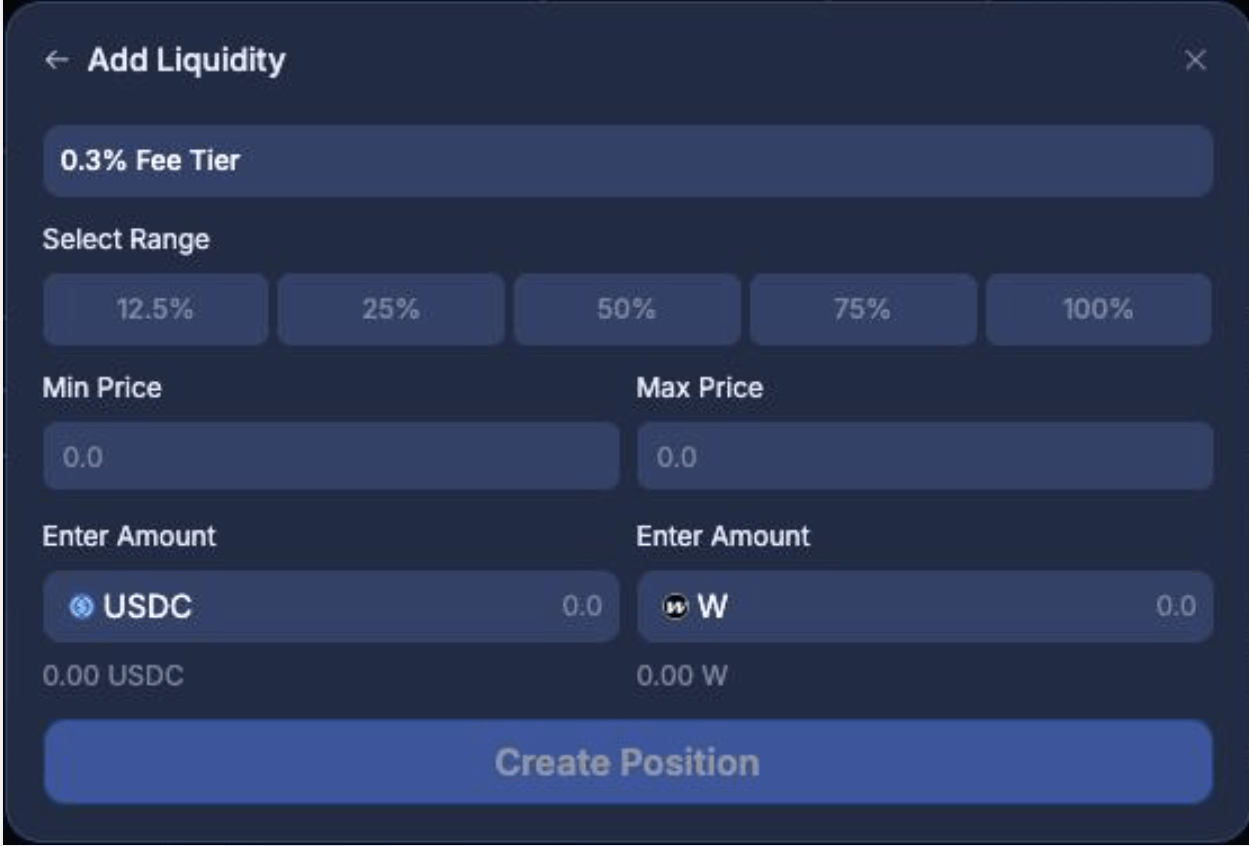
LP is a direction I think is worth researching separately.
That's because Swap mainly relies on trading activity, while LPs can participate in the operation of trading pools by providing liquidity.
Key things to focus on:
The pool's actual trading volume.
Current TVL and capital utilization.
Fee revenue.
The weighting of points rewards.
Price risk when withdrawing funds.
Whether the pool has significant exposure to a single asset.
It's especially important to note that RWA assets differ from ordinary tokens.
If the price of the underlying reference asset changes and the pool's liquidity and pricing are not updated quickly enough, LPs may face risks such as price deviations, impermanent loss, and slippage when exiting.
Therefore, you should not assume that a pool with higher points efficiency is automatically a better place to invest.
My participation priorities: first research trading volume and fees, then points efficiency, and only then decide how much capital to commit.
In short: the key question in researching Metric is not simply how to farm points, but whether it can use genuine RWA trading demand to turn short-term points users into long-term traders.