On the same Friday, two publicly traded companies holding ETH did the exact opposite.
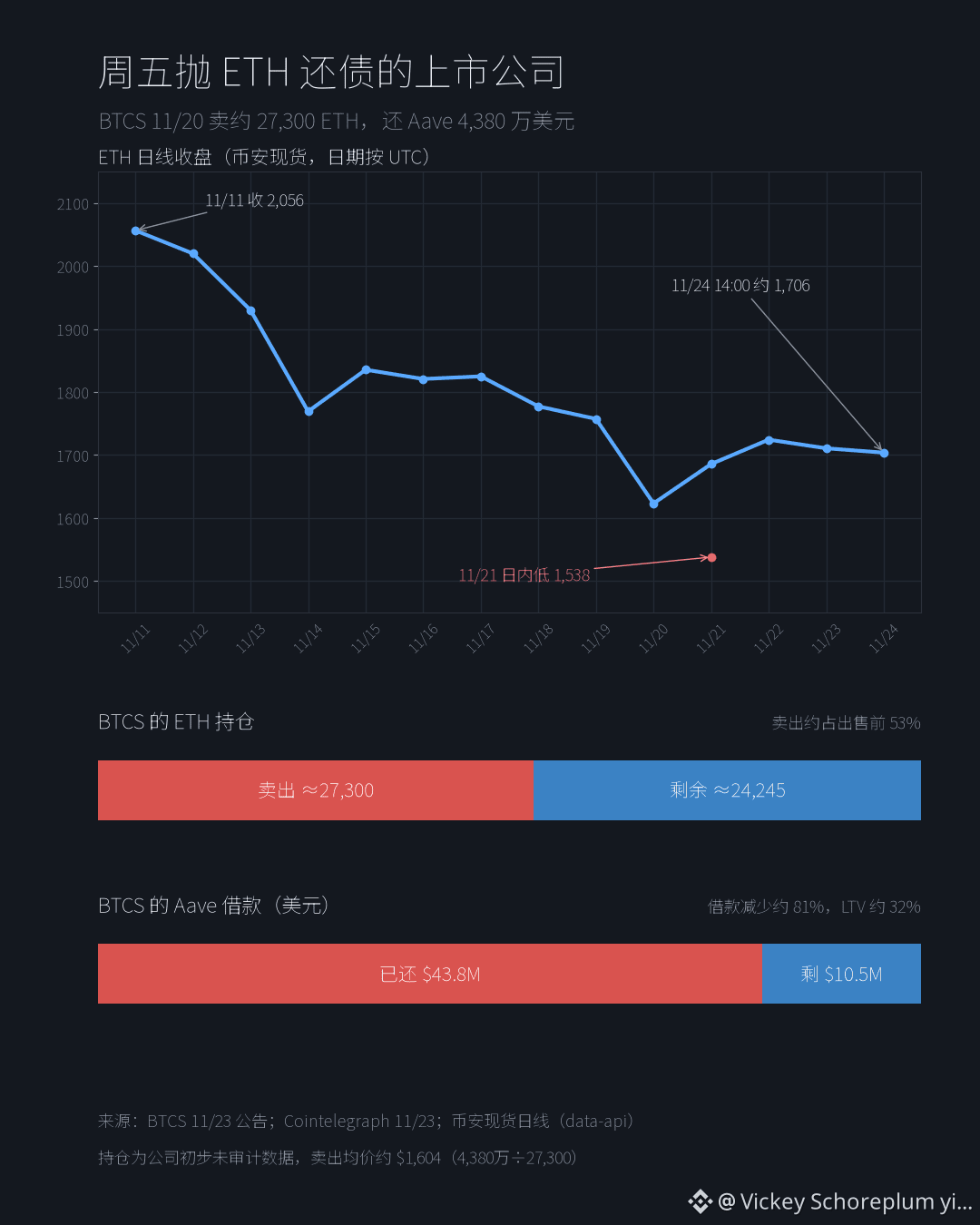
On November 20, BTCS sold about 27,300 $ETH for roughly $43.8 million, and used all of it to repay its Aave loans. That works out to an average price of around $1,604. After repaying, it still owed about $10.5 million on Aave, with a collateralization ratio of around 32%, and held about 24,245 ETH (according to the company's November 23 announcement; preliminary, unaudited figures).
On the other side, BitMine bought another 7,819 ETH that same week, bringing its total holdings to 6,085,564 ETH, or 4.98% of the total ETH supply (Cointelegraph, citing the company's announcement).
I'm not saying one was right and the other wrong, but one thing really stuck with me: BTCS's CEO said in the announcement that selling at this price "comes with a real cost," but they still chose not to carry debt into a downturn. That day, ETH fell about 12% from its intraday high, hitting a low of around $1,561—about 24% below its November 11 level. When you're borrowing against your coins and the price suddenly drops, your first priority is always to avoid liquidation.
On Binance spot right now (around 11/24 14:00), ETH is trading around $1,706. I'm only watching two levels: to the downside, the November 21 daily low of $1,538; to the upside, the November 23 intraday high of $1,845.
A question for you: Are you borrowing against your coins or using leverage? At what ETH price would you start reducing your position instead of riding it out? Give me a number.
Want to watch the chart: https://www.binance.com/zh-CN/trade/ETH_USDT
#ETH #DeFi #CryptoMarket
Personal observations only; not investment advice.