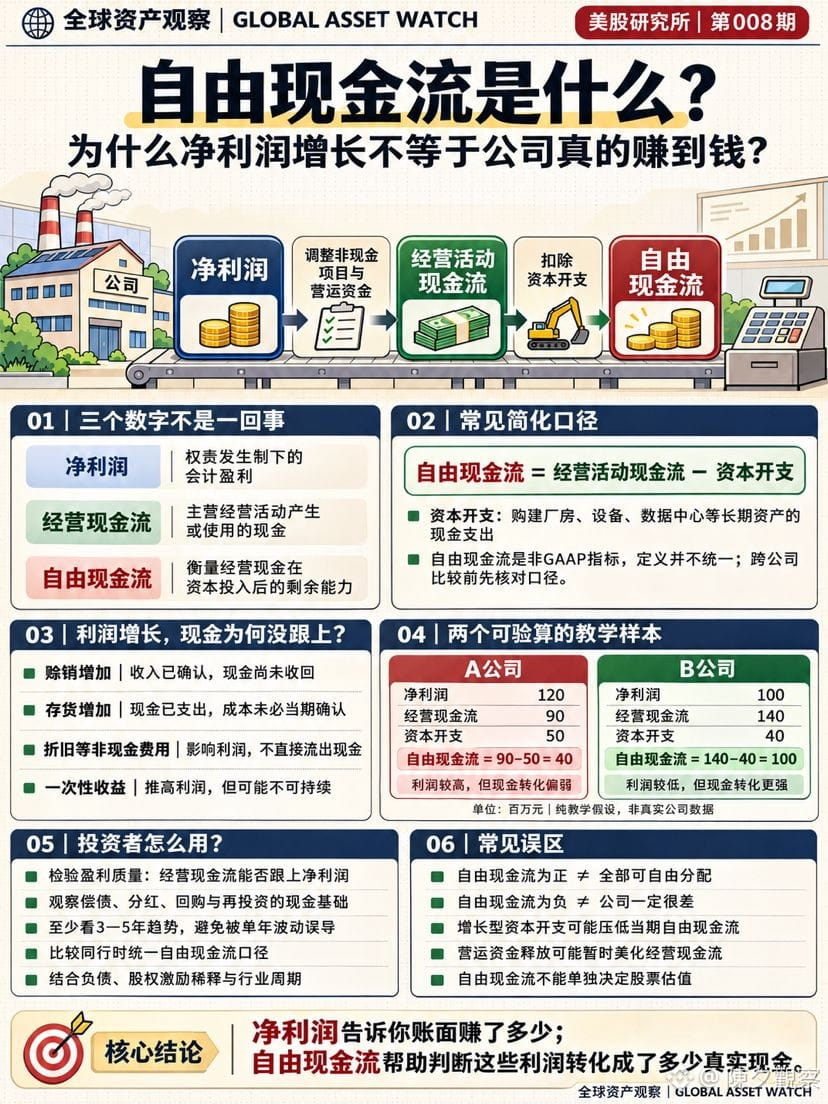
A company’s net profit grows. Why might the cash in its accounts not increase at the same time?
Because net profit is calculated on an accrual basis: revenue from credit sales can be recognized before cash is received, depreciation affects profit but does not require a cash payment in the current period, and increases in inventory and accounts receivable also tie up funds.
A commonly used simplified measure:
Free cash flow = cash flow from operating activities − capital expenditures
It can help assess the quality of earnings and provide insight into the cash available for debt repayment, dividends, buybacks, and continued investment. But free cash flow is a non-GAAP measure, and companies may define it differently; definitions must be standardized before comparing companies. The SEC also notes that cash flow and net profit are related, but they are not the same.
Don’t look at just one quarter: growth-related capital expenditures may temporarily depress free cash flow, while the release of working capital may temporarily boost operating cash flow. A more reliable approach is to examine trends in net profit, operating cash flow, and capital expenditures over at least 3–5 years.
Sources: SEC Beginners’ Guide to Financial Statements|CFA Institute Free Cash Flow Valuation
Coming next:
Wednesday|Crypto Class|Episode 008
“How to read Bitcoin spot ETF fund flows—and why net inflows don’t necessarily mean the price will rise”
#感恩节交易周开启,市场能否迎来修复性反弹?