


On November 23, 2026, just 11 days after leaving the company he had founded 33 years earlier, Jensen Huang returned to his former position.
NVIDIA’s board announced that Jensen Huang was immediately reinstated as president, CEO, and a board member. Just six days earlier, during the earnings call, despite quarterly revenue of $115.8 billion, up 103% year over year, board chair Harvey Jones had told global analysts that the board had unanimously accepted Huang’s resignation and had no intention of bringing him back.
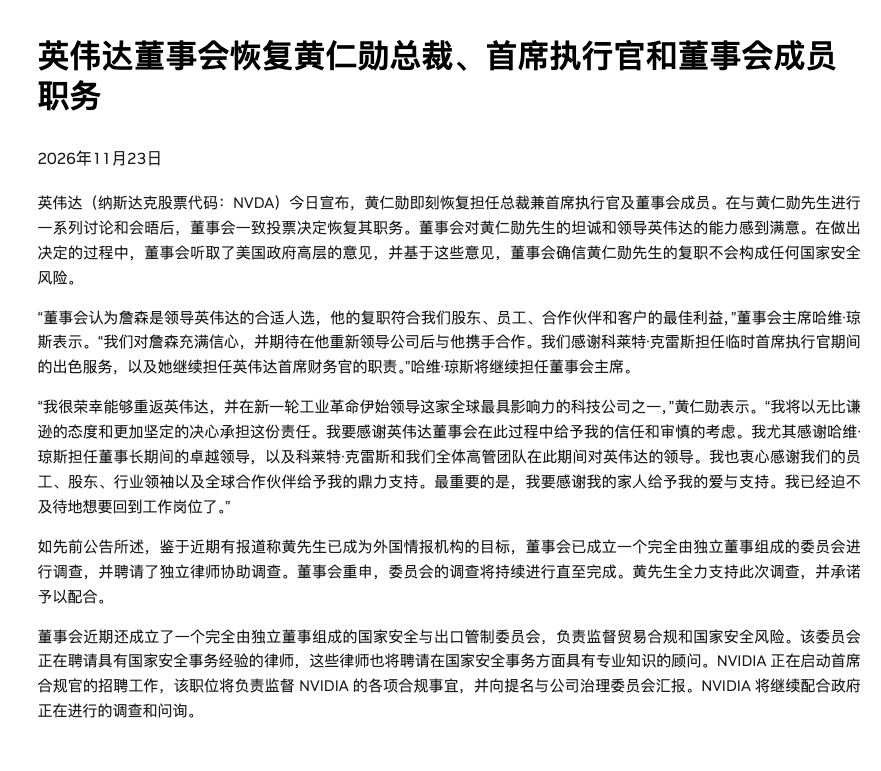
Image source: NVIDIA
At the all-hands meeting on November 18, Jones reportedly explained to employees that the board had accepted the resignation because he was “not candid enough.” In today’s announcement, however, the board said that after a series of conversations and meetings with Jensen Huang, it was satisfied with his “candor” and his ability to lead NVIDIA.
In its announcement, the board specifically stated that it had sought the views of senior US government officials in making its decision.
The secondary market priced in the reversal with a spectacular rally. As soon as news of Huang’s return broke, Nvidia rose about 28% in premarket trading at one point, regaining nearly $900 billion in market value in a single morning. After the opening bell, the Nasdaq Composite rose as much as 7%, and the S&P 500 gained 5%.
If you turn the camera toward a few other corners, the picture becomes even more intriguing.
Just a week before Huang’s return, Cathie Wood, the head of ARK Invest, was still steadily trimming Nvidia, with her first sale at $156.14. Three days earlier, the New York Times had published a long investigation detailing Huang’s tirades inside the company and his humiliation of employees. And the US Treasury secretary, who had demanded on television a week earlier that Nvidia’s board “look outside the company” for a new CEO, had just invented an entirely new set of linguistic definitions in the studio the day before.
The ink on the trade confirmations was barely dry, and the hit piece had only been out for three days, when the man in the leather jacket was already walking back in and taking his seat at the head of the table.
Looking back at this absurd hunt, Beating tries to understand one question: when a computing company becomes the foundation of a global industrial revolution, why did Washington’s hawks, Manhattan’s newsroom, Silicon Valley’s closed-source giants, and the independent directors in Santa Clara all come to believe they could push Jensen Huang out? And how was that illusion ultimately shattered by the evaporation of $2.7 trillion in market value?
Using Others, Changing Tune, and Making a Deal
To understand why Jensen Huang was able to come back, we first have to understand why, for a time, he couldn’t.
The ten independent directors in Santa Clara were never the only ones standing in the doorway. The story began in the Situation Room beneath the West Wing of the White House in Washington.
Over the past year, there have been two sharply different camps within the Trump administration when it comes to Nvidia and chip exports.
One was Trump’s own line: business, tariffs, the stock market indexes—if chips could be sold, sell them.
Trump’s attitude toward Huang was gradually changed by Huang himself. In July 2025, at an AI summit, Trump recalled that he had initially considered breaking up Nvidia. Last December, it was Huang’s lobbying that persuaded Trump to approve H200 sales, with the US government taking a 25% cut. Commerce Secretary Lutnick was caught in the middle. The hawks thought he was too slow to implement controls; according to the Washington Post, his own reason was that he didn’t want a trade war with China.
Throughout this storm, Trump himself barely changed his tune. When it first broke, he told reporters that Jensen Huang was a “very good man” and should remain CEO. On November 16, he said he certainly wouldn’t mind Huang coming back: “I think he’s learned a very important lesson.”
The other was the hawkish line. Secretary of State and National Security Advisor Rubio, and Treasury Secretary Bessent, were the two key figures on this side. They had consistently argued for tightening the screws on chip controls, and that Nvidia’s profits should not come first.
It was obvious which side Jensen Huang was on. For years, he had repeatedly lobbied in Washington against strict export controls, almost always standing opposite the hawks.
Asked about divisions within his cabinet, Trump replied, “These are two opinions, two lines of thought.” The president openly acknowledged that his team was not united on the issue.
But the hawks faced a tricky institutional dilemma. In the structure of the US government, authority to approve additions to the Entity List for export controls lay with Lutnick’s Commerce Department. If they couldn’t seize control of Commerce head-on, and couldn’t persuade their own boss, how could they move this immovable object?
In the hawks’ eyes, the storm in early November had come at just the right time. Someone who had opposed them for years finally had a reason they could use to take him down.
As the Washington Post later revealed, Rubio made a move with a distinctly Washington feel. He rewrote a departmental assessment that had originally been plainly worded, replacing it with extremely severe warnings and turning it into a memo he personally oversaw and circulated up the chain. Then, a steady stream of internal documents that had been locked away in administrative files, along with details of executives’ private lives, began flowing to the New York Times.
It was a textbook case of using someone else to do your dirty work.
It’s fascinating to connect the dots between Rubio’s and Bessent’s statements over those 11 days.
According to reports, when reporters asked Rubio about the matter on November 8, he said he couldn’t comment because it was an “internal company matter” at Nvidia.
On November 11, the New York Times reported that Jensen Huang had been involved in a personal relationship with a subordinate who reported directly to him. That evening, the board accepted his resignation. The news was made public on November 12: Huang had resigned from all his positions. At that moment, Washington’s hawks thought they had won the whole game.
The day after the resignation, Bessent went straight on CNBC and took aim at the Commerce Department. He said that for months, the Treasury Department, the War Department, the Office of the US Trade Representative, and the State Department had all argued that the companies in question should be put on the Entity List, “but the pen is in Commerce’s hands.”
Two days later, on Sunday, November 15, Bessent appeared on Fox’s Sunday Morning Futures. According to Fortune, in the same interview he first called Nvidia an excellent company and Huang a “highly creative innovator,” then changed tack, saying Nvidia had a “culture of noncompliance” and questioning whether the company was pushing seemingly noncompliant sales to dress up its revenue and profits. He compared it to a bank: if a bank had compliance practices like that, the US Office of the Comptroller of the Currency would already have stepped in, and “many executives would be removed from their positions.”
Then he drew a hard line on leadership: when the board looked for a new leader, it needed to look outside the company.
Looking outside for a CEO was clear enough: don’t let Huang come back, and don’t let one of his people take over either.
So why did Bessent change his tune just a week later?
On November 16, the US Department of Commerce issued a new rule specifically tightening restrictions on remote access to advanced chips. According to the Washington Post, it was pushed by the Treasury Department and the National Security Council, led by Rubio. That same day, Trump, Bessent, and Lutnick flew to Manila together.
On November 17, Nvidia’s board established a “National Security and Export Controls Oversight Committee” made up of independent directors, with a specific mandate to monitor trade compliance. The new rule took effect on November 19.
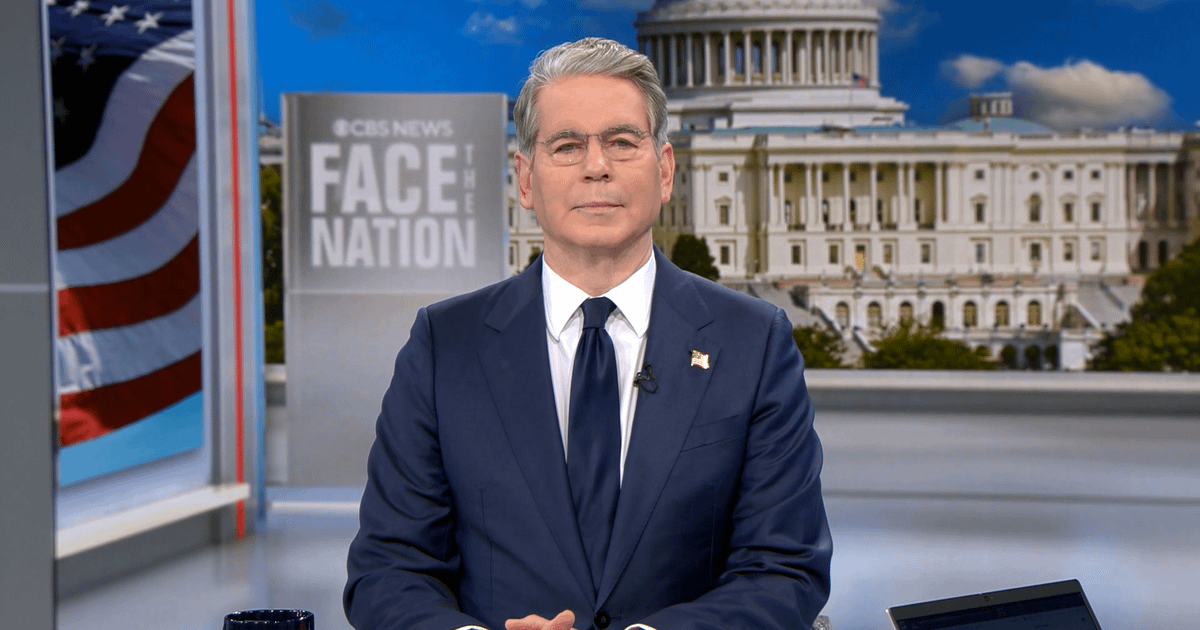
Bessent interviewed on Face the Nation, November 22, 2026 | Photo: CBS News
By Friday, November 20, when Bessent appeared on CNBC again, his tone had clearly softened. Asked about his differences with the Commerce Department, he said, “We are all committed to carrying out President Trump’s instructions.” He also confirmed that the export policy for H200 chips would “continue as planned,” because “the appropriate controls are in place, and remote access has been contained.”
That same day, Trump said at the White House that America was a country willing to give people a second chance. He also said Huang had put America “a full 10 years ahead.”
More importantly, that same day brought a Black Friday for US stocks. Nvidia plunged 14.01% in a single day, closing at $125.53. From its October high of $239.24, it had lost about $2.7 trillion in market value.
Put these events together, and the outline of a deal starts to emerge.
The hawks got the new rules on remote access they wanted, along with an export-controls committee on the board and a written compliance system with people watching over it. Trump got H200 sales continuing, a reprieve for the stock market, and the return of the man who had put America 10 years ahead.
Only after everything was in place did Bessent deliver, on CBS’s Face the Nation on Sunday, November 22, what may have been one of the smoothest U-turns in modern political history.
Under questioning from host Margaret Brennan, he first clarified that what he had said a week earlier about Nvidia’s various compliance issues was merely a possibility that needed investigation, not a conclusion. He then downplayed the much-discussed personal scandal as “to some extent, a nothingburger” and “a little personal quirk.”
When asked about the president wanting Huang back, after Bessent had demanded the company “look outside” the week before, Bessent said without batting an eye: “I said they should look outside the company, but Jensen Huang is now outside the company.”
In a week, Bessent found a way to walk back every single thing he had said. Rubio, after helping the board reach its decision from the upper reaches of government, had made no public comment on Huang’s return to the job as of publication.
That same day, Trump wrote on Truth Social, “I hope Nvidia’s Board will rehire Jensen Huang. It would be the best thing for the company, and for America.”
The next morning, Monday, Nvidia’s board voted unanimously. After the reinstatement announcement, Trump posted again, calling it “the right and proper decision.” Less than 24 hours passed between Bessent’s change of tune and Huang’s return to his former position. Once Washington’s internal disagreements had been settled, the carriage back to the palace was ready and waiting.
Cathie Wood’s Perfectly Timed Misstep
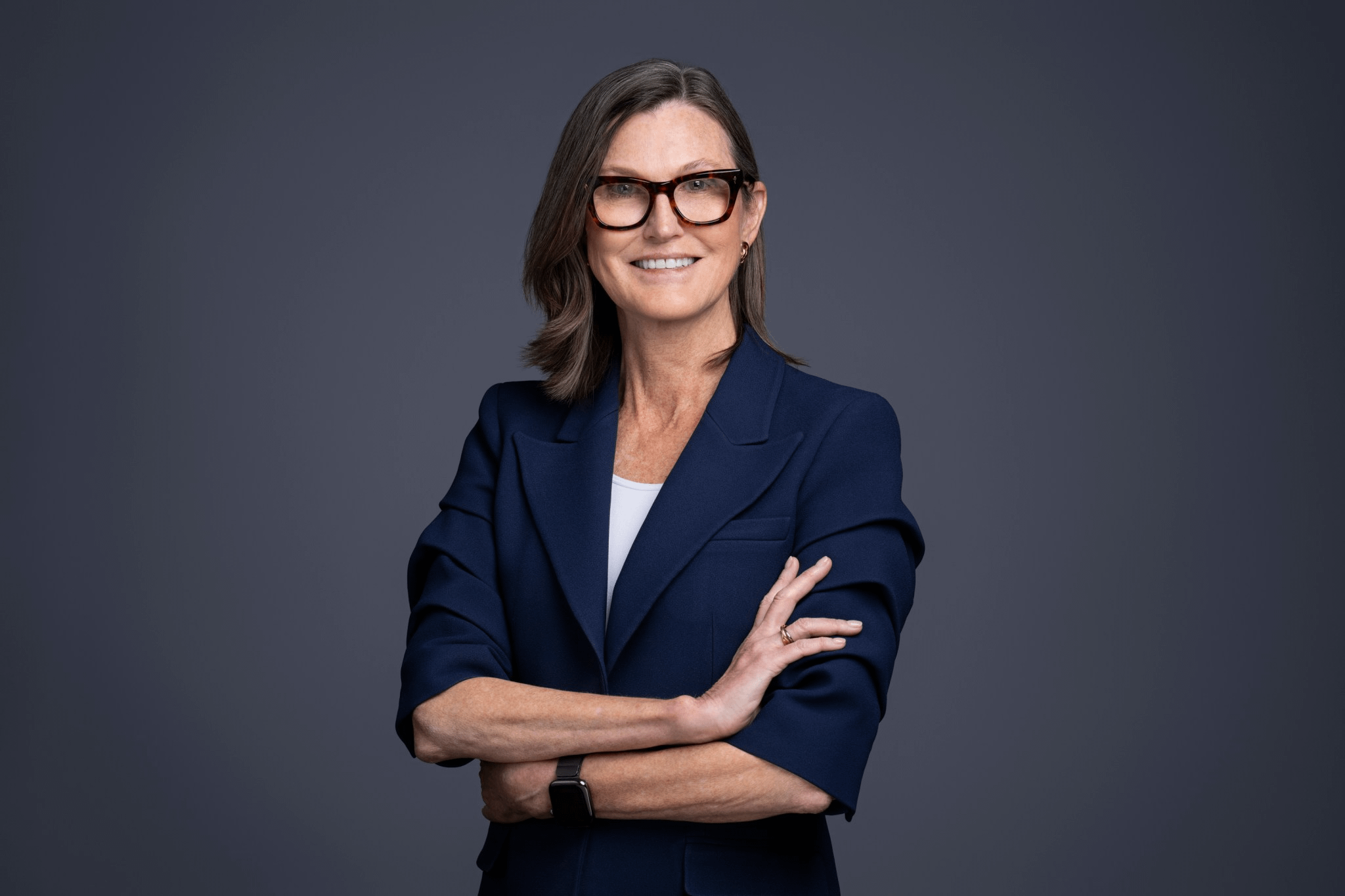
Cathie Wood was probably the unluckiest person of all over those 11 days.
First, let’s look at what she did.
On September 30, ARK held about 2.56 million shares of Nvidia, 85% more than at the end of June. On November 5, ARKK bought another roughly $43.7 million worth. On Monday, November 9—the first trading day after the board announced its investigation into Huang—while everyone else was running for the exits, ARK was still adding to its position, buying about 90,000 shares.
ARK Invest founder Cathie Wood (file photo) | Photo: ARK Invest, via TechCrunch
Then Jensen Huang resigned.
The day after Huang resigned, on November 12, Wood was still trying to reassure the market in public with the standard Wall Street argument: Nvidia could not rely on Huang alone, and even without its co-founder, the company had an excellent engineering team capable of sustaining its future.
If you looked only at fundamentals, there was indeed no reason to sell Nvidia in mid-November. Quarterly revenue had doubled to $115.8 billion, net income was $65.3 billion, and the forecast for the next quarter was $130 billion. Using Friday’s closing market cap and annualizing that quarter’s net income, its price-to-earnings ratio came to less than 12.
But after Bessent appeared on Fox on Sunday and issued an administrative threat of “executive removals” and a “10-day ultimatum,” Wood couldn’t take it anymore.
On Monday, November 16, ARKK and ARKW together sold about 540,000 Nvidia shares at a loss. At that day’s closing price of $156.14, that came to about $84.8 million. On November 19, she trimmed her Nvidia holdings again. That same day, six ARK funds bought 935,000 shares of Anthropic at its $83 IPO price, for about $77.6 million.
According to reports, her public explanation for selling was “the Jensen Huang issue.” One estimate put Wood’s three sales over the previous week at about 710,000 shares in total, bought at an average price of roughly $204 and sold at an average of about $150.
Wood’s logic was actually consistent. ARK reportedly gives significant weight to a company’s people, management, and culture when evaluating it. With the founder out and the Treasury secretary publicly applying pressure, that category would take a hit—and when it takes a hit, you sell. She had followed this discipline for more than a decade. In January 2023, ARKK sold its entire Nvidia position, citing an excessive valuation, and missed the subsequent rise of more than tenfold for the same reason: that same discipline.
Wood understood Nvidia; she just didn’t understand Washington.
This time, the biggest factor driving the share price was at the table in Washington—a factor Nvidia’s earnings couldn’t control, and ARK’s model couldn’t account for.
There were contrasting examples right alongside her. After Huang resigned, Altimeter and Atreides jointly wrote to the board, asking it not to rule out the possibility of his return. On the day Huang resigned, Duan Yongping said he wouldn’t sell for now—and casually sold a lot of put options while he was at it.
Bessent himself was an even more telling example. He had spent decades in hedge funds on Wall Street, served as chief investment officer at Soros Fund Management, then founded his own firm, Key Square, before becoming Treasury secretary. A financier chose politics, and in a single week could take back everything he had said—while the market still had to rise and fall with his words.
In this era, financiers who don’t take a political side often don’t last long.
The New York Times’ Series, and Silicon Valley’s Undercurrents
If Wood misplayed her hand in a political maneuver, the New York Times and certain people in Silicon Valley genuinely believed that Huang’s era was over.
From its first story on October 29 onward, the New York Times published more than ten reports about Huang, at its busiest almost one a day. Its flagship podcast, The Daily, even devoted an episode to the story. The paper’s reporting reached from Nvidia’s boardroom all the way into the White House.
The New York Times’ newsroom sign at the entrance to its headquarters in Manhattan, New York | Photo: Mark Lennihan / AP
For Washington’s hawks, feeding information to the media was simply a tactical tool for pressuring Lutnick and forcing Nvidia to hand over compliance oversight. But the New York Times editorial desk treated this political maneuver as a historic showdown to settle accounts with the tech oligarchs.
Around the midterm elections, fear among progressives and urban white-collar workers that AI would replace intellectual labor reached its peak. So when politicians put material about personal conduct and internal management right in front of the press, these writers eagerly seized the opportunity.
Around November 11, columnist Anand Giridharadas published a satirical piece in the New York Times opinion section, “Jensen Huang Betrayed the Leather-Jacket Lovers.” He wrote that the scandal had shaken not only Silicon Valley and geopolitics, but was also “an earthquake” for leather-jacket lovers. In the very week Huang lost his job, the paper’s opinion section chose to make jokes about his leather jacket.
Stephen Witt, who appeared on November 15, delivered a perfect demonstration of what it means to stab someone in the back. The author of the 2025 biography of Huang, The Thinking Machine, wrote in the New York Times that Huang’s humble image was an act, and described him as arrogant and unable to tolerate dissent. He also dredged up an old story: Huang had quietly left a $1,000 tip for a waitress at a Denny’s, something Witt only learned after he later went and asked the waitress himself. His conclusion was that even this was a performance for Huang’s own benefit.
By November 20–22, as calls for Huang’s return grew louder, the New York Times put a long article on its front page titled “Threats, Insults, Reconciliation: How Jensen Huang Made Humiliation the Norm,” featuring former employees’ accounts of Huang’s harsh language.
Beyond the Manhattan newsroom, there were also people inside Silicon Valley quietly hoping for a “world without Jensen Huang.”
Take Anthropic, which had just completed a mega-IPO valued at $1.4 trillion on November 19.
On the surface, Nvidia was an important investor in Anthropic and the foundation of its computing power. But behind the scenes, Huang and Anthropic founder Dario Amodei had already clashed head-on on two fronts.
One was chip exports. Dario Amodei is Silicon Valley’s most aggressive advocate for controls. Over the past year, he had loudly called in Washington for tighter restrictions, directly opposing Huang’s lobbying. The other was a fatal weakness in Anthropic’s business model. Huang had consistently thrown his weight behind open-source models, from developing Nemotron in-house and investing in Reflection AI and Thinking Machines Lab, to pushing for the acquisition of Hugging Face. For Anthropic, whose trillion-dollar valuation rested on selling expensive closed-source models, Huang’s downfall was like having the largest obstacle overhead removed on the eve of its IPO.
Anthropic itself made no secret of this. On the day it went public, Daniela Amodei said on CNBC that one distinctive feature of Anthropic was its many computing partners. Besides Nvidia, there were Amazon, Google, and Broadcom. “That gives us a helpful strategic advantage.”
In the same interview, CNBC host Andrew Ross Sorkin asked Dario and Daniela Amodei directly: Nvidia was an investor in their company and had participated in the offering, but they were on the opposite side from Huang on chips for China. How did they feel watching the controversy unfold?
Dario first said that Nvidia was a long-term partner, then added, “We’re not always going to agree with our partners on policy issues.” Anthropic would continue to stand by its position. Sorkin followed up: did they think Huang should come back? Daniela said, “We obviously wouldn’t comment on anything involving a competitor.” Dario added, “That’s for Nvidia to decide.”
A company backed by Nvidia called Nvidia a competitor on camera.
Whether it was the New York Times’ series or the closed-source giants watching from the sidelines, they were all waiting for the same ending. They all thought the Jensen Huang era was over.
But reality told a different story.
The New York Times wanted to tell a story about Nvidia employees living in fear. But an open letter called “Stand With Jensen” gathered more than 200,000 signatures in just a few days, including more than 10,000 from current Nvidia employees. At an all-hands meeting on November 18, employees told CNBC that there was just one prevailing feeling in the room: they wanted Huang back.
As late as Sunday, November 22, the New York Times was still publishing new follow-up reports. After more than a month of installments, the grand finale was the return of Consort Xi.
In palace intrigue, it’s often the clowns on stage who put on the biggest show.
November and the People Who Build Engines
If this plot feels familiar, that’s perfectly normal. Silicon Valley CEO comeback dramas seem to have a particular fondness for November.
On Sunday evening, November 20, 2022, Disney announced that Bob Iger was returning as CEO, replacing Bob Chapek, the successor Iger himself had handpicked. The next day, Disney shares rose more than 6%.

Sam Altman shows his visitor badge on returning to OpenAI’s offices on November 19, 2023 | Photo: Sam Altman / X
On Friday, November 17, 2023, the OpenAI board abruptly fired Sam Altman. Over the following days, more than 700 of OpenAI’s roughly 770 employees signed a joint letter demanding the board resign and Altman return. Late on November 21, OpenAI announced that Altman was coming back. The whole affair took five days.
On November 23, 2026, Jensen Huang was back. The whole affair had taken 11 days.
The common thread in these stories is clear: the people pushed out were icons of their companies; the procedures used to remove them were technically within the rules; and the force that brought them back came from outside those rules.
In Beating’s view, the tumultuous 11 days delivered a brutally sobering reality check to an AI industry that had been on a three-year tear.
Before this, three illusions were widespread in the business world.
The first was that once a technology company grew to a $5 trillion scale, institutions would outweigh individuals, and any founder could be smoothly replaced like a spare part.
The second illusion belonged to Washington’s hawks: that political statements and compliance pressure could let them decide who would be CEO of a company at the very center of the technology cycle.
The third illusion belonged to Manhattan’s newsroom: that more than ten reports and opinion pieces could determine whether a business leader stayed or went in this day and age.
From the day before Huang resigned through last Friday, Nvidia’s roughly $1.2 trillion loss in market value shattered all three illusions at once.
During the long stretch before technologies converge, AI remains a high-stakes game that depends heavily on the instincts of a very small number of leaders. Big Tech firms and sovereign wealth funds may command vast pools of capital, but they still have to bet on the handful of people capable of defining the next generation of architectures.
As for the fund managers who spent the past 11 days selling at rock-bottom prices, the biographers busy writing moral eulogies, and the politicians who thought a few leaks would let them take over the game, they probably all have to face the same awkward morning today.
At the end of the announcement, the newly returned Huang said one thing:
“I can't wait to get back to work.”