The UK has just ruled that exchanges cannot make markets on their own platforms, while a circular issued by Hong Kong’s SFC on February 11 this year opened the door to “associated market makers” for licensed platforms.
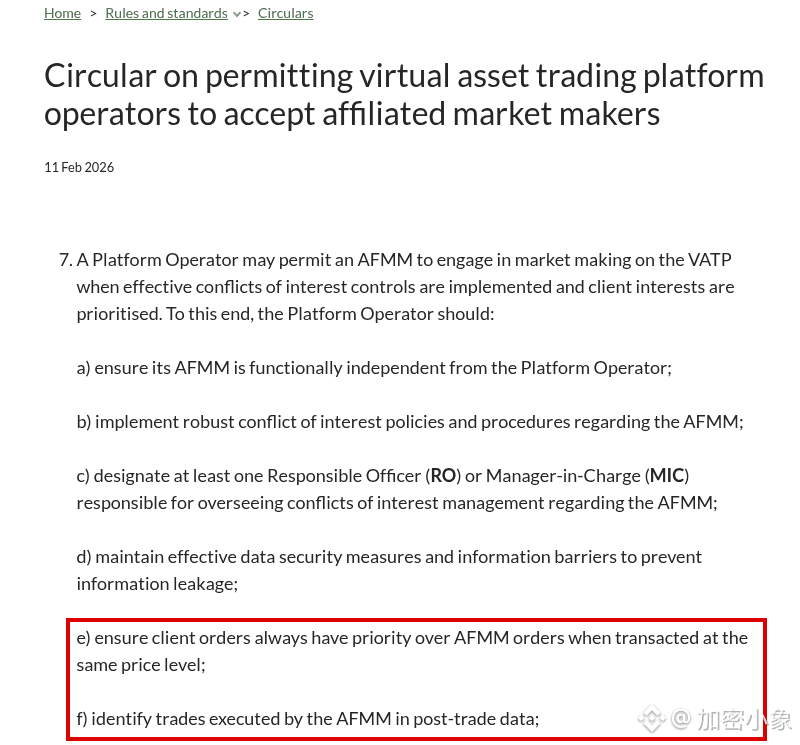
They may seem to be moving in opposite directions, but for retail investors the underlying principle is the same. The UK FCA’s final rules state that from October 25, 2027, compliant platform operators cannot quote prices on their own platforms using their own funds; the amendment signed by the Treasury on November 18 grants an exemption to third-party market makers. In Hong Kong, platforms were already prohibited from trading on their own account. The associated market makers now permitted must follow several rules: they must be functionally independent from the platform; customer orders at the same price must be given execution priority; post-trade data must identify which trades were theirs; and any preferential treatment they receive must be disclosed to users.
I’d treat this as a checklist for due diligence. Neither jurisdiction has banned “their own people” from providing liquidity; the question is whether you can see who’s on the other side. If you trade on a licensed platform in Hong Kong, you can look up these disclosures. If the platform’s terms don’t say a word about its market-making arrangements, I’ll assume there are people from the platform itself in the order book.
No matter how impressive the order-book depth looks, if you can’t find out who’s backing it, place orders based only on your own stop-loss.
#英国将禁止加密交易所在自有平台做市 #Hong Kong