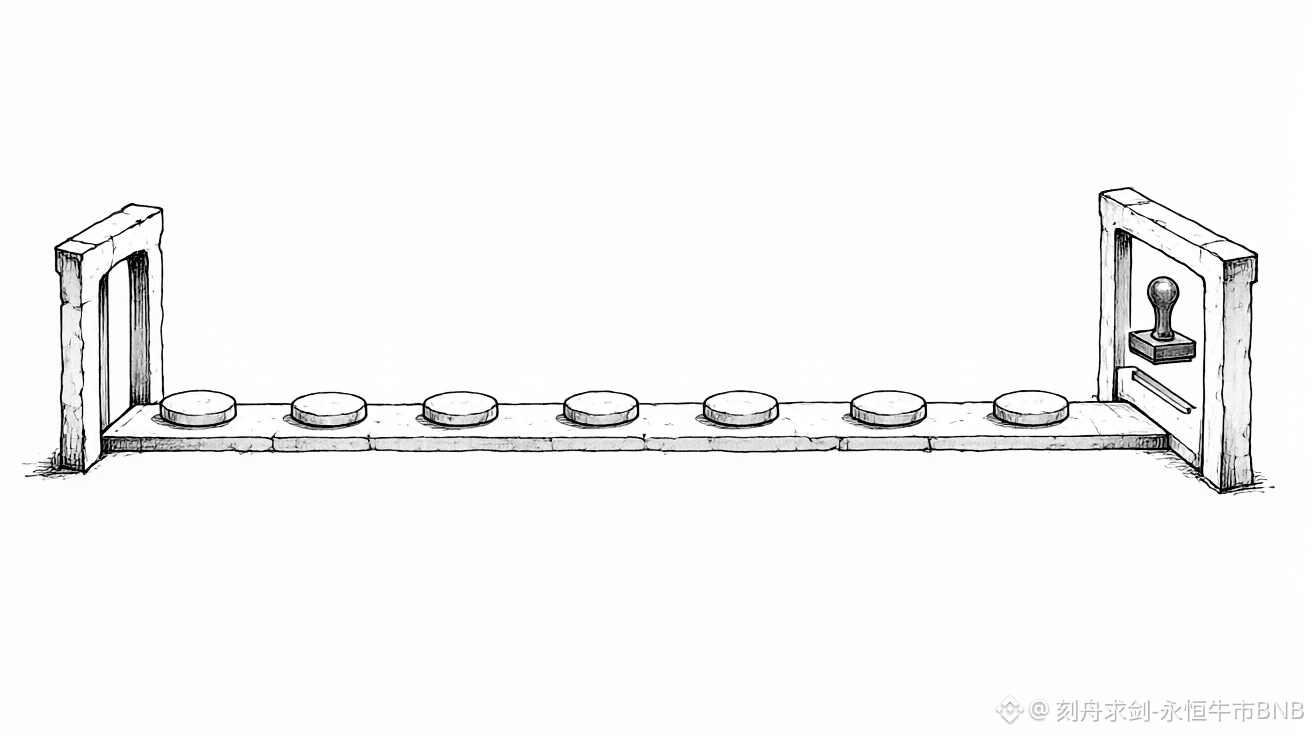
A little after four on Friday afternoon, an interbank payment missed the settlement window and had to wait until Monday. That same evening, another sum of money, recorded on a more or less similar ledger, cleared the gate that very night. I took a look: the ledgers weren’t all that different. The difference came down to what you declared at the door: a deposit, or a coin. The draft gazetted on November 20 excludes the former from the definition of virtual assets. $XAU
The draft would amend Chapter 615, the Anti-Money Laundering and Counter-Terrorist Financing Ordinance. Anyone dealing in, advising on, managing or providing custody for these assets would need a licence or registration from the SFC. Banks that are already regulated and want to get involved would also need to register separately. Anything classified as a virtual asset has to pass through the gate; the category carved out of that definition doesn’t need to show its papers. $BNB
Under the HKMA’s framework, tokenized deposits issued by commercial banks count as private money. They sit on the monetary side, separate from the asset side, and form the core layer of the Ensemble sandbox. Fintech Week took this a step further on November 2: banks used them for round-the-clock interbank settlement, with twelve banks and twenty institutions taking part. $SOL
The sums moving along this track are no small change. As of the end of September, the SFC had authorized seventeen tokenized retail products, with a total size of about HK$10.3 billion. Since October 26, two tokenized money market funds among them have been available for round-the-clock secondary-market trading on licensed platforms.
What separates the two kinds of money is the ledger behind them. A tokenized deposit is money the bank owes you, backed by the bank’s capital and regulation. A stablecoin, by contrast, is backed by a pool of reserve assets, and its issuer needs a licence. Deposit protection covers up to HK$800,000 per depositor at each bank; whether a product is covered depends on its terms.
Put simply, the way the ledger is kept hasn’t changed. What has changed is the name you give at the door and how many hoops you have to jump through. The draft goes to the Legislative Council for its first reading on December 2. After that, watch one thing: which gate starts getting a queue first.
Personal opinion only; this is not investment advice. You are responsible for your own gains and losses.
#香港代币化存款拟不列虚拟资产