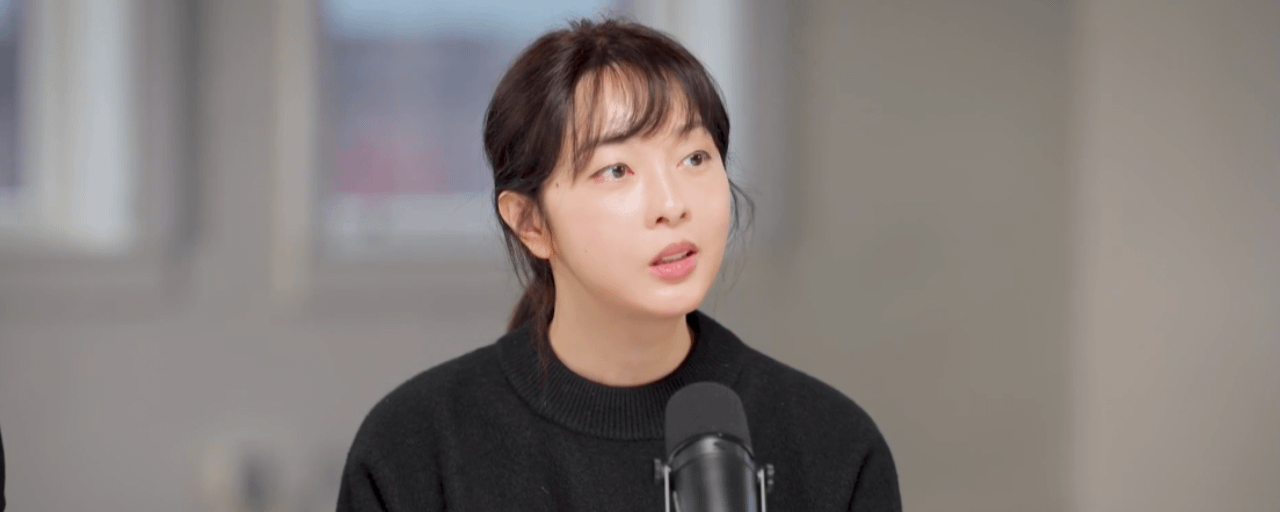


Chinese American engineer Lauren Tan, who combines beauty and brains, left Netflix and Meta before departing from the wildly popular AI coding tool Cursor. She then joined xAI and became a core developer of GrokBot, the AI bot on social platform X.
In Silicon Valley, some engineers may not be widely known by name, but their usernames often come up in tech discussions.
Chinese American engineer Lauren Tan is one such person. Her usual username is poteto, as if she had deliberately misspelled the English word “potato.”
Behind this seemingly casual username is a career path that has taken an unconventional route.
She has worked in web design, studied finance, turned to open source after a failed startup, and later worked at Netflix, Meta, and Cursor. Now she has joined xAI, where she is helping develop GrokBot, an AI bot for the X platform.
The most interesting thing about her experience is not the string of well-known companies on her résumé, but that at every turn, she used things she had actually built to open the next door.
Lauren Tan got her start in web design at 13, even redesigning her school’s website and earning her first paycheck.
At university, she chose not to study computer science, majoring in finance in Australia instead. Data analysis gradually sparked her interest in programming. After graduating, she tried to start a business, but it soon failed.
Judged only by her degree and the outcome of her startup, her experience might not seem especially promising.
But she did not pin all her hopes of finding a job on her résumé. Instead, she got involved in the open-source community and contributed to the front-end framework Ember.js. Her code contributions and a technical talk earned her a job at software consultancy DockYard, which also brought her from Australia to the United States.
Why can open-source projects serve as a springboard?
They give people a chance to demonstrate their abilities.
People without a traditional computer science background may not be able to prove themselves through the name of their school, but a piece of code that can be reviewed or a contribution that solves a problem lets a team assess directly whether they can do the work.
After joining DockYard, her career path gradually found its footing.
Lauren Tan worked at Netflix for nearly four years, contributing to internal tools and interface systems. She then joined Meta, where she worked on front-end infrastructure. Her experience went beyond how pages look to include how development teams build, maintain, and improve products.
That kind of experience has become even more valuable in the age of AI products. When people talk about artificial intelligence, it is easy to focus on models, chips, and computing power. But what ordinary users experience every day is often something else: Is the feature easy to find? Does the response fit the task at hand? Is the product smooth to use?
One of Cursor’s distinguishing features is that it puts AI coding capabilities into a code editor familiar to programmers, letting users call on AI as they write code.
For developers, how naturally a tool fits into their workflow may matter more than a one-off demonstration of a model’s capabilities. Lauren Tan moved from Netflix and Meta to Cursor, then joined xAI, putting her right at the forefront of this kind of product engineering.
GrokBot serves a different range of use cases. It appears in the X feed, where users might use it to look up information, ask questions, or interact with it during trending discussions. The feed changes quickly and contexts vary, so the product needs to run reliably while also making it clear how to ask questions and where to find the answers.
Here, engineering and interface design are not two unrelated things.
The same principle can be seen in other industries.
Canadian e-commerce platform Shopify began as an online snowboard shop run by its founders, then grew into a tool that helps merchants build online stores. It solved more than just a technical problem: it turned the process of setting up a shop into a product that more merchants could use.
Australian company Canva, meanwhile, started with design tools. Launched in 2013, it offers templates and online design features that let people without professional design experience create content such as posters and presentations. These cases differ from AI products, but they illustrate a shared point: whether technology can truly become part of everyday life often depends on whether a product makes complex capabilities easy to use.
Of course, the importance of product experience does not mean that underlying technology and specialized training are unimportant. Large software products need reliable infrastructure, and AI tools depend on model capabilities and engineering support.
Lauren Tan’s experience does not mean that degrees are no longer useful, nor should it be taken to mean that anyone can get into a top company simply by teaching themselves.
Her experience with open-source projects, engineering teams, and mature products was also an important part of her career transitions.
What’s truly worth noting is that she never let herself be defined by a single identity. A finance degree did not stop her from coding, a failed startup did not drive her out of tech, and leaving a big tech company was not the end of the road.
With every change of direction, she brought her existing skills to new problems, then used projects to show what she could solve.
As competition in AI products heats up, engineers are also moving between companies and fields.
But talent moving around does not mean everyone is leaving big tech, nor does it suggest that traditional software development has lost its value. What is changing is that product teams need more than people who can train models or build systems; they also need people who can bring technology into real-world use cases.
From helping redesign her school’s website at 13 to working on GrokBot, an AI bot for X users, Lauren Tan’s career has certainly taken many turns.
The lesson from her story is not that formal education no longer matters, but that where you start your career does not determine everything. What you have done and what problems you have solved are often what people really want to know about when considering you for the next opportunity. $SOL