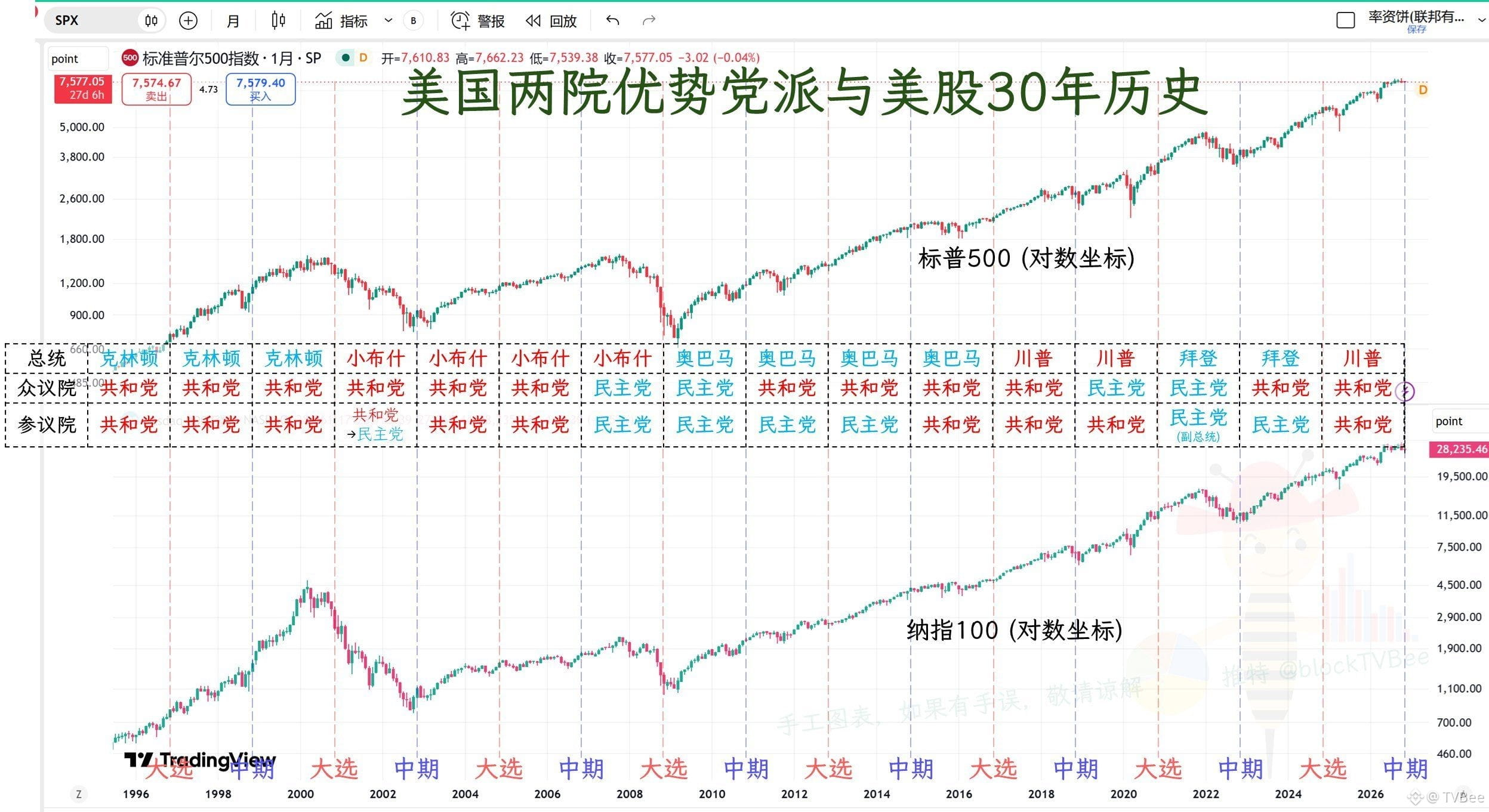

The U.S. stock market outlook should become clear by February at the latest (with a positive bias)
┈➤Earnings season will provide clarity
Q4 took place amid a broad market decline, and Q4 earnings will be released from January to February. Most tech and AI stocks report from late January to early February.
Earnings reports will reveal the state of demand and operations in the AI industry amid the sharp stock market decline.
┈➤The period of intense friction around the midterm elections is over
The past 30 years of history show that after midterm elections, the market begins to rise once it bottoms out—by February at the latest.
The latest such case was 2006: George W. Bush was president, just as now there was a president who had launched a war in the Middle East, and the Republicans lost control of both chambers in the midterm elections.
Of course, there are differences: the market rose from August to November in 2006, whereas this time it fell earlier, in October and November.
This isn’t about blindly applying the past to the present. Around midterm elections, the two parties clash (commonly known as partisan infighting), affecting fiscal policy and the markets.
But the Democrats are targeting Trump, not the stock market, and certainly don’t want to see it continue to crash. So friction should be at its most intense around the time members of Congress take office, then gradually ease and give way to relative calm.
┈➤Pay attention to early December
Also, note that the U.S. government is currently operating under a temporary funding bill, which runs through December 11.
Congress is expected to vote on a funding bill before then. If the two parties still haven’t reached an agreement, be on guard for another government shutdown.
That’s not to say a shutdown is certain. Since members of Congress will change next year, the rational move for Trump would be to adjust the funding bill so it can pass in December. Still, early December could bring market anxiety and volatility.