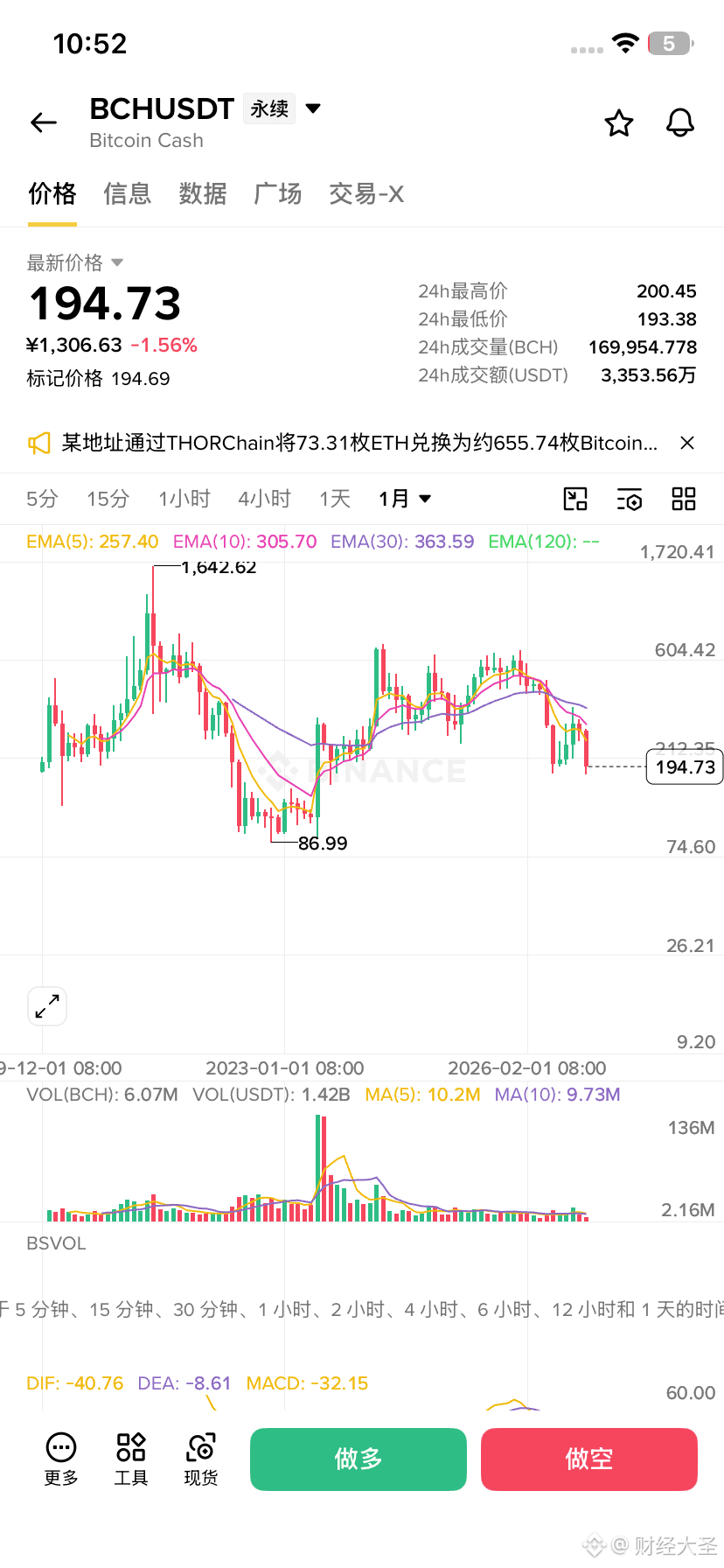
Whatever Happened to the Crypto World’s Former King? — $BCH Bitcoin Cash
Back then, some people believed that the real Bitcoin shouldn’t be today’s BTC, but BCH.
In August 2017, the Bitcoin community erupted in a fierce debate over block scaling.
One side insisted on keeping blocks small, while the other believed block capacity should be increased to make transactions faster and fees lower.
In the end, the two sides went their separate ways.
Bitcoin Cash (BCH) was officially born as a fork of Bitcoin.
When it first launched, BCH was riding high, backed by miners, industry figures, and a large number of supporters. Under the banner of “peer-to-peer electronic cash,” it aimed to make Bitcoin a practical everyday payment method.
But things didn’t unfold as expected.
In 2018, BCH was hit by another dispute over its direction, eventually splitting again and giving birth to BSV.
One fork turned into two splits, and the community’s consensus gradually eroded.
More importantly, BTC continued to evolve through approaches such as SegWit and the Lightning Network. Although BCH has continued to update its technology, it has never managed to catch up with BTC in terms of market influence or mainstream adoption.
BCH is still running today and still has an active trading market; it hasn’t disappeared.
But the Bitcoin Cash that many people once pinned their hopes on, believing it could challenge BTC, ultimately failed to follow the path it had once envisioned.
Sometimes, the cruelest thing about the crypto world isn’t that a project collapses. It’s that the project is still alive, but the story it tells is no longer the one it once was.
Did you ever have faith in BCH?