
#HKBillWouldExcludeTokenizedDepositsFromVirtualAssets
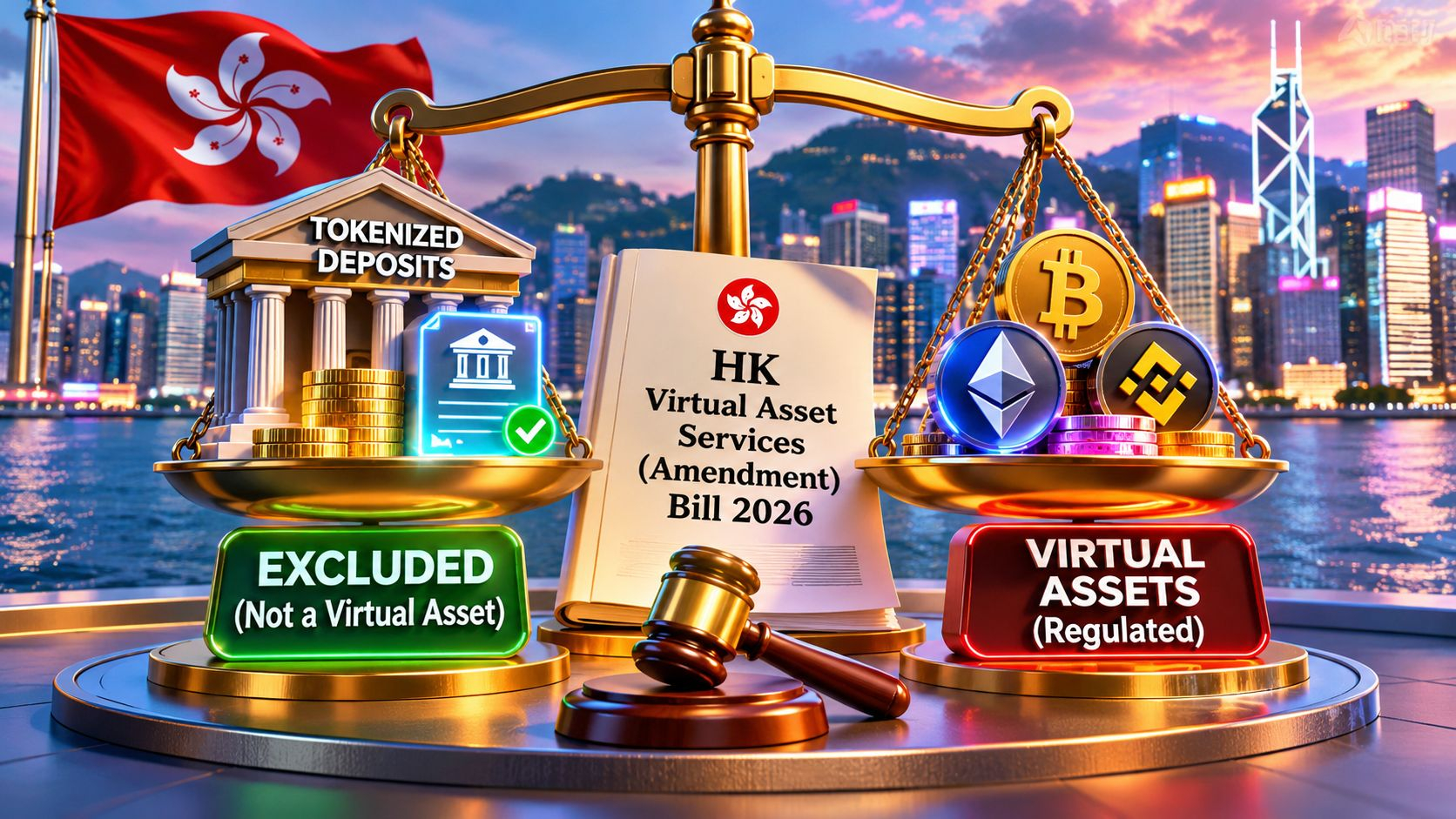
🏛️ HK Bill Would Exclude Tokenized Deposits From Virtual Assets 🏦
Imagine depositing money in a bank, receiving a digital token in return, and then discovering that regulators want to treat it differently from ordinary cryptocurrencies.
That distinction is becoming increasingly important in Hong Kong's evolving digital finance landscape.
The key distinction is that a tokenized bank deposit represents a claim against a bank. It is fundamentally different from a freely traded crypto asset, even if both use blockchain technology.
Hong Kong published its Virtual Asset Services Legislation (Amendment) Bill 2026 in the Gazette on November 20. The proposal expands licensing requirements to virtual asset dealing, advisory, management and custody services.
My take: This is about regulatory clarity, not hostility toward blockchain. Applying identical rules to bank deposits and investment-oriented crypto assets simply because both are tokenized could create unnecessary barriers.
The distinction could help banks develop tokenized payment and settlement infrastructure while keeping crypto-related financial services under appropriate supervision.
Another important development is Project EnsembleTX, which is advancing 24/7 interbank settlement using tokenized deposits and central bank money.
However, the bill is not yet law. Its first reading is scheduled for December 2, 2026. The legislative process and detailed regulatory implementation still matter.
The bigger opportunity is simple: bringing traditional banking onto blockchain without confusing digital money with digital investment assets.
Will this regulatory separation make Hong Kong a stronger global hub for tokenized finance?
Disclaimer: This article is for educational purposes only, not financial or investment advice.
#HongKong #Tokenization #GrowWithSAC $DODO $ETHFI $NIGHT
🏛️ HK Bill Would Exclude Tokenized Deposits From Virtual Assets 🏦
Imagine depositing money in a bank, receiving a digital token in return, and then discovering that regulators want to treat it differently from ordinary cryptocurrencies.
That distinction is becoming increasingly important in Hong Kong's evolving digital finance landscape.
The key distinction is that a tokenized bank deposit represents a claim against a bank. It is fundamentally different from a freely traded crypto asset, even if both use blockchain technology.
Hong Kong published its Virtual Asset Services Legislation (Amendment) Bill 2026 in the Gazette on November 20. The proposal expands licensing requirements to virtual asset dealing, advisory, management and custody services.
My take: This is about regulatory clarity, not hostility toward blockchain. Applying identical rules to bank deposits and investment-oriented crypto assets simply because both are tokenized could create unnecessary barriers.
The distinction could help banks develop tokenized payment and settlement infrastructure while keeping crypto-related financial services under appropriate supervision.
Another important development is Project EnsembleTX, which is advancing 24/7 interbank settlement using tokenized deposits and central bank money.
However, the bill is not yet law. Its first reading is scheduled for December 2, 2026. The legislative process and detailed regulatory implementation still matter.
The bigger opportunity is simple: bringing traditional banking onto blockchain without confusing digital money with digital investment assets.
Will this regulatory separation make Hong Kong a stronger global hub for tokenized finance?
Disclaimer: This article is for educational purposes only, not financial or investment advice.
#HongKong #Tokenization #GrowWithSAC $DODO $ETHFI $NIGHT