

It was a week in which an entire market narrative began to change.
In just five days:
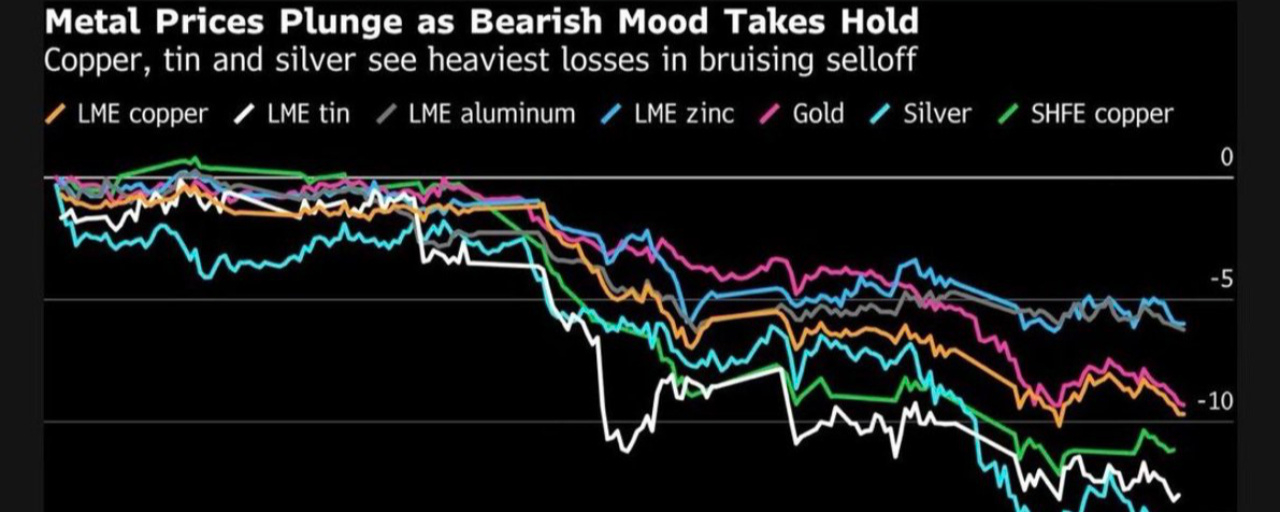
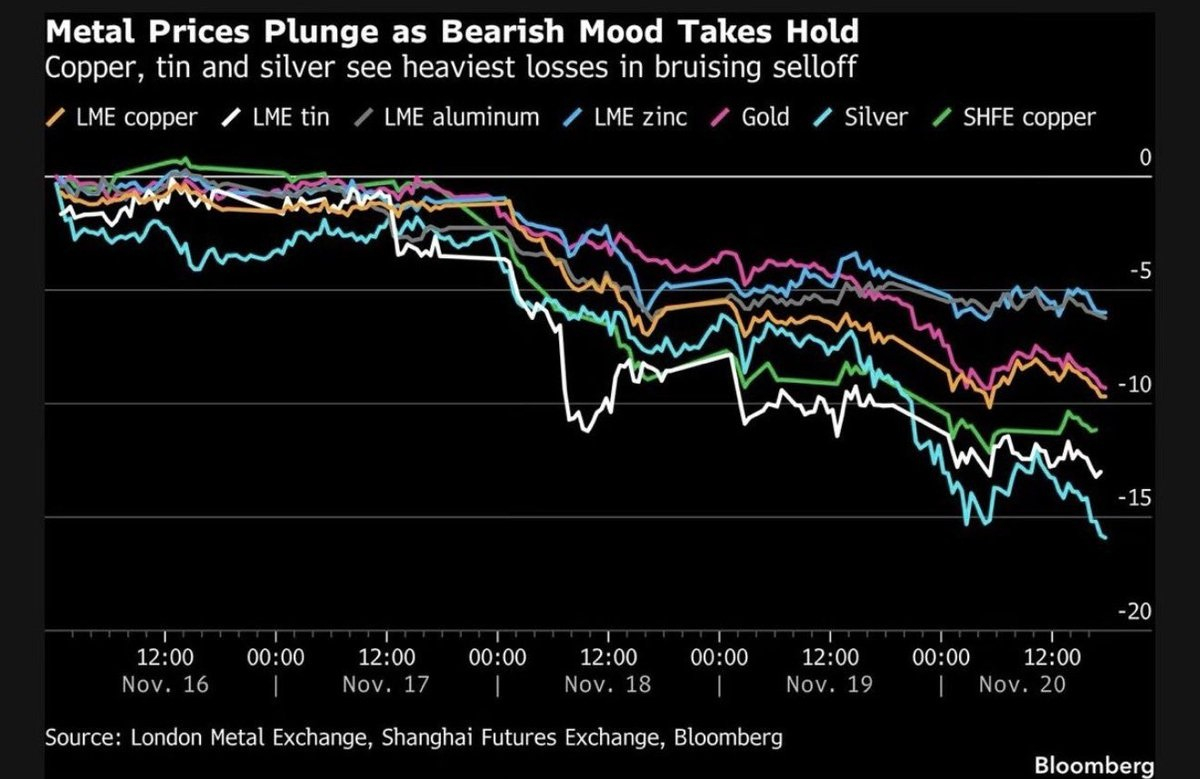
Silver fell more than 16%. $XAG
Tin dropped over 12%.
Shanghai copper lost 12%, its worst week in 15 years.
London copper fell 9%, marking its sixth consecutive weekly loss.
Even gold, the traditional safe haven, dropped nearly 9%.
This wasn't one metal falling. Almost the entire metals market sold off simultaneously.
When gold and copper decline together, the issue goes beyond supply and demand for any single metal. It signals a broader shift in global market sentiment.
Four factors drove the selloff:
1. The AI expectations bubble is deflating.
Copper rallied on expectations that data centers and power grids would consume unprecedented quantities. Then Nvidia, despite strong results, signaled greater discipline in AI spending. One statement was enough to shake the market. Prices had been driven by expectations, not actual consumption.
2. The dollar is at a 19-month high.
A stronger dollar makes metals more expensive for buyers using other currencies, weighing on demand.
3. The Fed is signaling rate hikes, not cuts.
Markets are increasingly pricing in a quarter-point hike in December. Since gold pays no yield, higher bond yields increase the opportunity cost of holding it.
4. China is weakening.
Retail, property, and industrial production data are all disappointing. China remains the world's largest metals consumer.
Copper entered bear-market territory just ten weeks after reaching an all-time high. Major mining companies lost roughly $127 billion in market value in a single week.
But here's the contradiction:
Physical copper inventories in China remain tight, and import premiums are near record levels. Spot aluminum is also trading at a historic premium to futures.
The metal is still needed. What collapsed was the financial bet on it.
That distinction between the paper market and the physical market is this week's biggest lesson.
What does this mean for our region?
Gold is not a safe haven in every situation. It can protect against inflation and local currency depreciation, but it is not immune to a strong dollar and rising interest rates.
In economies where gold is priced in dollars and then converted into local currency, a global decline in gold may be partially offset by local currency depreciation. Watch both prices, not just one.
Countries that export metals and depend on those revenues could face growing budgetary pressure in the coming months.
Most importantly, U.S. monetary policy is now driving markets more than almost anything else. If you don't follow the Fed, you don't understand gold prices in the local market.
The bottom line:
Markets aren't punishing metals. They're repricing the future.
And when excessive expectations begin to unwind, everything built on them can fall even gold.