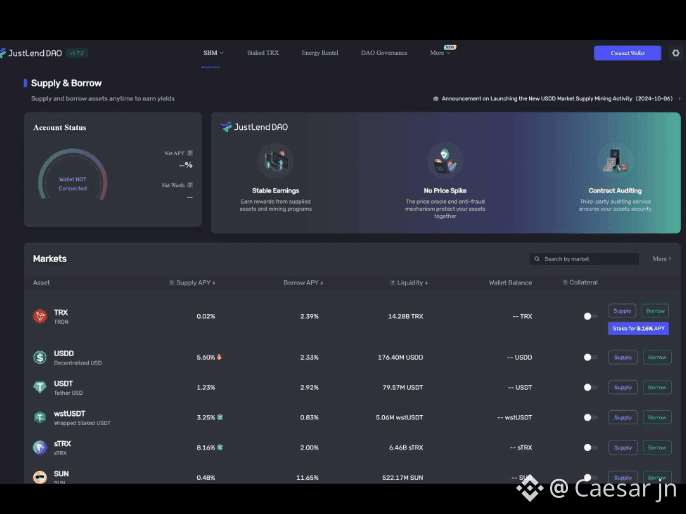
JUSTLEND DAO: THE REAL TEST OF A LENDING PROTOCOL IS HOW IT MANAGES CAPITAL AND RISK.
One aspect of DeFi I find particularly interesting is how protocols make liquidity useful without overlooking the risks that come with lending and borrowing.
This is where JustLend deserves a closer look.
Built on TRON, JustLend provides a decentralized money market where users can supply supported digital assets to earn interest or borrow against eligible collateral.
But what I find more interesting is the distinction between its two lending models.
CAPITAL EFFICIENCY AND RISK ISOLATION
SBM V1 follows a cross-collateral approach. It allows supported assets within a shared lending market to contribute to borrowing capacity. This offers flexibility and capital efficiency.
SBM V2 takes a different approach through isolated collateral markets and a dual-layer Vault and Market structure.
Each market operates with defined collateral and borrowing parameters. This helps contain risks associated with individual collateral assets rather than allowing them to spread across the entire lending structure.
V2 also introduces an Adaptive Curve Interest Rate Model, which adjusts borrowing and supply rates according to market utilization.
WHY THIS MATTERS
I believe the future of DeFi lending should not be measured simply by how much liquidity a protocol attracts.
The more important questions are how efficiently that liquidity is allocated, how borrowing demand is managed and what happens when collateral values change.
A lending protocol must balance opportunities for suppliers and borrowers with the responsibility of protecting the wider system from excessive risk.
That balance is not easy to achieve, but it is essential for sustainable DeFi infrastructure.
What interests me about JustLend is that its V1 and V2 models approach this challenge differently, giving users distinct lending structures rather than treating every market as if it carries the same risk.
For me, this is the kind of development worth examining when evaluating the maturity of DeFi on TRON.
#TRONEcStar