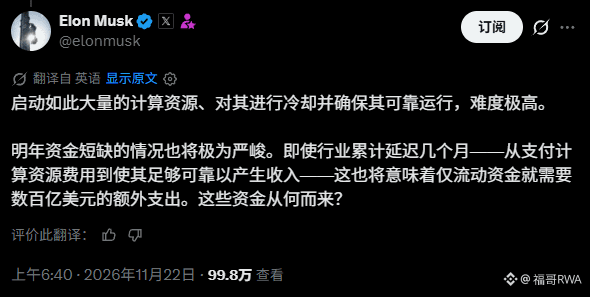
Look at it from a different angle: the AI industry isn’t “short on money”—AI financing is shifting from “venture capital narratives” to “infrastructure debt.” The money hasn’t disappeared; investors are simply no longer willing to take on equity risk during the gap between “buying GPUs” and “generating revenue.”
What’s truly scarce isn’t dollars, but assets that can secure long-term power purchase agreements, obtain grid connection approvals, and lock in long-term contracts with major customers. The plunge in capital markets doesn’t necessarily mean people fear demand won’t materialize; it may mean they’re reassessing the denominator: AI companies are shifting from growth stocks to asset-heavy utilities, so of course the valuation framework has to change.
So “the entire industry collectively delaying by a few months” looks more like a localized risk than an inevitable industry-wide outcome. The giants will use their own cash flows and long-term contracts to prioritize delivery. Those getting squeezed out are pure-play rental providers with no long-term contracts, no power, and no revenue beyond computing.
My view: don’t just watch “who runs out of cash first”; pay closer attention to “who has power, land, and long-term contracts.” Over the next year, money will continue flowing toward energy and the power grid, rather than being distributed evenly across all AI companies. A stagnant share price doesn’t mean technological progress has stopped; it just means capital markets are starting to price in “physical infrastructure.”