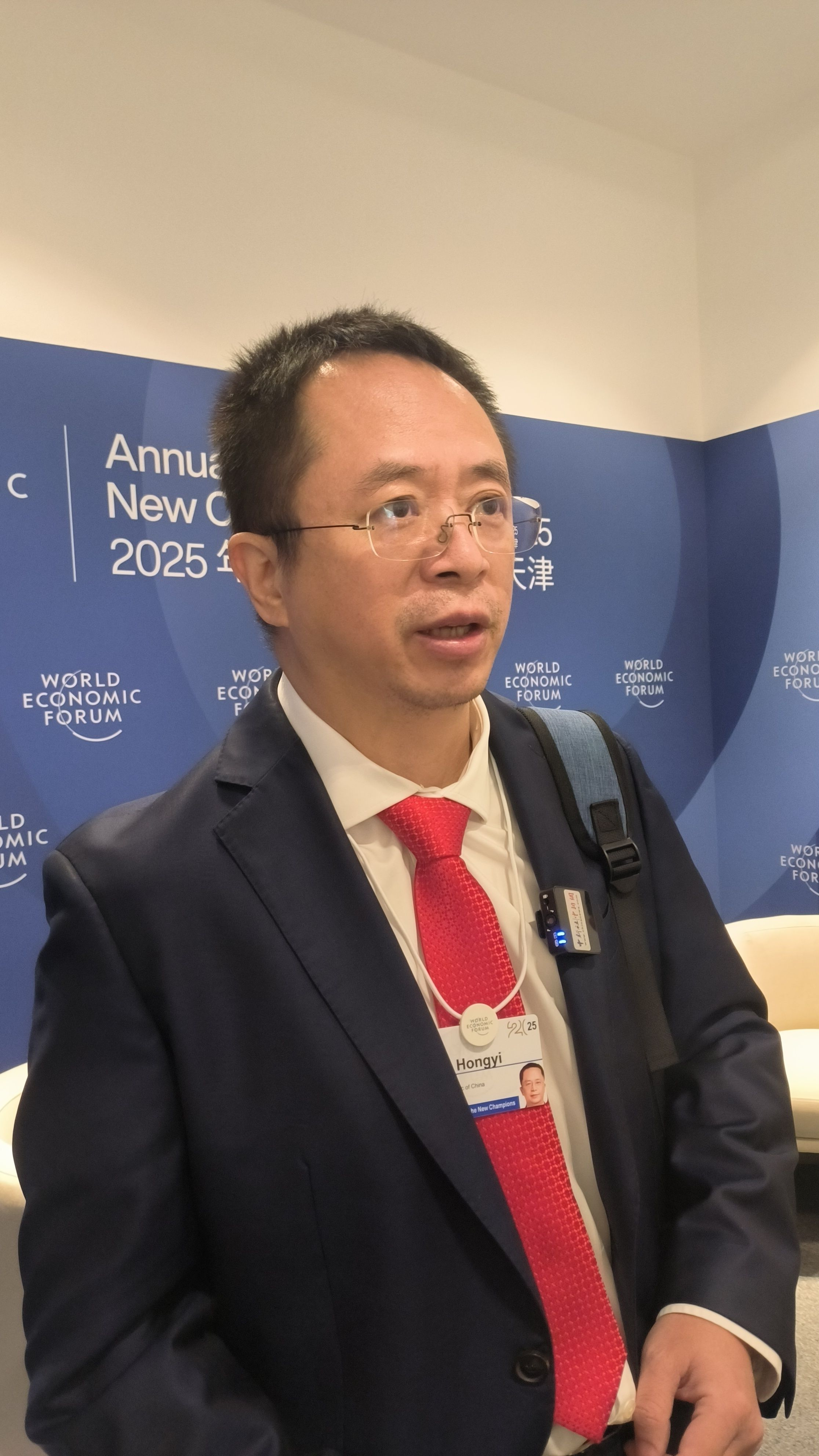


Zhou Hongyi’s “miscalculation” is not worthy of the slightest sympathy. His investment of a few million dollars in ByteDance’s Series B was a stroke of genius. But to raise money for his own business, he actually sold out on the eve of ByteDance’s takeoff. This was no mere investment decision: it was a veteran internet entrepreneur completely losing his nerve in the game of capital, trading one of the world’s top-tier assets for a ticket to the abyss of losses.\r
The story itself isn’t complicated, but the more closely you look, the more astonishing it gets.\r
In September 2013, ByteDance was still raising its Series B. The round totaled $10 million, with DST Global and Qihoo 360 as investors. At the time, Zhang Yiming was just a young entrepreneur trying to make a name for himself in Zhongguancun’s startup scene. Toutiao had launched only a little over a year earlier, and the general view of this algorithmically powered news app was that it was “fresh, but had no real moat.”\r
Zhou Hongyi got in at this point, too. A stake worth a few million dollars was no small amount in the overall round, and in return he got only a tiny slice of equity. His judgment was certainly impressive—let’s not forget that even many professional VCs hadn’t made a major bet at the time.
By the end of 2016, ByteDance had just completed its $1 billion Series D round, bringing its valuation to around $11 billion. Zhou Hongyi exited completely that same year, and the multiple on his paper gains was impressive. In any ordinary investment case, this would be textbook execution.
The question is what he did with that money.
In those years, 360 was busy taking itself private from the U.S. stock market. The entire buyer group needed an astronomical amount of cash to buy the company back. According to accounts pieced together by outside observers, the most valuable and easiest-to-liquidate asset Zhou Hongyi held was his ByteDance stake. That’s why many people interpreted his move as “getting off the train early.”
A few years later, he pivoted and bet on Neta Auto. In October 2021, 360 announced plans to invest a total of 2.9 billion yuan and lead Neta’s Series D round. It initially put up a very real 1.9 billion yuan, at one point holding a 16.594% stake and becoming the largest shareholder outside the management team. Zhou Hongyi himself got involved as a product manager.
We’ve all seen the situation Neta Auto has faced in recent years. In 2022, it briefly topped annual sales among China’s new EV makers, delivering 152,100 vehicles. But that crown came at the cost of cumulative losses of around 18.3 billion yuan over three years, with an average loss of more than 80,000 yuan per vehicle.
Sales fell to 127,500 vehicles in 2023, then plunged to 64,500 in 2024. Production at its three major bases in Tongxiang, Nanning, and Yichun was suspended one after another, and reports of unpaid wages and suppliers showing up to demand payment kept coming.
In June 2022, 360 issued an announcement transferring, for zero yuan, the equity corresponding to the 1 billion yuan it had yet to pay in, and abandoning any further capital injection. Its stake fell to 11.4266%. In 2022 and 2023, 360’s financial reports recorded a combined loss of around 1.3 billion yuan on this investment.
In June 2025, the Jiaxing Intermediate People’s Court ruled to accept the bankruptcy restructuring application of Hozon New Energy. In March 2026, founder Fang Yunzhou and former CEO Zhang Yong were listed as judgment debtors subject to enforcement for failure to comply. By April 2026, Neta had entered bankruptcy liquidation, and the full 1.9 billion yuan investment was written down to zero.
Zhou Hongyi himself publicly backed Neta several times, appearing in livestreams to sell its cars and getting hands-on. He even criticized Neta in public for “always congratulating itself.” After all that effort, the situation still didn’t fundamentally improve. On September 15, 2026, when asked at the Fifth Beidou International Summit on Large-Scale Applications whether he would invest in new energy vehicles again, he answered bluntly: “I’ve already taken a loss once. I won’t get back in.”
Meanwhile, ByteDance’s valuation had long since surpassed hundreds of billions of dollars. TikTok was thriving around the world, and Douyin had become one of China’s most powerful traffic magnets.
And so, the fortunes of those two investments diverged on the same timeline.
After hearing this story, many people instinctively label Zhou Hongyi as someone who “sold too soon,” then sigh, “The hardest thing is holding on.” That conclusion isn’t wrong, of course, but it’s too shallow.
What’s really worth thinking about is why Zhou Hongyi chose to cash out at that particular moment.
It’s not that he didn’t understand the internet. Having built 360 to that scale, he understood traffic and platform dynamics no less than the average investor.
So why did he still leave?
The answer may lie in a detail that’s easy to overlook. For someone like Zhou Hongyi, building cars was never just a financial investment. It was an obsession with becoming a “disruptor” once again in the new energy vehicle sector.
Once that obsession takes hold, the need for capital becomes urgent. And an early-stage equity stake with relatively low liquidity naturally becomes the first thing to be sacrificed.
In other words, he may not have sold ByteDance because he was bearish on it. It may simply be that he had more pressing matters to deal with in those years, and ByteDance ranked lower on his list of priorities.
That’s what makes this story truly frustrating.
It wasn’t that his judgment was poor. It was that he used a highly certain asset to fund a highly uncertain bet.
The value of that ByteDance stake was essentially the execution power of Zhang Yiming and his team delivering results. Zhou Hongyi just had to sit back and wait.
The Neta debacle tested the ability to coordinate the entire automotive industry chain, manage the supply chain, and build a brand—none of which were part of 360’s DNA. In a livestream in 2024, he himself admitted that from marketing to product planning, Neta was “always congratulating itself.” $BNB