

Bottom line: The message you saw most likely mixes several true events into one false story. I checked the publicly available recent developments in U.S. crypto legislation and regulation and found no record of the “SEC setting up a new crypto certification office, voted down by Democrats.” What actually happened is part of a longer story: the Digital Asset Market Clarity Act (CLARITY Act) failed in a Senate procedural vote on September 15, 2026, with 49 votes in favor and 50 against—11 short of the 60 votes needed to open debate. Every Democrat present voted against it. And Democrats had already swept both chambers of Congress in the November 3 midterm elections; they were not “taking control next month.” As for the claim that “Democrats fear political donations from the crypto industry,” it is broadly on the right track, but gets the details wrong: Democrats’ main objection is the lack of safeguards against Trump and his family profiting from crypto businesses. They had even held an “Anti-Crypto Corruption Week” specifically to attack this issue.
Treating fake news as a bullish signal and calling a real negative catalyst a “golden buying opportunity” are essentially the same mistake. Let’s clarify what’s actually happening in the market and what the real drivers are.
I. Market update: The most panicked night is behind us, but don’t mistake a rebound for a reversal
Ethereum did indeed fall below $1,700 on November 21—and much further than that. It bottomed out near $1,538 that day, down more than 10% over 24 hours. But by the morning of November 22, ETH had climbed back above $1,680, rebounding more than 3% on the day. Bitcoin’s move was even more dramatic: it plunged to around $55,000 intraday the previous day, its lowest level since September 2024, then reclaimed $60,000 by the morning of the 22nd.
This detail matters. The “everyone in the group chat was panicking” quote you cited refers to late Friday night, by which point the market had already staged its first V-shaped recovery. The Fear and Greed Index was still stuck at 12, in the extreme fear zone, which shows that sentiment hadn’t recovered—only the most urgent selling had passed.
II. The three real drivers behind this downturn have nothing to do with the “SEC office”
The first is the collapse in AI stocks. On November 20, the Philadelphia Semiconductor Index plunged 10.73% in a single session, falling 17.13% for the week—its worst weekly performance since September 2001. Nvidia dropped more than 14% in a day, while the Nasdaq plunged roughly 1,200 points late in the evening. CoinShares’ head of research said bluntly that this crypto downturn was driven more by selling in AI stocks than by problems within the crypto industry. Even gold and silver were falling, suggesting the market wasn’t seeking safe havens but raising cash.
The second is that ETFs have turned from an “entry point” into an “exit.” On November 19, U.S. spot Bitcoin ETFs saw net outflows of $582 million in a single day, including $541 million from BlackRock’s IBIT—the fund’s largest daily outflow since its launch in January 2024. The following day, they saw further net outflows of about 9,745 Bitcoin. The picture was similarly bleak for Ethereum: net outflows were about $131 million on November 19, followed by another $13.2 million on November 20. Paul Howard of market maker Wincent put it plainly: ETF outflows say it all— institutional investors haven’t really stepped in to buy.
The third is a cascade of liquidations driven by leverage. Kaiko analyst Andrew Yang noted that leverage was key to the rapid sell-off: a breakdown triggers liquidations of highly leveraged longs, which push prices lower and trigger the next wave. In 24 hours, about 290,000 traders were liquidated across the market, for a total of roughly $1.893 billion; long positions accounted for 91%. There were also actions by “structural sellers,” such as miners resuming sales and Strategy selling Bitcoin to pay preferred-stock dividends. The latter involved just 32 coins, but exposed the vulnerability of highly leveraged corporate holdings.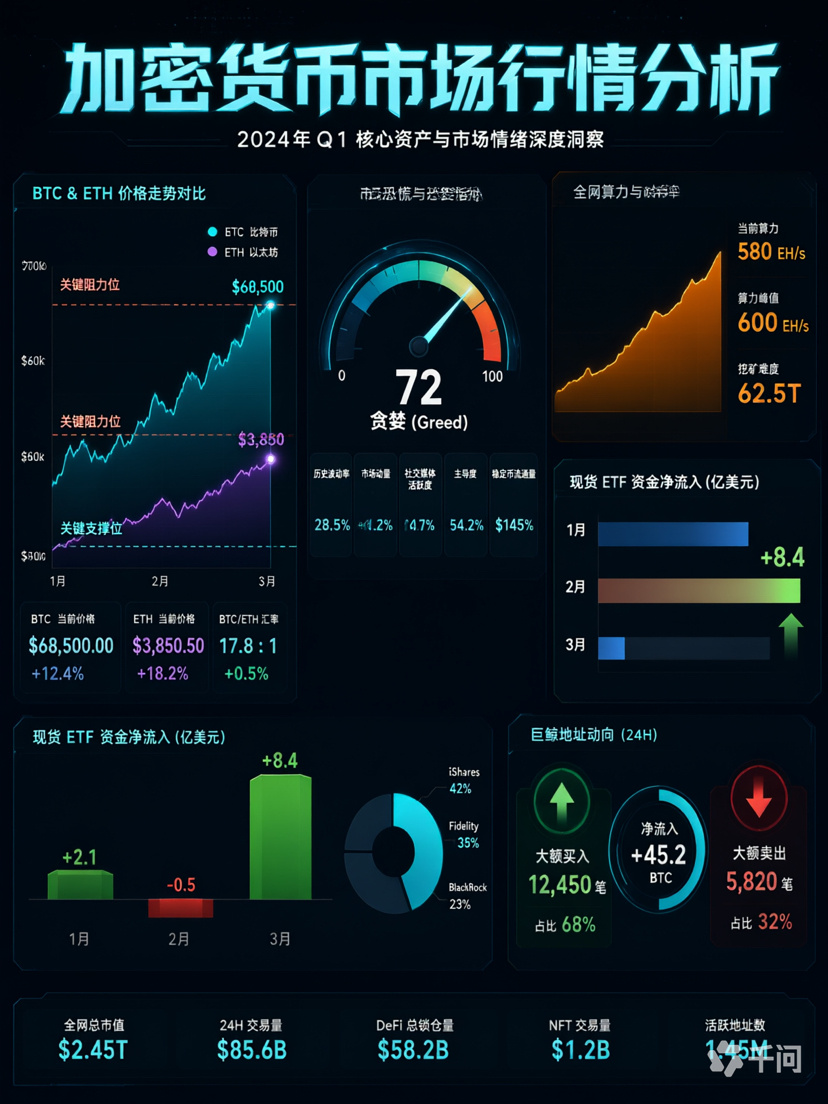
III. Is “the bill is dead” bullish or bearish? The answer is more complicated than you think
First, let’s correct a common misconception: no legislation doesn’t mean no regulation. Throughout 2026, the SEC and CFTC have been building rules piece by piece under their existing authority—clarifying rules for Bitcoin perpetual futures, issuing a joint token classification, proposing fundraising and custody rules, and opening consultations on retail crypto trading. The day after the Senate vote failed, the SEC announced an “innovation exemption” for trading tokenized stocks. The rules are still being written; it’s just that the writers have shifted from Congress to regulators.
Now consider the direction of travel. After Democrats took control of both chambers, the balance of power clearly shifted toward the SEC and away from the CFTC. House Democrats are discussing a market structure bill based on Maxine Waters’ consumer protection framework, giving the SEC a greater role and limiting the CFTC’s scope. It could include provisions for segregating customer funds, 24-hour withdrawals, and monthly reserve audits. For exchanges and custodians, this would mean a costlier set of rules: reserve audits, segregated custody, and fiduciary duties would all directly increase operating costs.
So the more accurate assessment is this: the industry-friendly, looser framework has been buried, which is a medium-term negative; but there is no “regulation-free” window. Calling this a “golden window for unfettered growth” confuses legislative gridlock with regulatory easing. TD Cowen’s Jaret Seiberg even believes that Democratic investigations into Trump’s crypto businesses could prevent an industry-acceptable version of CLARITY from advancing for two years.
IV. Technical analysis: Key levels to watch
BTC. The year-to-date low of $57,742 set on July 1 has been decisively broken. That means the “defense of the year-to-date low” has been lost, and attention is shifting to whether new support can form below. In the short term, $55,000–$55,800 is the zone of the November 21 panic low and the starting point for this rebound. Above that, $60,000–$61,000 is a high-volume area and psychological threshold, followed by $62,000–$63,000, the earlier breakdown zone. Some institutional models put the short-term trading range around $53,500–$57,700; a break below $53,500 would open up further downside. Standard Chartered previously cut its year-end target from $150,000 to $100,000 and warned that Bitcoin could first fall to slightly below $50,000 before rebounding. This scenario deserves consideration, but not blind acceptance.
ETH. $1,538 is the panic low for this downturn, while $1,600 is a psychological and structural dividing line. $1,700–$1,800 is the first resistance band for a rebound (and includes the figure you mentioned), while above $2,000 is a previous high-volume zone. ETH is relatively weaker than BTC, in part because of continued ETF outflows and because ETH-related fund flows have yet to settle after the Binance incident.
V. Trading strategy: Consider scenarios instead of guessing the direction
If you hold spot. “Just hold” isn’t a strategy; it’s simply an action. The questions you really need to answer are: Will you be able to leave this money untouched for several years? Can you withstand another 30% drop? Do you have cash to add to your position in stages? If the answer to all three is yes, dollar-cost averaging in stages during periods of extreme fear has historically been a reasonable approach. If you can’t answer yes to any one of them, reduce leverage and exposure first instead of comforting yourself by “locking” your position. If you do add, consider setting tiers—for example, below $55,000, at $53,000–$54,000, and at the $50,000 level—instead of putting it all in while prices are still falling.
If you trade futures. The costliest mistake right now is chasing: chasing shorts near a panic low risks getting stopped out by a rebound at any moment, while chasing longs in a downtrend is like catching a falling knife. A safer approach is to wait for structural signals. A strong daily close that reclaims and holds $60,000–$61,000 would indicate a short-term structural recovery, with $62,000–$63,000 as the next target. If the rebound repeatedly meets resistance around $60,000, a second test of $55,000 or even $53,500 is likely. Place your stop-loss where your entry thesis is invalidated, not at the point where you feel you can no longer tolerate the loss. Consider cutting leverage to less than a third of your usual level, because when liquidity dries up, orders of the same size can cause greater slippage.
Three hard rules. First, don’t trade with money you need for living expenses or money you’ve borrowed. Second, don’t place large market orders late at night on weekends or around major data releases. Third, keep exchange balances separate from long-term holdings. After the Binance incident, this is not optional.
Invalidation signals (Kill-Switch). If any two of the following conditions occur at the same time, the view in this article that the market is “bottoming out within a range” needs to be revised: ETFs record net inflows for three or more consecutive trading days; BTC’s correlation with the Nasdaq falls noticeably and U.S. stocks stabilize; or rate-hike expectations ease significantly after the December FOMC meeting. Conversely, if ETFs continue to see large net outflows and BTC posts a daily close below $55,000, we should acknowledge that the downtrend is continuing.
VI. Risk analysis: Four ways this thesis could be wrong
Macro. The December 8–9 FOMC meeting is the biggest potential source of volatility. Minutes from the November 19 meeting showed that almost all officials thought further rate hikes might be needed. CME data put the probability of a 25-basis-point hike in December at about 92.7%. But on Friday night, OIS contracts tied to the December meeting showed that traders were no longer fully pricing in a hike, with the rate-hike premium falling to 23 basis points. Officials are hawkish, but market pricing is softening. This divergence means volatility could intensify around the December meeting.
Structure. ETF flows are the key factor that will determine the outcome of this market cycle. Deutsche Bank analysts noted that retail investors have been largely absent during this sharp downturn, leaving ETF allocators and corporate treasuries as the main buyers. The amplifying effect of ETF flows on prices is the exact mirror image of how inflows previously drove prices higher. Without buyers returning, any rebound will lack a foundation.
Events. The U.S.–Iran conflict and attacks on oil tankers in the Strait of Hormuz are driving up oil prices and inflation uncertainty. Fund flows have yet to fully settle after the Binance hack, while major tech IPOs, including Anthropic’s, are diverting speculative capital. These are all factors the crypto market cannot resolve on its own.
Regulation. If the Democrats’ SEC-leaning version moves forward, the risk of rising compliance costs and some businesses moving offshore will be priced in again. This runs counter to the narrative that “killing the bill is hugely bullish.”
VII. Final thoughts
The claim that “the White House can’t kill decentralization” is true, but it doesn’t answer whether your account can withstand another 30% drawdown. Markets never reward slogans; they reward sound position management and cash reserves. Those who make it through the cycle don’t do so by stubbornly holding on in the depths of despair, but by having ammunition, discipline, and an exit plan even in the worst of times.
One more important reminder: In mainland China, virtual-currency-related business activities are illegal financial activities and are not protected by law. Participating in trading may result in financial losses that are difficult to recover. The above is for market information and analysis only and does not constitute investment advice. Crypto assets are extremely volatile, and futures and high-leverage trading carry even greater risks. Make your own decisions and bear responsibility for your own gains and losses.#英伟达一个半月市值减少2.7万亿美元 #比特币跌破6万美元,短期能否企稳反弹? #全球股市创三年来最长连跌,投资者避险情绪升温 #贝莱德IBIT单日流出5.41亿美元创纪录 #Anthropic上市次日大跌,股价接近破发 $BTC



