

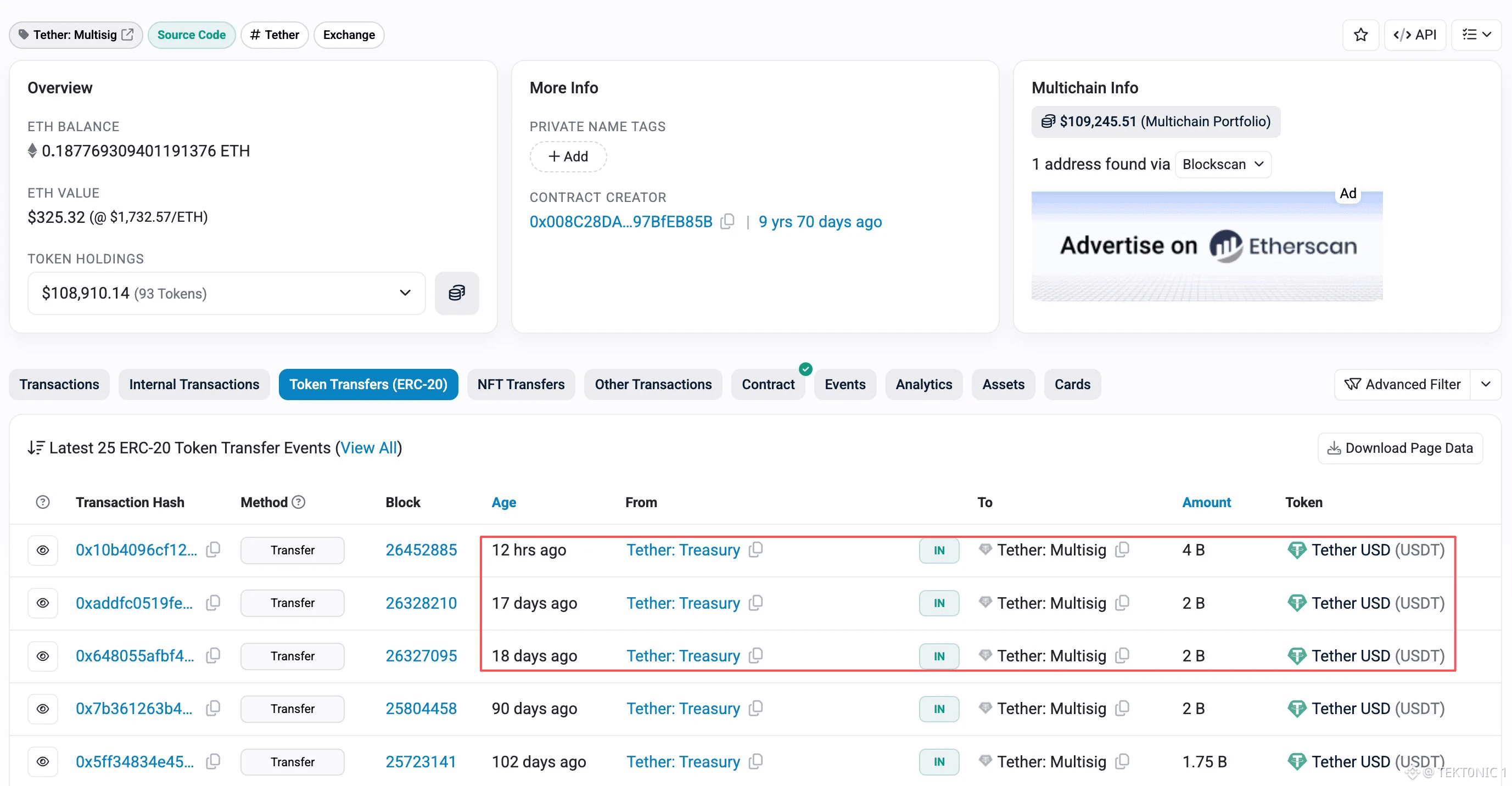
TETHER HAS REPORTEDLY BURNED $8 BILLION IN USDT OVER 20 DAYS. WHAT DOES THIS MEAN FOR STABLECOIN LIQUIDITY? On-chain activity has drawn attention after Tether carried out another major USDT burn, bringing reported burns over the past 20 days to approximately $8 billion. However, there's an important detail behind these transactions. A large portion of the recent burns involves $USDT held in Tether's own treasury rather than tokens actively circulating in users' wallets. For example, on November 20, Tether burned 4 billion USDT on Ethereum from its treasury inventory. This reduced Ethereum's total USDT token supply, but it did not mean that another $4 billion was withdrawn from the market at that moment. Why does this distinction matter? USDT burns can happen when tokens returned through redemptions are destroyed, or when Tether removes previously authorised but unissued tokens from its inventory. These are different events, and neither should automatically be interpreted as evidence of declining stablecoin demand. The more important metric to watch is the change in circulating $USDT supply across all networks. That gives a clearer picture of whether stablecoin liquidity is actually expanding or contracting. A large burn makes headlines, but the net supply movement tells us much more about what's happening in the market. #BTC Price Analysis# #Stablecoins #Macro Insights# #Bullish $BTC
Join global crypto users on Binance Square
⚡️ Get latest and useful information about crypto.
💬 Trusted by the world’s largest crypto exchange.
👍 Discover real insights from verified creators.
Email / Phone number