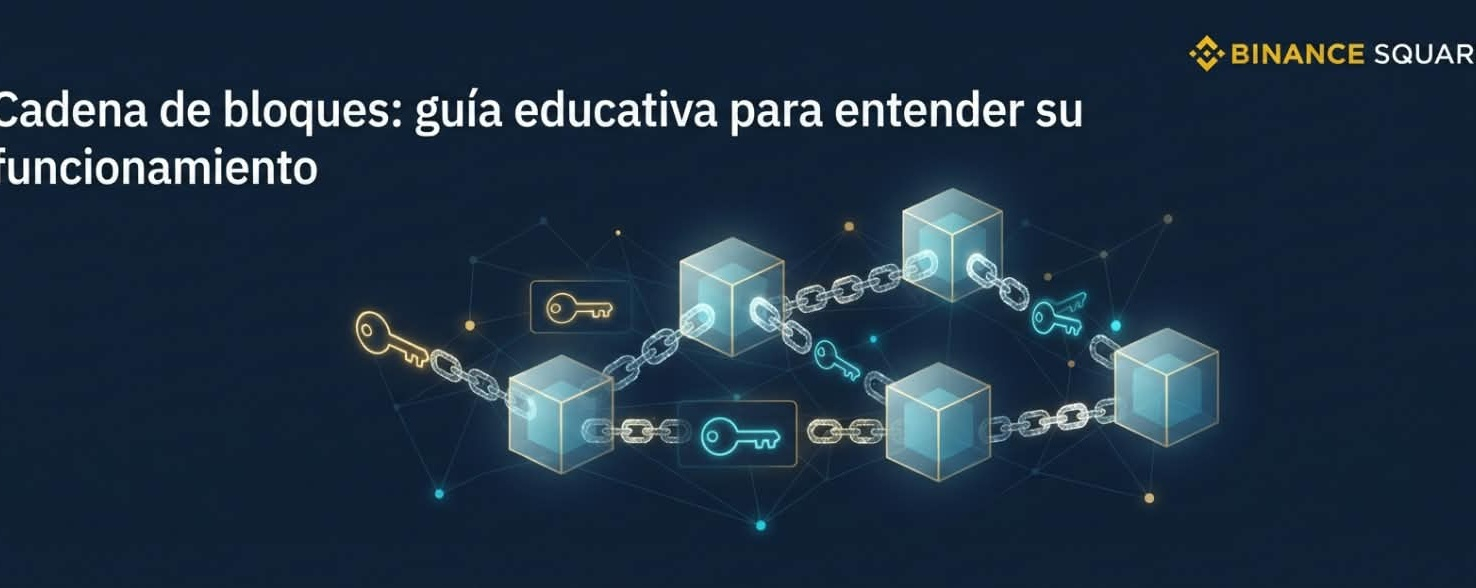

Blockchain is a way to record and share information in an orderly, verifiable manner among multiple participants without relying on a central intermediary. For those new to the topic, it helps to think of it as a shared ledger where each update is reviewed before being recorded.
1. What problem does blockchain solve?
In many traditional systems, a bank, company, or central administrator keeps the records and validates transactions. Blockchain allows different participants to maintain a shared history and independently verify that the system’s rules are followed.
Shared ledger: Each participant operating a node keeps a synchronized copy of the history to consult and verify data.
Preventing double spending: By collectively validating each transfer and updating the ledger, the system prevents the same digital balance from being used twice.
Less reliance on third parties: Protocol rules define how changes are validated, reducing the need to blindly trust a single entity.
2. How are blocks connected, and how is the history protected?
Information is grouped into blocks that are added one after another in chronological order.
Grouping into blocks: Valid operations are collected into a block along with control information, such as timestamps and cryptographic references.
Digital fingerprints (hashes): Each block generates a unique cryptographic code (hash) and takes the hash of the previous block, creating a sequential link.
Detecting alterations: If someone tries to change data in a past block, its hash changes and breaks consistency with the following blocks, allowing the network to detect the discrepancy.
3. Public and private keys: How is an operation authorized?
Unlike a traditional account with a username and password, a blockchain uses public-key and private-key cryptography to prove authorship and control over funds or data.
Public key: This is the visible identifier (or the basis of an address) that others can use to send you assets or verify a signature.
Private key: This is the secret piece of data that signs the operation; whoever possesses it and protects it properly can authorize transfers from that account.
4. Key concepts and educational applications
Although the foundations of cryptographic timestamping date back to the 1990s, the major breakthrough came with the Bitcoin white paper in 2008 and the launch of its network in 2009. Since then, the ecosystem has grown to include programmable networks and multiple use cases.
Consensus mechanisms: These are the rules by which network participants agree on which block is valid and what the correct history is.
Smart contracts: These are programs hosted on the blockchain that automatically execute actions when predefined conditions are met.
Practical applications: In addition to transfers of value, their use in traceability, digital identity, decentralized finance, and asset tokenization is being studied.
5. Best practices for studying this technology
Learning how blockchain works also involves developing prudent everyday habits.
Do your own research (DYOR): Review official documentation, how a protocol works, and what its risks are before interacting with any tool.
Protect your credentials: Never share private keys or recovery phrases, and be wary of unsolicited links or messages.
Distinguish between concepts: Clearly separate what blockchain is, what a specific digital asset is, and what risks each operation entails.
$BTC $ETH $BNB #blockchain
#EducacionCripto @Elise_Crypto