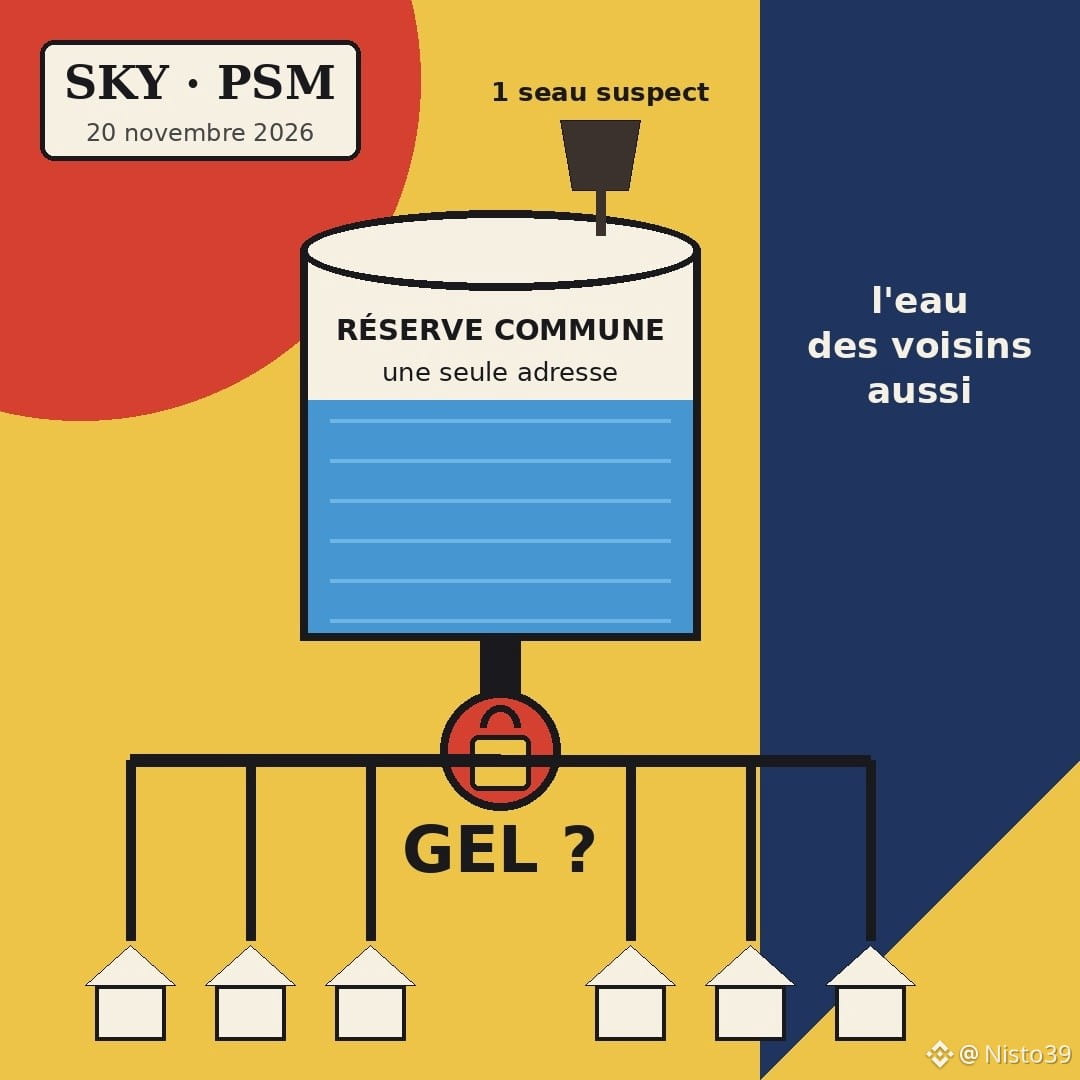
Sky doesn't have a North Korea problem. Sky has a tank problem. $SKY
In 24 hours, the SKY token lost around 16 to 19% (CoinCodex, CoinMarketCap), and more than $1.5 billion in $USDC flowed out of its main reserve (CoinDesk, Nov. 19).
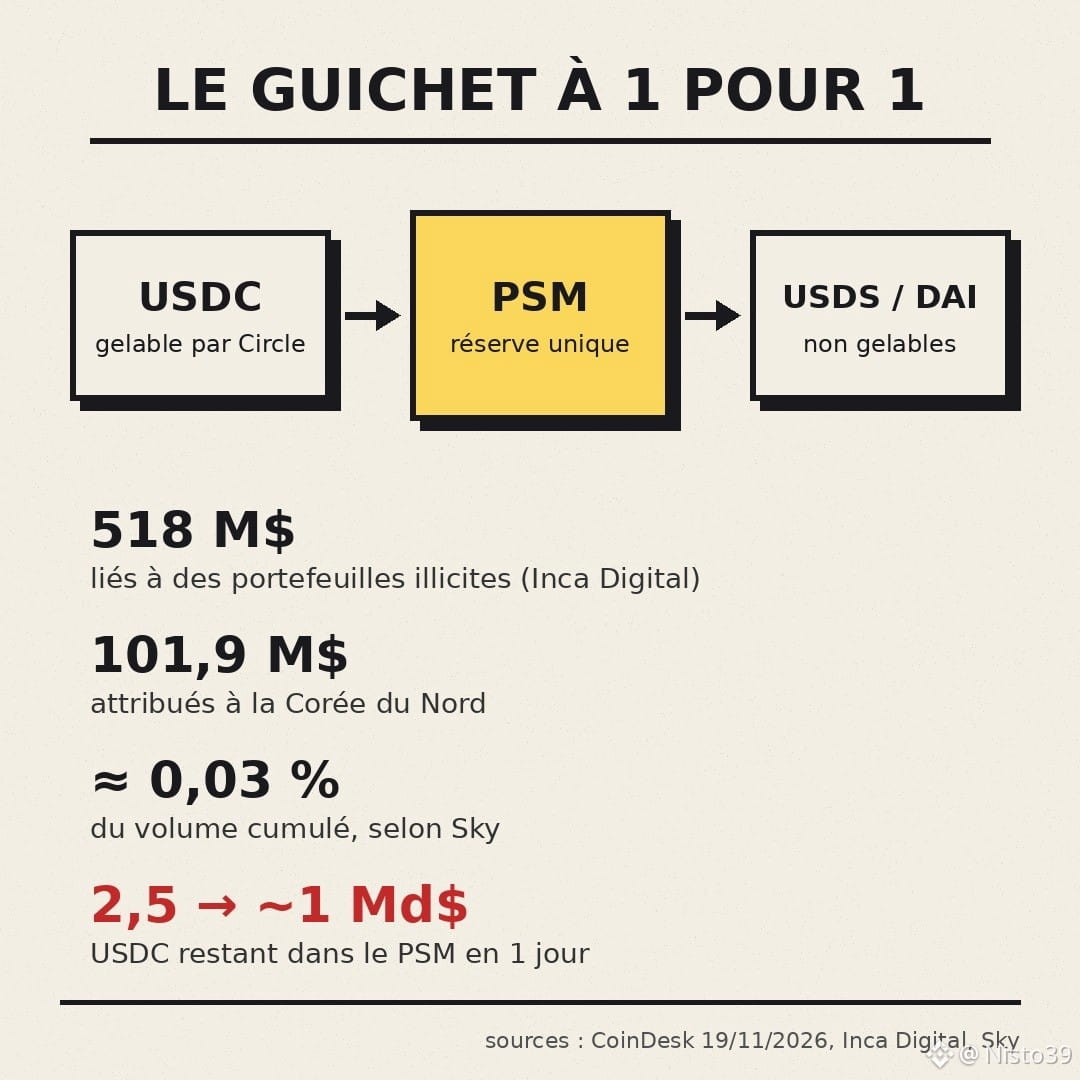
That reserve is the PSM (Peg Stability Module): a counter where you can exchange USDC for Sky's digital dollars, USDS or DAI, at a 1:1 rate. It's what keeps them pegged to $1.
The spark: an investigation by Inca Digital published by CoinDesk. Over the past few years, $518 million in transactions linked to hackers, phishing, or sanctioned entities passed through this counter. That includes $101.9 million attributed to North Korea, and $91.5 million in the 10 days after the Bybit hack in February 2025.
Sky's response: around 0.03% of $968 billion in cumulative volume, routed through third-party aggregators, not its own websites, which screen wallets. Its founder, Rune Christensen, says USDS remains overcollateralized, with around $10 billion in backing.
Both versions can be true. That's where the problem lies.
The PSM's USDC sits in a single address, and Circle can freeze an address by court order. One suspicious bucket, and the whole tank could be shut off, including water for honest neighbors. No freeze has happened. The market didn't wait: around $2.5 billion in USDC in the PSM the day before, $1 billion afterward, and USDS lost more than 30% of its market cap ($3.2 billion). Its price is holding at $1.
My take: that 0.03% is reassuring about the water's purity, not the plumbing.
Which would you prefer: a stablecoin open to everyone but backed by a reserve a third party can block, or an entry-screened model like Ethena's? And why?
#Sky #DeFi #Stablecoin #USDS