
Semiconductors surge and then retreat as Korean, Hong Kong and A-share funds stage a “mass exodus”: where is the money hiding?
U.S. semiconductor stocks replayed the same old script overnight. The Philadelphia Semiconductor Index surged early in the session, only to close down 2.41%. A short-seller report sent AMD tumbling 7%, while Nvidia reversed course from a gain of nearly 5% to end in the red.
The money is moving in plain sight: pulling out of AI computing power and data centers and seeking shelter in defensive and beaten-down stocks. Memory stocks held up relatively well, becoming one of the few corners of the AI sector still standing.
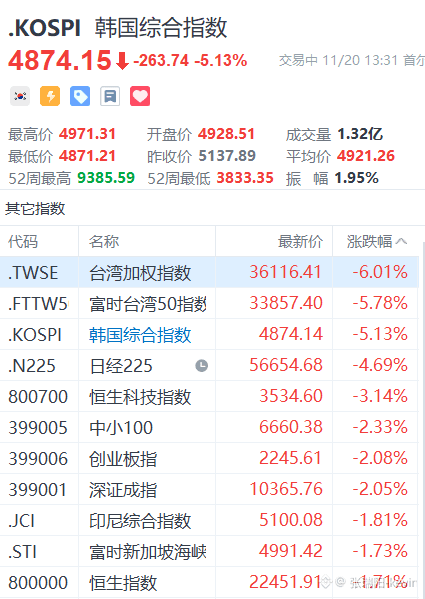
Asia-Pacific markets opened to a panic sell-off.
South Korea was hit hardest, with the KOSPI falling more than 4% at one point. Foreign investors and institutions dumped several hundred billion won worth of stocks combined in the morning, while retail investors tried to catch the falling knife. Money flowed out of machinery, electronics and telecommunications, funneling instead into the two defensive sectors of electricity and gas, and food, beverages and tobacco.
Southbound funds in Hong Kong, by contrast, bought against the trend, with net purchases totaling HK$3.958 billion for the day, mainly in Tencent, SMIC and Meituan. Alibaba saw net sales of 450 million, while NetEase was hammered, plunging 18%.
A-share institutional investors were even more decisive: semiconductor stocks saw a single-day outflow of 7.16 billion, and electronics nearly 7 billion. They turned around and increased holdings in “safe-haven” sectors such as agriculture, forestry, animal husbandry and fisheries; utilities; general equipment; and publishing.
$KORU $SOXL $KSTR