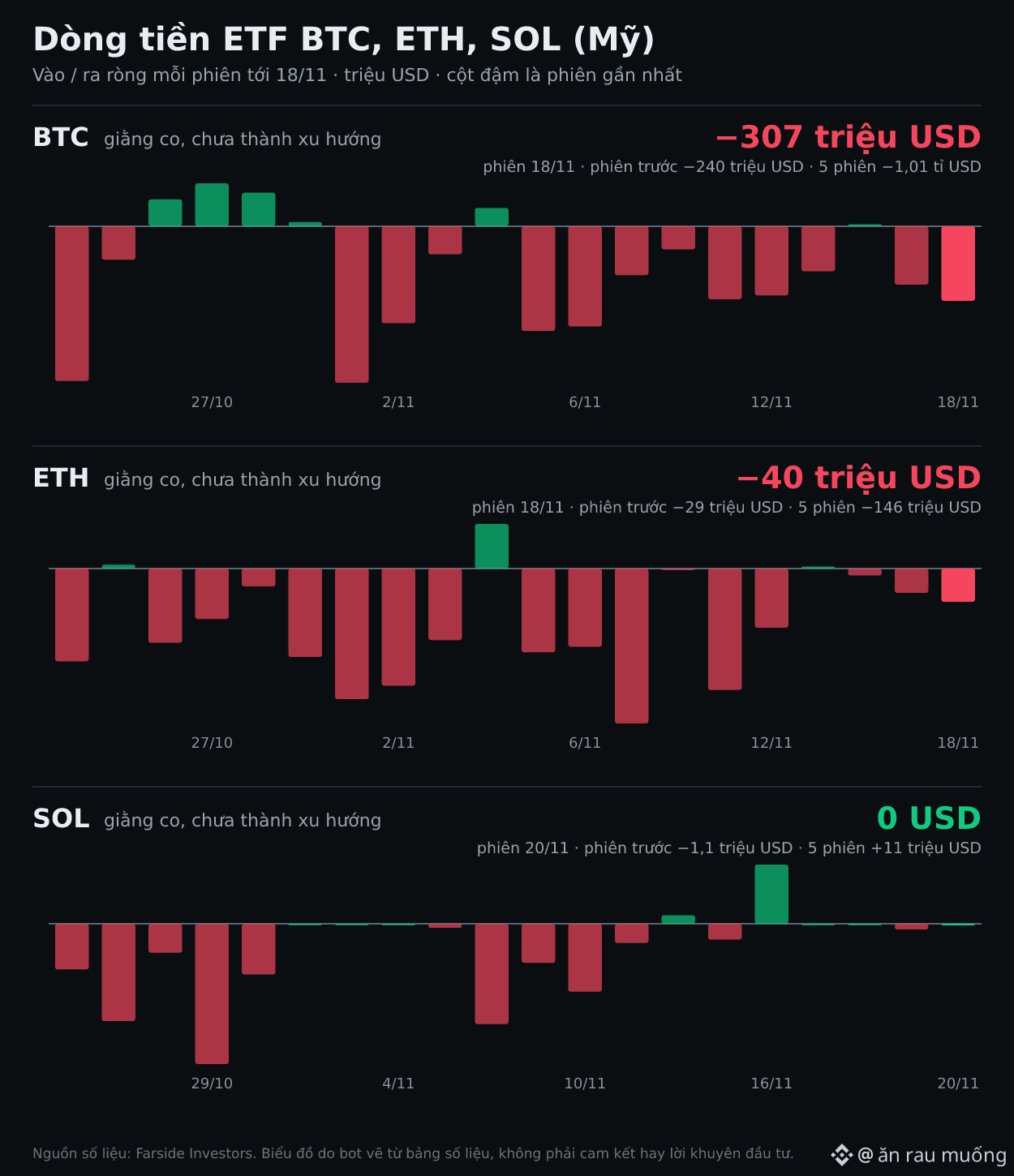
ETF on 18/11: $BTC 62.103 saw $307 million in net outflows for the second consecutive session. Have ETF outflows stopped?
📊 Overview
U.S. Bitcoin ETFs saw $307 million in outflows on 18/11, more than in the previous session ($240 million). Over the two-session period, $546 million flowed out of the funds, with IBIT accounting for 65%. During the same period, BTC fell 2.8%.
🔍 Assessment
This is a significant outflow: the funds saw $3.86 billion in outflows over the past 20 sessions, more severe than 95% of 20-session periods since 2024. From their peak, the funds’ cumulative net inflows have fallen by $8.57 billion to $54.16 billion. Flows have alternated, so there is no trend yet: this session saw −$307 million, the previous session −$240 million, and the past 5 sessions −$1.01 billion (versus −$1.44 billion in the 5 sessions before that).
🎯 Scenarios
Historically, 63 outflow streaks have lasted 2 sessions, as this one has, and usually continued for one more session. One week later, BTC was up in 32 cases and down in 31. Meanwhile, when ETFs have seen outflows of $1 billion or more over 5 sessions, as they have now, BTC was up one week later 39% of the time and down 61% of the time (compared with a usual 52% chance of rising). These two data points point in different directions, so ETF flows alone are not enough to determine price direction. A sign that money is returning: a session with net inflows of at least $30 million, and no further outflows from IBIT.
📌 Other coins
$ETH: Choppy, with no established trend; saw $40 million in outflows on 18/11 and $146 million over 5 sessions.
$SOL: Choppy, with no established trend; no flows on 20/11 and $11 million in net inflows over 5 sessions.
Source: Farside, CoinMarketCap. Historical statistics are not investment recommendations. Manage your capital before placing trades.
#ETF #BTC #ETH #SOL