Binance Futures rolled out six TradFi U-margined perpetual contracts in batches on the afternoon of November 18. Among them were contracts such as $SOXX that track traditional assets. They are settled in USDT and support up to 20x leverage.
People who regularly trade U-margined perpetuals may instinctively approach these contracts the same way: familiar interface, familiar funding rates, but the underlying assets come from a completely different market. Stocks have trading hours, close for periods, and can gap; crypto perpetuals are quoted continuously. During the hours when the underlying market is closed, the contract price is maintained through a tracking mechanism, and order book depth is not the same as when the underlying asset is actually trading.
So when applying what you know about funding rates, leverage, and continuous trading to these contracts, you need to break things down a little further: you’re trading a product that tracks a price, which is distinct from the underlying asset itself and the liquidity of its market. The two markets run on different clocks, so it’s worth considering that separately when making decisions.
Would you apply your usual intuition about funding rates directly to perpetual contracts that track stock prices?
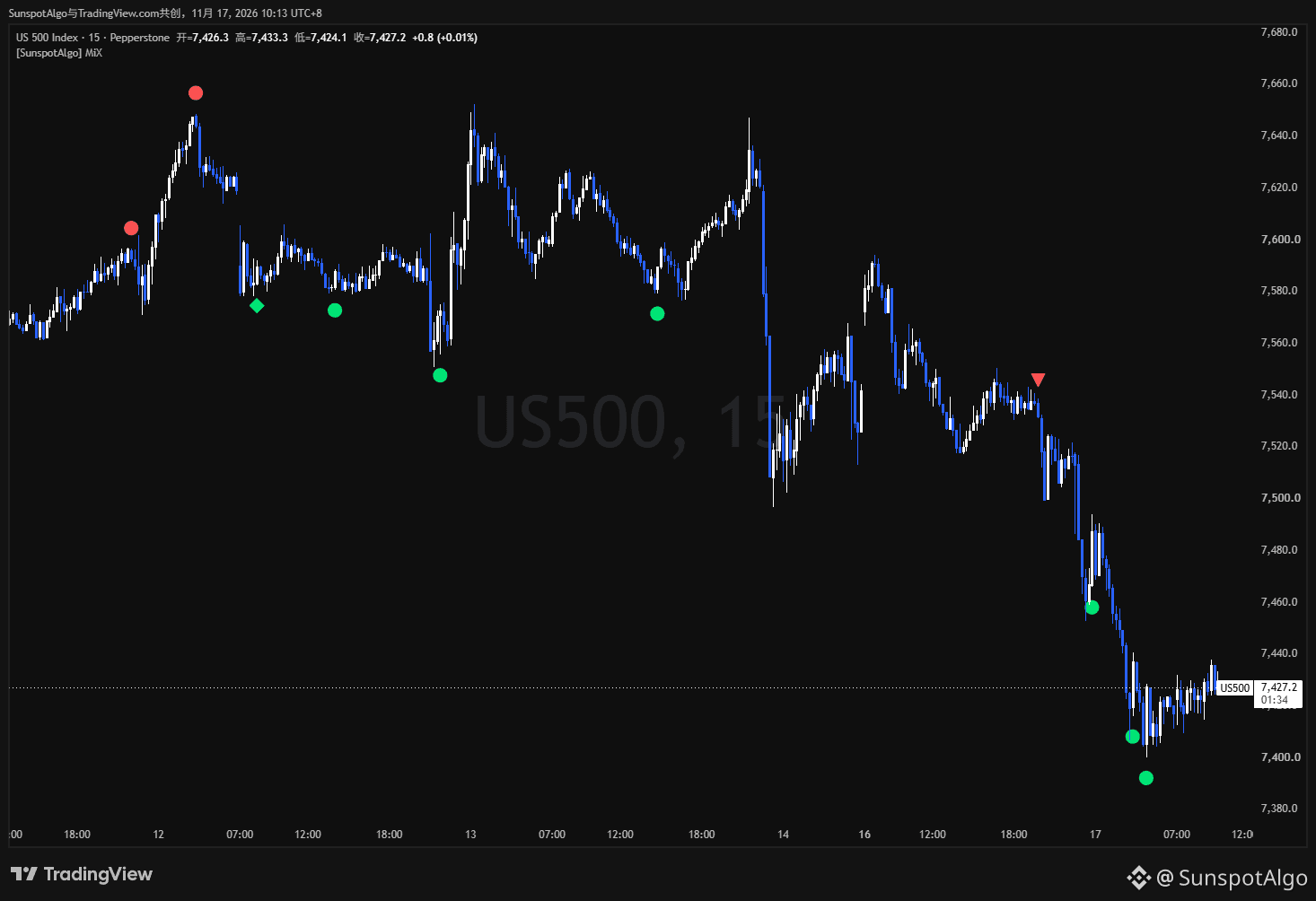
Screenshot from the proprietary MiX signal indicator: a trading signal tool that supports all symbols and timeframes, available on TradingView. Visit the homepage for more information if you’re interested.