
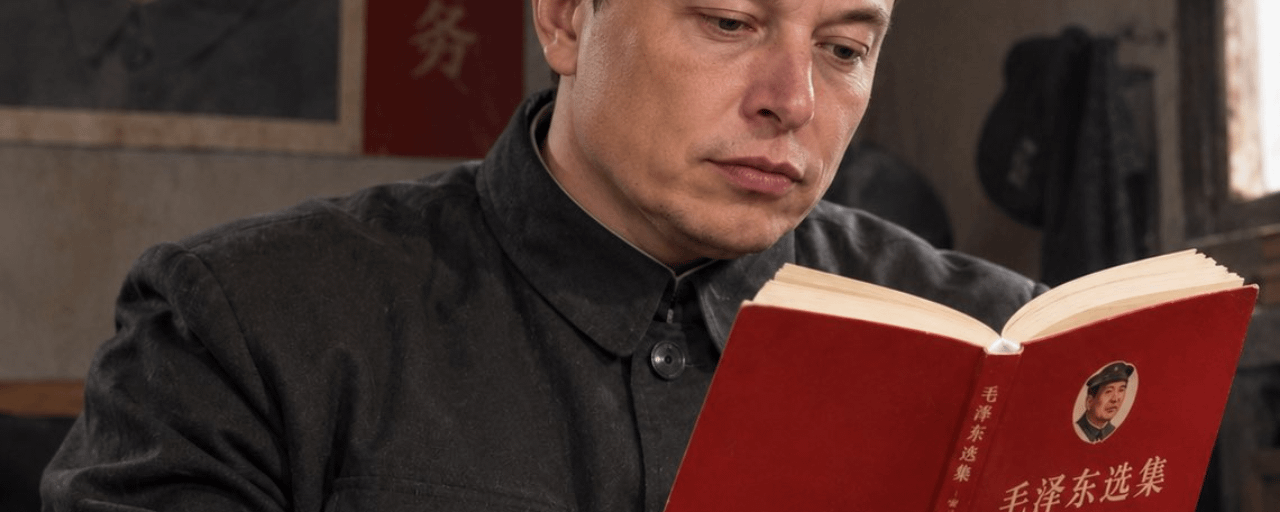

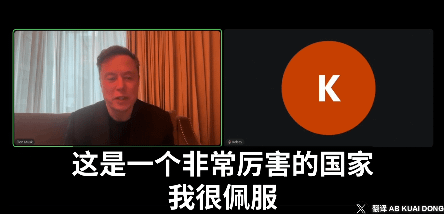
Musk likened Jensen Huang to Michael Jordan in his prime, using an almost brutally blunt analogy: You’re on a winning streak, and then you kick Jordan off the team—“that doesn’t seem like a very smart decision.” The remark’s impact lies not in whether it is precise, but in how it distills the turmoil swirling around Nvidia, AI assets, and global risk assets into a scene everyone can understand: a team that’s winning games has dismantled, with its own hands, the person it can least afford to lose.
And the market’s reaction provided an almost immediate footnote.

I. The one “kicked off the team” wasn’t just a CEO
To Nvidia, Jensen Huang has never been “just a CEO.” The things Musk listed in their conversation—managing the supply chain, eating street food with key suppliers in Korea and Taiwan, decades-long relationships, a deep understanding of technology, and teams turning down higher offers elsewhere out of personal loyalty to him—aren’t résumé bullet points. They’re the invisible infrastructure a company relies on to function at critical moments. When one person simultaneously provides strategic judgment, supply-chain coordination, and organizational cohesion, his departure isn’t simply a matter of “finding someone else to fill that chair.” It means a well-established system of collaboration is forced to reset.
Nvidia shares fell despite positive earnings news, and that’s the market expressing the same idea through price: the good news is about the past, while the board’s decision is about the future. When a company’s core assets are highly personified, “following the correct governance procedures” and “avoiding damage to value” are not automatically the same thing.
II. The ripple effects: from Nvidia to Hong Kong stocks, from the AI narrative to the reality of interest rates
The Jensen Huang affair didn’t happen in isolation. It collided with an already shaky macroeconomic environment, amplifying the effects.
The reaction in Hong Kong stocks was the most immediate. The Hang Seng Tech Index plunged, with Lenovo, Tencent, Alibaba, and Meituan all under pressure. The first chain of logic starts with Nvidia: tighter chip supply could cause internet giants’ future computing costs to multiply. If token prices can’t rise at the same pace, profit margins get squeezed from both ends, and investors choose to exit first. The second chain of logic starts with the Federal Reserve: Hong Kong pegs its currency to the U.S. dollar, and rising expectations of Fed rate hikes widen the Hong Kong–U.S. interest-rate differential. Investors sell Hong Kong dollars to buy U.S. dollars, forcing the Hong Kong Monetary Authority to drain liquidity and push HIBOR higher. Property stocks and high-valuation tech stocks are squeezed at the same time. Hong Kong’s economic cycle may not necessarily move in sync with the U.S. one, yet it is forced to tighten along with it. This asymmetric transmission of interest rates is especially unfavorable for Hong Kong stocks.
A deeper source of unease comes from the European Central Bank. In its financial stability assessment, it bluntly noted a “historical similarity” between today’s debt-fueled AI investment boom and the subprime bubble: off-balance-sheet commitments by major tech companies had exceeded $4 trillion by the second quarter of 2026, while circular transactions among cloud providers, AI labs, and chipmakers further blurred the boundaries of actual leverage. The Fed’s meeting minutes also unusually highlighted the rapid expansion of AI-related debt and opaque financing structures. In other words, Nvidia’s problems aren’t just Nvidia’s problems. It is the most conspicuous node in a vast and complex AI credit chain—and that node is beginning to buckle.
III. Gold’s plunge: the other side of the same story
If Nvidia and Hong Kong stocks tell the story of “repricing AI assets,” then gold tells the other side of the same coin: when money itself becomes more expensive, everything that pays no interest has to be weighed anew.
Spot gold lost the $3,800 level outright, briefly tumbling to around $3,719 during the session. It fell more than 3% intraday, hitting a low not seen in over a year. Domestic AU9999 dipped to 803.50 yuan per gram, while gold-shop buyback prices had already fallen to 791 yuan per gram. The immediate trigger was a statement by Fed Governor Christopher Waller: inflation hasn’t been tamed; it’s spreading. In December, the Fed may need to “give people a bit of a shock” by raising rates 50 basis points at once, rather than the 25 basis points markets had grown accustomed to. The meeting minutes showed that “several officials” supported an above-normal rate hike, indicating this wasn’t just one person’s view.
The U.S. Dollar Index climbed above 103, reaching a high not seen in over a year, while gold, silver, and commodities priced in dollars all came under pressure. But interest rates weren’t the only reason for the drop in precious metals: after a steep run-up, speculative long positions had become overcrowded, and the reversal in expectations triggered a rush to take profits; consecutive declines in AI-related stocks forced some leveraged investors to sell gold and silver to meet margin calls; and modest selling by some central banks, along with weakening expectations for industrial silver demand, also added marginal pressure. China’s central bank, meanwhile, continued buying against the trend, making purchases for 24 consecutive months, with buying accelerating markedly over the past four months. The same price decline can mean very different things on different balance sheets.
IV. Cherries, Dan Bin, and the question of “who can vouch for you?”
Amid a barrage of macroeconomic warnings and plunging asset prices, the box of cherries handed out by Chilean President Kast at a Shenzhen fruit shop seems like a story from another world. But its underlying logic isn’t so distant: over the past 20 years, Chile’s cherry-growing area has expanded from around 7,000 hectares to 80,000, with some 250,000 people involved in harvesting. About 99% of the fresh cherries imported by China come from Chile. A “Cherry Express” route spanning 18,000 kilometers links Chile’s harvest season to China’s Lunar New Year shopping season. This is a business driven by real demand, constrained by physical realities, and impossible to inflate indefinitely through storytelling. It doesn’t depend on a judgment about “whether AI will change the world”; it depends on fruit trees, cold chains, and ports.
Dan Bin’s remarks about Google’s “Waterloo” landed at precisely the opposite extreme. Dragging Buffett and Li Lu in to “share the blame” doesn’t solve anything logically. When asked a similar question, Duan Yongping hit the nail on the head: “Are you looking for someone to vouch for you?” The foundation of an investment judgment is always whether you can assess a company’s future discounted free cash flow, and whether the purchase price leaves a sufficient margin of safety. If the judgment itself is wrong, bringing in any number of famous names to share responsibility for the narrative won’t make it right. If the judgment is sound, a short-term market correction is just noise; there’s no need for anyone to “be wrong alongside you.” Buffett’s record over more than six decades includes plenty of mistakes, but he has never needed anyone else to vouch for them. That, too, is part of what has allowed his approach to endure across cycles.
In conclusion
Whether Jensen Huang returns will ultimately be decided by Nvidia’s board and shareholders. Musk’s suggestion—“either the board changes its mind, or shareholders vote to replace the board”—is a realistic path at the governance level. But more important than that specific outcome is the common pattern these events have exposed: when a key node in a system is removed, when interest rates abruptly change direction, and when narrative-driven assets are tested against cash flows rather than imagination, every “safety cushion” thins at once. Gold, tech stocks, Hong Kong stocks, bonds—there isn’t a single bucket that doesn’t leak.
What’s truly scarce at such times isn’t information or opinions, but the ability to distinguish, amid the noise, which changes affect intrinsic value and which are merely price fluctuations. Whether kicking Jordan off the team was a mistake is something time will tell. But if you base your judgment on someone else, you’ve already handed them the answer from the start.
Special note: This article is for sharing opinions and information only and does not constitute investment advice. Markets involve risks; make your own decisions.