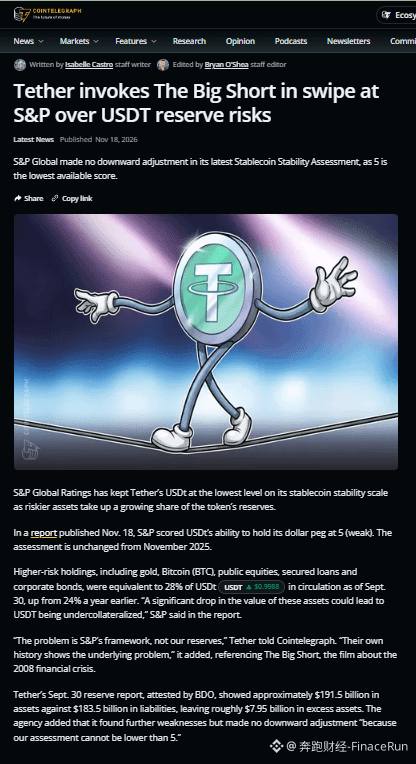
Tether invokes The Big Short to hit back at S&P’s lowest rating: The problem is your framework, not our reserves
Nov. 19 — According to Cointelegraph, S&P Global Ratings published a commentary report on Nov. 18, keeping Tether’s stablecoin USDT at the lowest level, Tier 5 (weak), in its stability assessment.
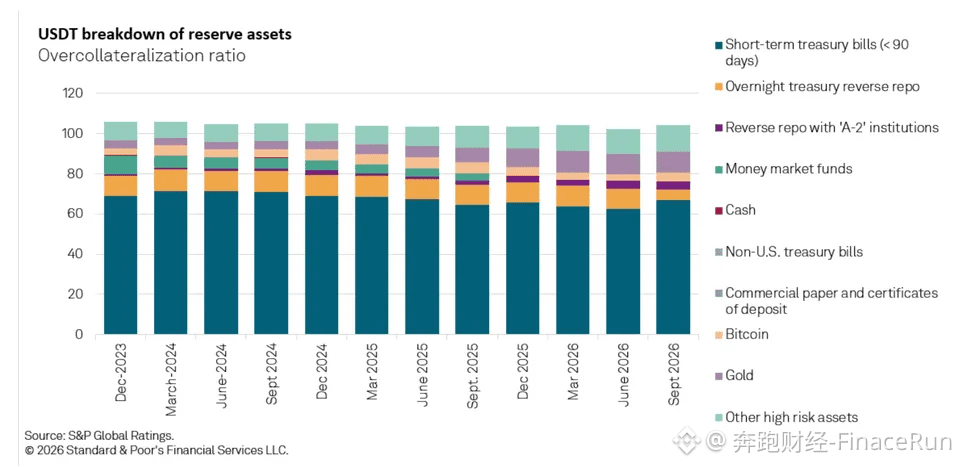
The report noted that as of Sept. 30, higher-risk assets such as gold, Bitcoin, publicly traded stocks, secured loans, and corporate bonds accounted for 28% of USDT in circulation, up from 24% a year earlier.
S&P issued a risk warning, saying that if the value of these assets were to fall sharply, USDT could face the risk of being undercollateralized.
The report also pointed to regulatory concerns in El Salvador, where Tether is registered. Local rules require 70% of reserve assets to be convertible to cash within 30 days and allow high-risk assets such as gold, Bitcoin, and loans to be included in reserves. S&P, however, considers the framework’s standards too lenient.
S&P also noted that Tether has no requirement to segregate reserve assets, and that its audited financial statements and audit reports have not been made public. Its reserve reports also do not disclose information about custodians or counterparties.
Tether responded forcefully: “The problem lies in S&P’s assessment framework, not in our reserves.” It also invoked The Big Short, the film about the 2008 financial crisis, using a historical event to mock what it sees as problems with S&P’s own rating system.
Tether also said that, according to its reserve report certified by BDO as of Sept. 30, the company had approximately $191.5 billion in assets and $183.5 billion in liabilities, with excess assets of about $7.95 billion.
In short, S&P gave USDT its lowest score, while Tether hit back, saying the rating framework is flawed. Both sides stand by their positions—which side are you on? Leave your thoughts in the comments!
#标普全球评级 #Tether