An investor lost nearly USD 70 million after copying the wrong address. The surprising part wasn’t the theft, but what happened afterward.
In May 2024, the victim was trying to transfer 1.155 $WBTC . An attacker had carried out an “address poisoning” attack: they added a fake address to the victim’s history that looked very similar to the real recipient’s address.
The victim copied it without checking the full address and sent the funds.
It wasn’t a wallet hack. It was a valid transfer, signed by its own owner, to the wrong address. On the blockchain, that usually can’t be undone.
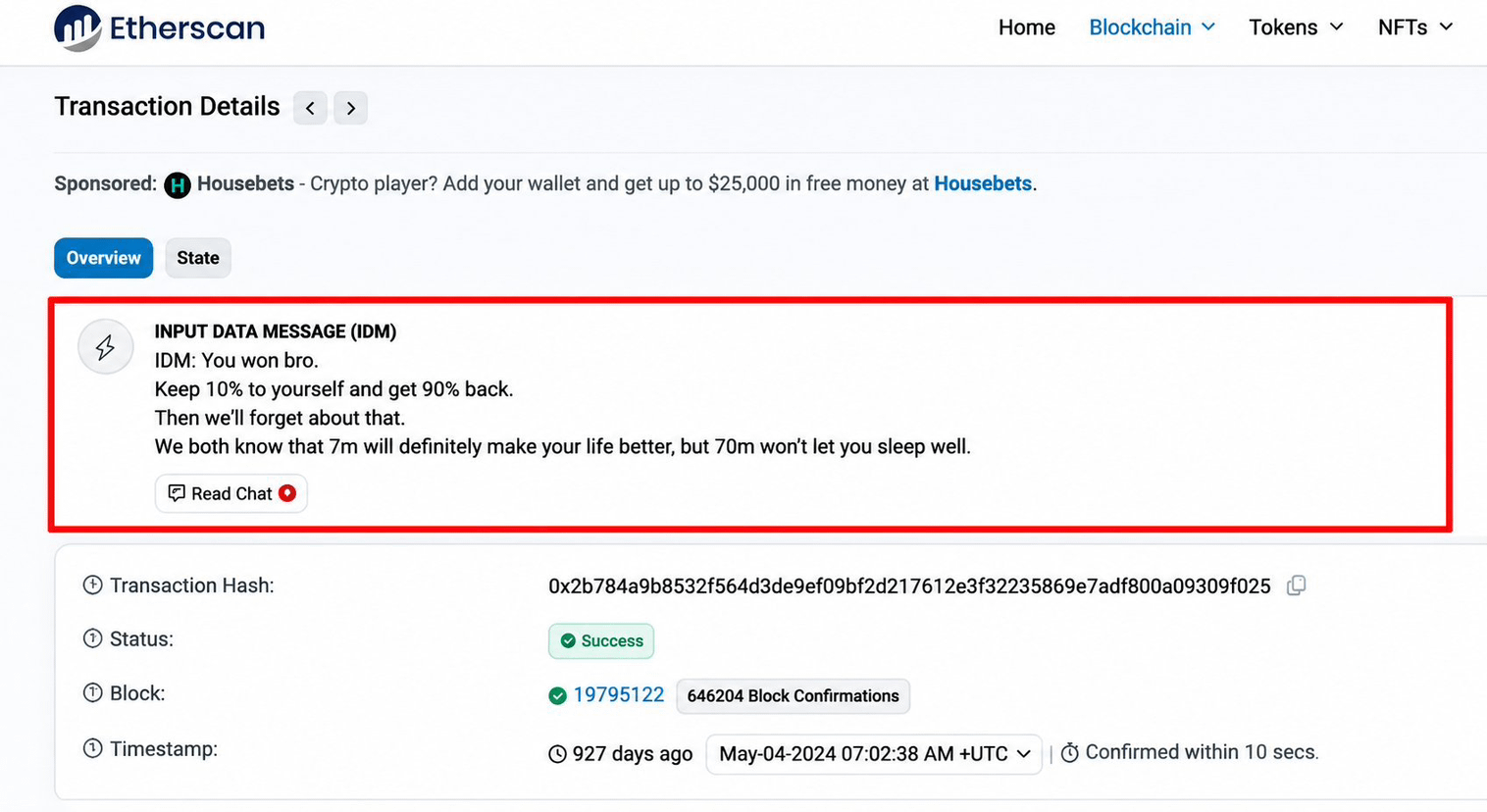
Desperate, the investor wrote to the attacker in a public message on Ethereum:
“You win, brother. Keep 10% and return 90%. We both know that USD 7 million can improve your life, but USD 70 million won’t let you sleep.”
The attacker converted the WBTC into approximately 22.955 $ETH . However, after several messages and days of publicly tracked movements, they ended up returning practically all the funds.
Blockchain transparency can increase pressure on those who steal, because every movement is exposed. But we shouldn’t confuse traceability with reversibility. The refund was exceptional; the network couldn’t force the attacker to make it.
This case leaves us with three simple rules:
1. Don’t copy addresses from your transaction history.
2. Check more than just the first and last characters.
3. Use a whitelist and make a small test transfer first.
A single check would have prevented a loss of nearly USD 70 million.
Do you check the full address before sending crypto, or only the beginning and end?
Follow me for more real stories and crypto security lessons.
Sources: Etherscan, SlowMist, and Chainalysis.
$BTC
#bitcoin #blockchain #RussiaCentralBankAddsAlfaBankToCryptoExchangeRegister