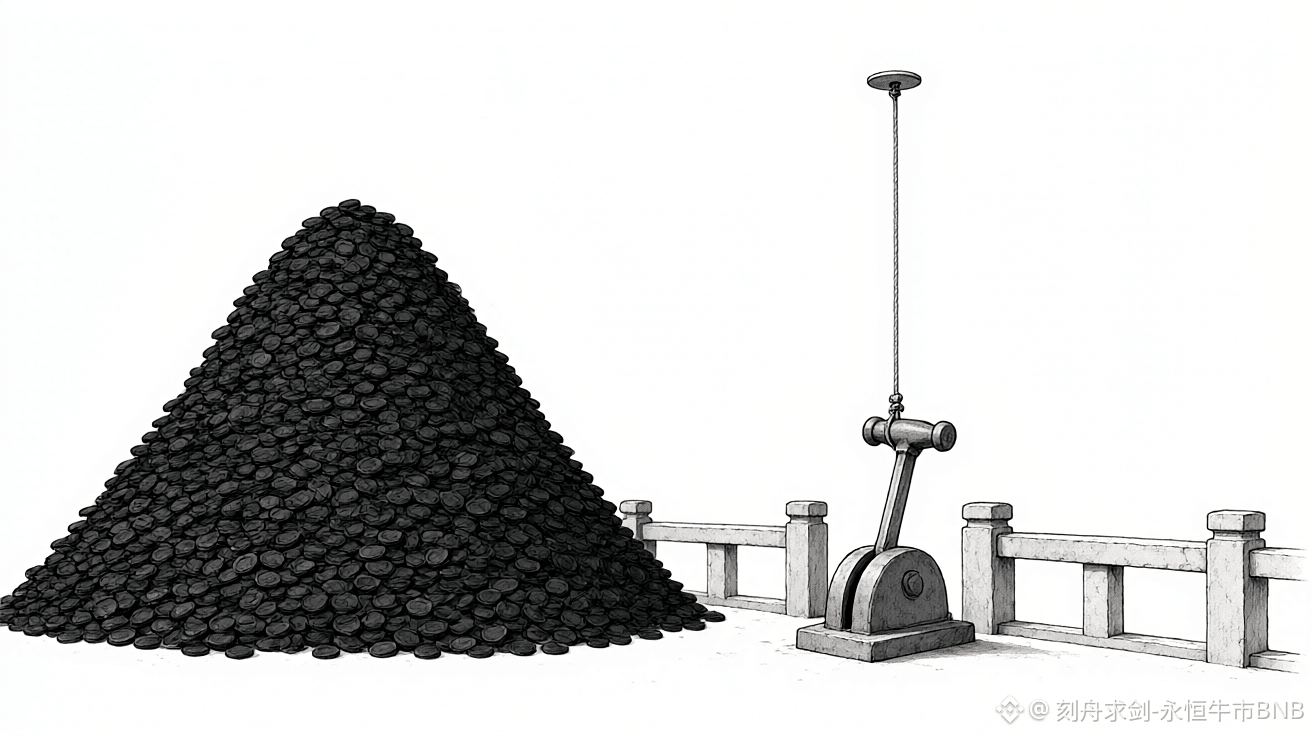
A stock that pays no dividends, yet controls more than half the votes. I only understood after digging through the registration documents: 825 million shares are being put on the market, but the one share that really calls the shots isn’t for sale. $CL
The ownership is split into five layers. The publicly issued Class A shares carry one vote each, but only about 6% of the company will be available for public purchase. An entity formed by the seven founders holds one Class F share, locking in 50.1% of the general voting power; future issuance of Class A or Class N shares won’t dilute it. A long-term interest trust holds a single Class T share, which lets it appoint and remove the directors who make up a majority of the board. $XAU
The people putting up the money are in a separate lane. In a $26 billion private placement, the search giant and the chip leader each subscribed for $10 billion, another chipmaker for $2.5 billion, and several others for $1 billion apiece. They’re all getting non-voting Class N shares, which can only be converted into voting Class A shares if transferred to a third party. Including earlier notes, Amazon’s economic interest is about 14.7% and Google’s about 13.7%—nearly 28.4% combined. The money goes in, but they don’t get a seat at the boardroom table. $ZEC
Demand was intense: orders came in at seven times the number of shares available, and pricing wasn’t finalized until the 18th. Retail investors received about 20%, well above the usual 5–10%. But in a vote of more than 18,000 people, 67% said they wouldn’t buy at the offering price. Wanting shares and being willing to pay the actual price are two different things; the underwriters also gave priority to existing shareholders, so many people ended up receiving far fewer shares than they requested.
As a controlled company, it doesn’t have to fill all of its nomination and governance seats with independent directors. Revenue for the first nine months was $33.2 billion, with a net loss of $10.4 billion; the third-quarter operating loss was $567 million. Spending commitments have piled up to $900.9 billion, including about $70.7 billion due over the next 12 months alone. At the midpoint, proceeds from the public offering and private placements total about $84.6 billion. That sounds like a fortune, but against the bills, it doesn’t leave much room to spare.
The money belongs to one side; the votes belong to another. Both are laid out in the same document, and anyone who reads it should take note.
These are my personal views and do not constitute investment advice. You are responsible for your own gains and losses.
#Anthropic获批以ANT代码在纳斯达克上市
The ownership is split into five layers. The publicly issued Class A shares carry one vote each, but only about 6% of the company will be available for public purchase. An entity formed by the seven founders holds one Class F share, locking in 50.1% of the general voting power; future issuance of Class A or Class N shares won’t dilute it. A long-term interest trust holds a single Class T share, which lets it appoint and remove the directors who make up a majority of the board. $XAU
The people putting up the money are in a separate lane. In a $26 billion private placement, the search giant and the chip leader each subscribed for $10 billion, another chipmaker for $2.5 billion, and several others for $1 billion apiece. They’re all getting non-voting Class N shares, which can only be converted into voting Class A shares if transferred to a third party. Including earlier notes, Amazon’s economic interest is about 14.7% and Google’s about 13.7%—nearly 28.4% combined. The money goes in, but they don’t get a seat at the boardroom table. $ZEC
Demand was intense: orders came in at seven times the number of shares available, and pricing wasn’t finalized until the 18th. Retail investors received about 20%, well above the usual 5–10%. But in a vote of more than 18,000 people, 67% said they wouldn’t buy at the offering price. Wanting shares and being willing to pay the actual price are two different things; the underwriters also gave priority to existing shareholders, so many people ended up receiving far fewer shares than they requested.
As a controlled company, it doesn’t have to fill all of its nomination and governance seats with independent directors. Revenue for the first nine months was $33.2 billion, with a net loss of $10.4 billion; the third-quarter operating loss was $567 million. Spending commitments have piled up to $900.9 billion, including about $70.7 billion due over the next 12 months alone. At the midpoint, proceeds from the public offering and private placements total about $84.6 billion. That sounds like a fortune, but against the bills, it doesn’t leave much room to spare.
The money belongs to one side; the votes belong to another. Both are laid out in the same document, and anyone who reads it should take note.
These are my personal views and do not constitute investment advice. You are responsible for your own gains and losses.
#Anthropic获批以ANT代码在纳斯达克上市