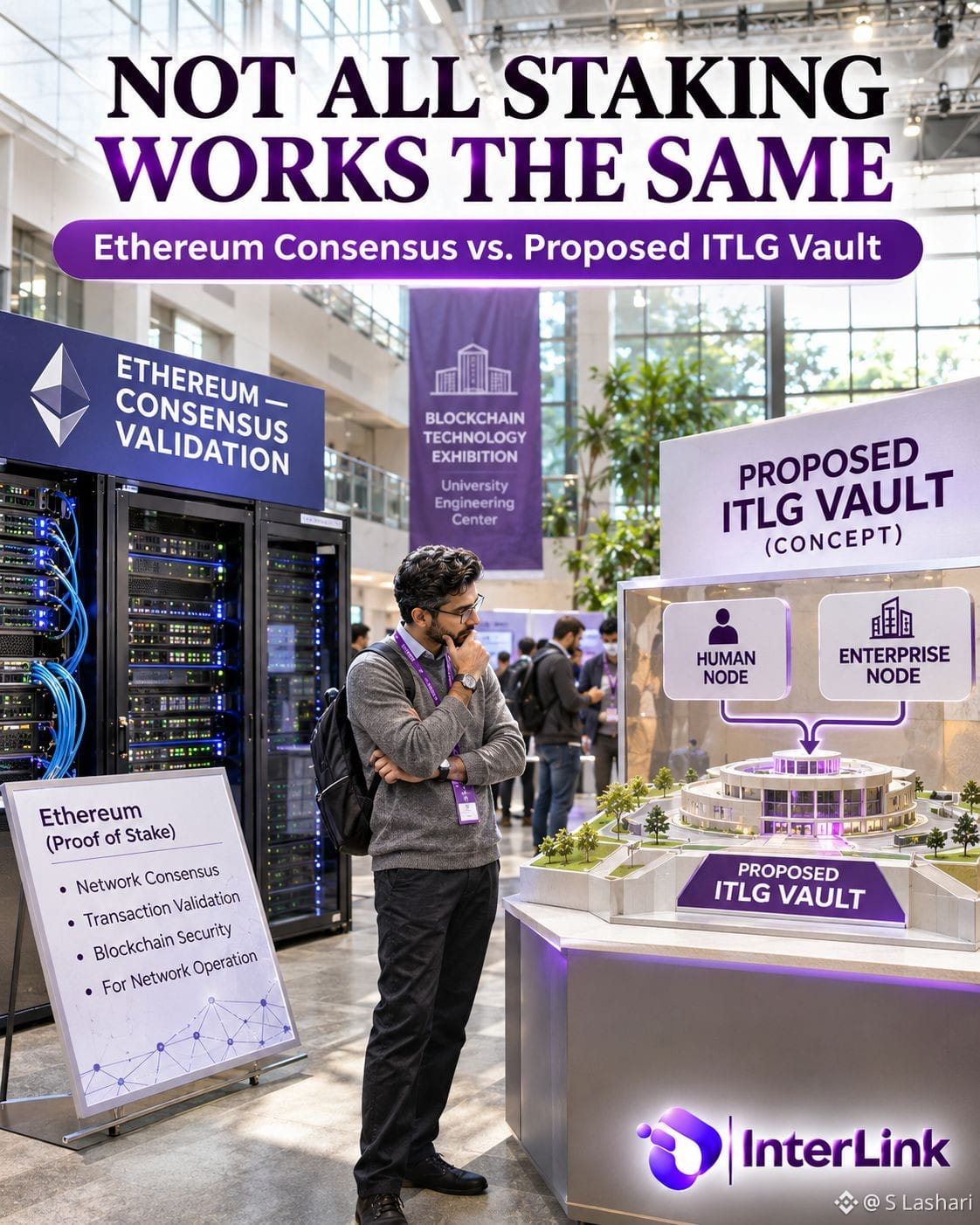
𝗜𝗧𝗟𝗚 𝗦𝗧𝗔𝗞𝗜𝗡𝗚 𝗩𝗔𝗨𝗟𝗧 𝗩𝗦. 𝗘𝗧𝗛𝗘𝗥𝗘𝗨𝗠: 𝗧𝗪𝗢 𝗗𝗜𝗙𝗙𝗘𝗥𝗘𝗡𝗧 𝗔𝗣𝗣𝗥𝗢𝗔𝗖𝗛𝗘𝗦
Staking is not the same mechanism across every blockchain.
Ethereum's $ETH proof-of-stake system uses validators and staked capital to secure network consensus. Validators participate in block proposals and attestations, with rewards and penalties tied to protocol rules.
InterLink's proposed $ITLG Staking Vault takes a different direction.
𝗪𝗵𝗮𝘁 𝗺𝗮𝗸𝗲𝘀 𝘁𝗵𝗲 𝗜𝗧𝗟𝗚 𝗺𝗼𝗱𝗲𝗹 𝗱𝗶𝗳𝗳𝗲𝗿𝗲𝗻𝘁?
The Vault is designed around two verified participant categories:
• Human Nodes: KYC-verified individuals staking transferable $ITLG.
• Enterprise Nodes: KYB-verified businesses staking through registered institutional wallets.
Both would enter a shared staking pool without a separate preferential institutional reward rate.
The proposed rewards would be dynamic, drawing from existing ITLG allocations and ecosystem-generated fees.
𝗧𝗵𝗲 𝗶𝗺𝗽𝗼𝗿𝘁𝗮𝗻𝘁 𝗱𝗶𝘀𝘁𝗶𝗻𝗰𝘁𝗶𝗼𝗻
Ethereum staking directly supports blockchain consensus security.
InterLink's proposed Vault emphasizes verified participation, ecosystem rewards, and governance.
These are different functions. The Vault should not be assumed to provide the same consensus-security mechanism as Ethereum validators.
Its effectiveness will depend on finalized contracts, identity verification, fee generation, and governance rules.
𝗞𝗲𝘆 𝘁𝗮𝗸𝗲𝗮𝘄𝗮𝘆: Staking design matters more than the word "staking." Understanding what participants actually secure, earn, and govern is essential.
#interlink📈 #ITLG #ITL #etherreum
𝗗𝗶𝘀𝗰𝗹𝗮𝗶𝗺𝗲𝗿: Educational purposes only. Not financial advice. DYOR.