A Cooling AI Boom Could Prompt a Fed Policy Pivot, Creating an Opportunity for Bitcoin to Rise
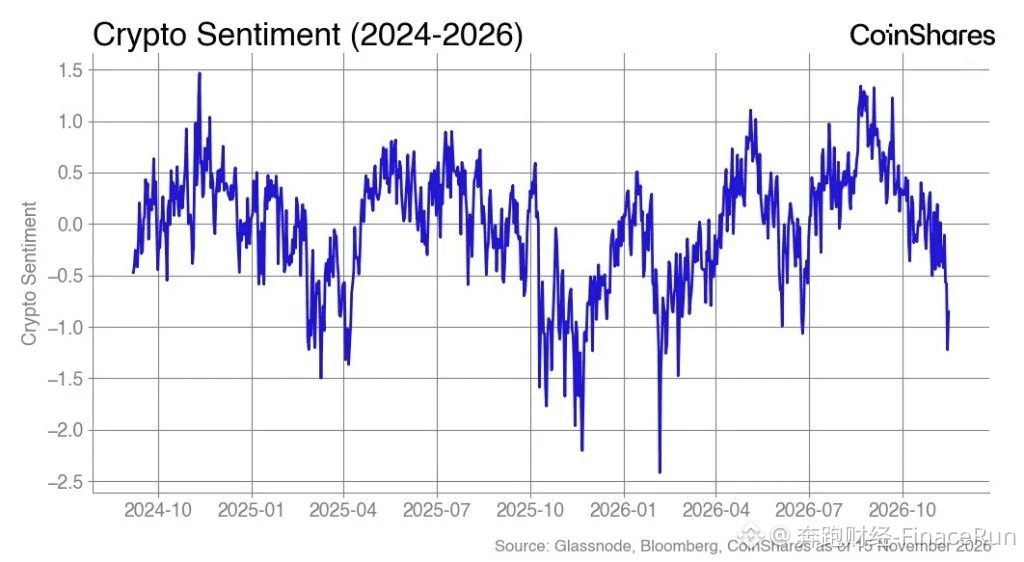
November 18 — According to market reports, CoinShares senior portfolio manager Marc des Ligneris said that fear in the crypto market is now close to the level seen during the tariff-driven sell-off in March 2025.
He believes Bitcoin’s downside is limited unless a sharp stock market correction triggers a broad wave of risk aversion across markets.
He noted that futures-market funding rates are healthier than they were during the wave of liquidations in February. However, options skew and the Fear and Greed Index have both reached extreme levels—conditions not commonly seen in a healthy bull market.
In his view, the rally in August looked more like a false start. The crypto market has not truly entered a bull market, but a significant capitulation-driven sell-off has already taken place.
Marc des Ligneris said monetary policy and the U.S. dollar have a major influence on Bitcoin. Inflation data released last week also came in above expectations, putting considerable pressure on the market.
Analysts noted that if the AI boom fades and the bursting of the bubble weighs on growth expectations, this could prompt the Federal Reserve to change course on monetary policy, creating a more favorable price environment for Bitcoin.
In summary, based on its analysis of the current market capital structure, CoinShares head of research James Butterfill puts Bitcoin’s baseline trading range at $60,000 to $90,000.
He also stressed that a sustained break above the range’s upper limit would require a shift in Fed policy expectations, renewed institutional inflows, or renewed buying by large holders. Otherwise, it will be difficult for BTC to decisively break above $90,000.
#比特币 #机构观点