
Daily Perpetuals Market Report | 11/18: Positions Shrink as Prices Fall, Directional Signals Diverge
The midday anomaly was that long positions remained crowded, while aggressive trades skewed toward selling.
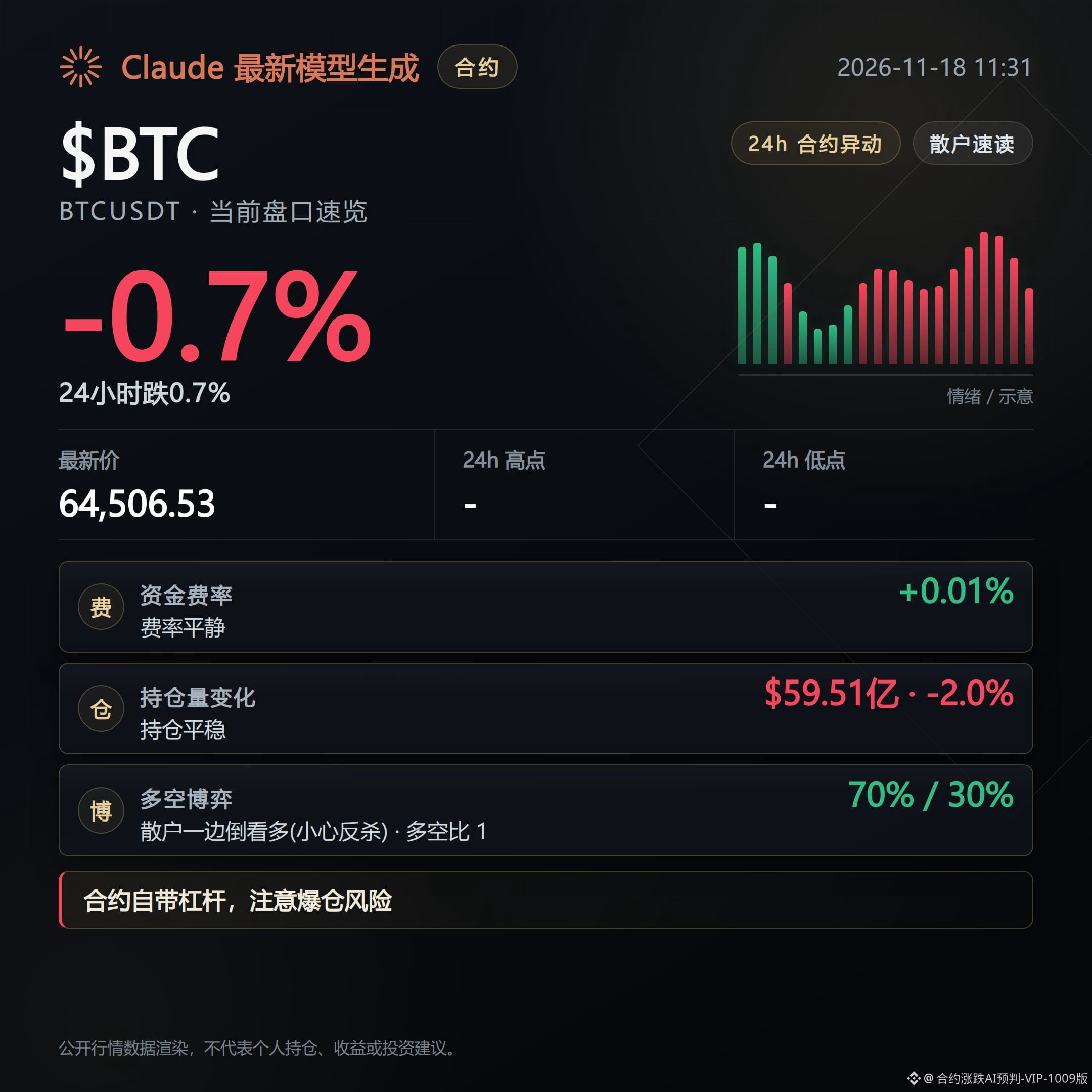
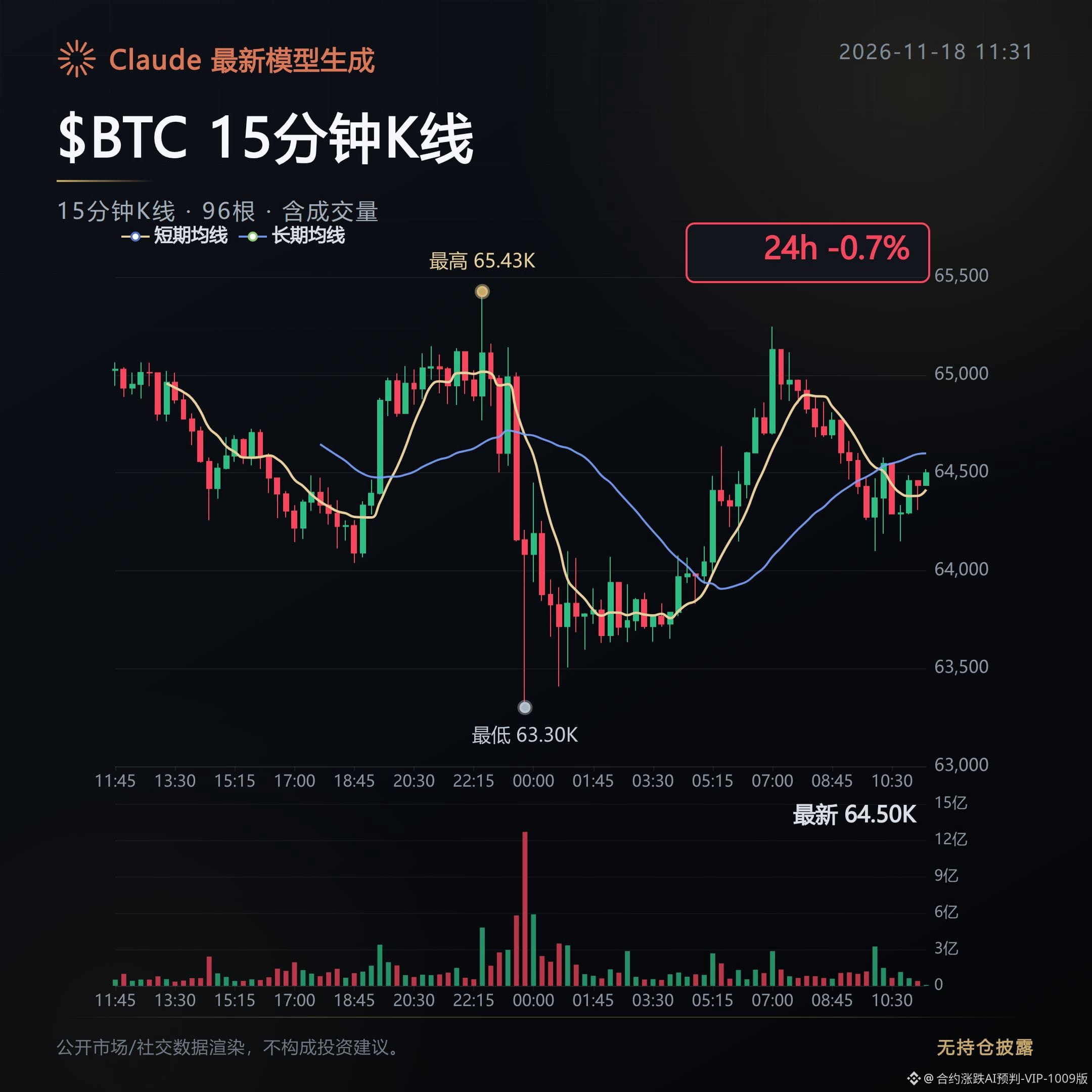
$BTC was marked at $64,506, down 0.73%, after briefly breaking below $64,000.
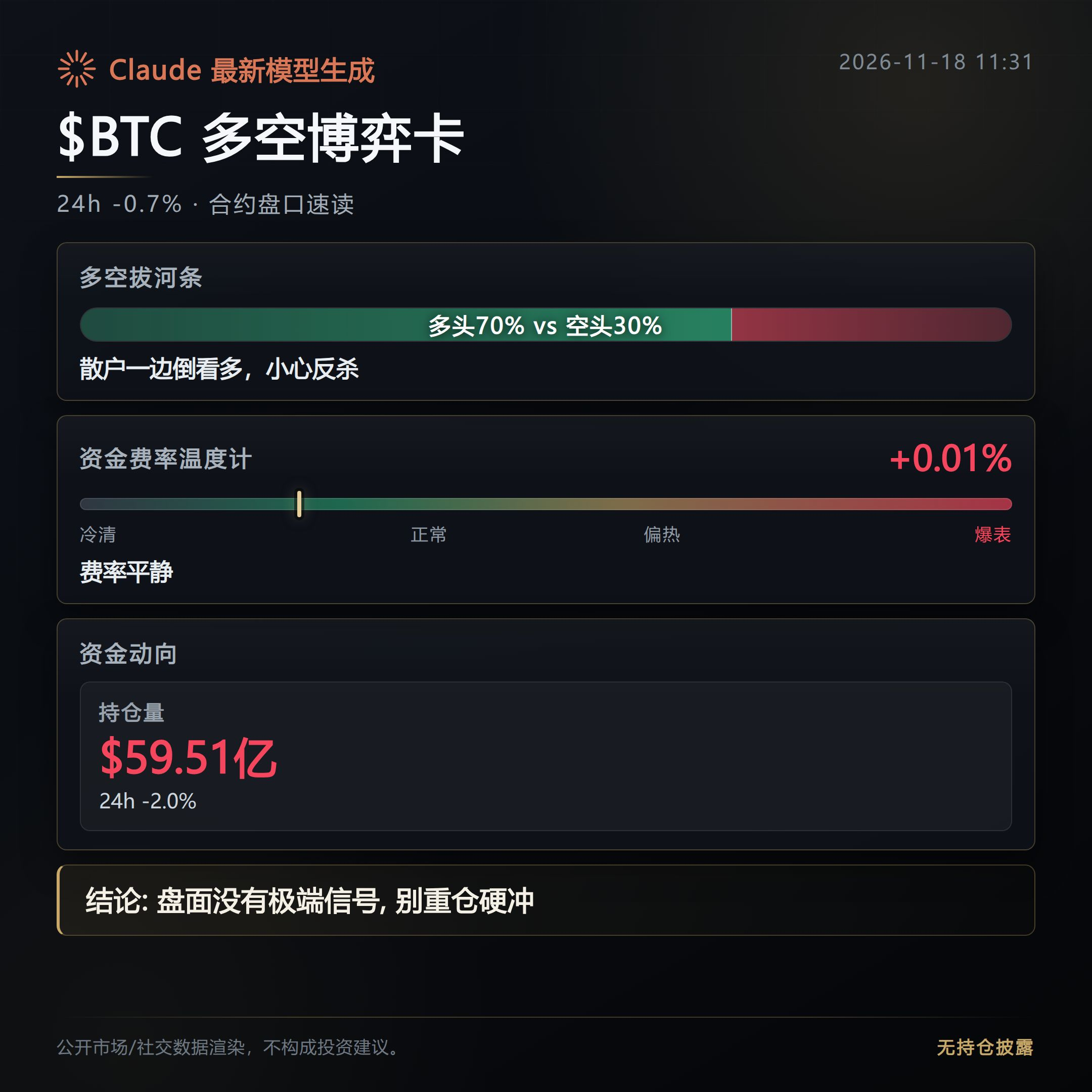
Open interest fell to $5.951 billion, a change of -2.0%, suggesting the decline came with leverage being unwound—not a buildup of new shorts driving prices down.
Yet longs still accounted for 70%, the funding rate was +0.0063%, and the taker buy/sell ratio was just 0.91.
With positioning skewed long and trading skewed toward selling, long liquidations may come first during any rebound.
The Fear & Greed Index was just 11, indicating extreme fear in the spot market.
$ETH fell 1.21%, while its funding rate remained at +0.006%—another sign of a disconnect, with prices weakening while longs continue to pay.
Tighter chip restrictions sent Nasdaq 100 futures down more than 1%, while Nvidia fell below $160. The repricing of AI assets is spilling over into highly volatile crypto positions.
Strategy shares are also under pressure as Bitcoin falls below $64,000, which may heighten market sensitivity to corporate leverage tied to crypto holdings.
$SOL was an outlier.
Its mark price was $74.97, up 3.44%, while its funding rate was -0.0054%.
Prices rose while shorts continued to pay, suggesting the strength partly reflects short covering. As long as the negative funding rate persists, the risk of a short squeeze in the near term remains.
Short costs are even more extreme in KAVA, BREV, and RUM, with funding rates of -0.431%, -0.398%, and -0.305%, respectively. These markets are more prone to sharp moves in either direction.
Midday pricing looked more like “defensive deleveraging,” with some localized short covering mixed in.
The CFTC halted some Trump-related Kalshi contracts, adding to regulatory pressure on prediction markets. Event-driven positions such as TRUMP lack a stable catalyst.
The honest caveat is that open interest is falling, and for now there is no sign of a sustained buildup in new short positions.
If $BTC 's taker buy/sell ratio climbs back above 1, the long share falls, and open interest stabilizes, defensive pricing could give way to a recovery in major coins. Until then, the crowded 70% long positioning remains a key risk boundary.
This content was generated with assistance from Claude Fable 5 and is for informational purposes only. Please verify it independently.
The midday anomaly was that long positions remained crowded, while aggressive trades skewed toward selling.
$BTC was marked at $64,506, down 0.73%, after briefly breaking below $64,000.
Open interest fell to $5.951 billion, a change of -2.0%, suggesting the decline came with leverage being unwound—not a buildup of new shorts driving prices down.
Yet longs still accounted for 70%, the funding rate was +0.0063%, and the taker buy/sell ratio was just 0.91.
With positioning skewed long and trading skewed toward selling, long liquidations may come first during any rebound.
The Fear & Greed Index was just 11, indicating extreme fear in the spot market.
$ETH fell 1.21%, while its funding rate remained at +0.006%—another sign of a disconnect, with prices weakening while longs continue to pay.
Tighter chip restrictions sent Nasdaq 100 futures down more than 1%, while Nvidia fell below $160. The repricing of AI assets is spilling over into highly volatile crypto positions.
Strategy shares are also under pressure as Bitcoin falls below $64,000, which may heighten market sensitivity to corporate leverage tied to crypto holdings.
$SOL was an outlier.
Its mark price was $74.97, up 3.44%, while its funding rate was -0.0054%.
Prices rose while shorts continued to pay, suggesting the strength partly reflects short covering. As long as the negative funding rate persists, the risk of a short squeeze in the near term remains.
Short costs are even more extreme in KAVA, BREV, and RUM, with funding rates of -0.431%, -0.398%, and -0.305%, respectively. These markets are more prone to sharp moves in either direction.
Midday pricing looked more like “defensive deleveraging,” with some localized short covering mixed in.
The CFTC halted some Trump-related Kalshi contracts, adding to regulatory pressure on prediction markets. Event-driven positions such as TRUMP lack a stable catalyst.
The honest caveat is that open interest is falling, and for now there is no sign of a sustained buildup in new short positions.
If $BTC 's taker buy/sell ratio climbs back above 1, the long share falls, and open interest stabilizes, defensive pricing could give way to a recovery in major coins. Until then, the crowded 70% long positioning remains a key risk boundary.
This content was generated with assistance from Claude Fable 5 and is for informational purposes only. Please verify it independently.