
The previous article covered what’s left after costs: the gross listing spread minus execution costs. This one focuses on just one thing: what common false edges look like when something appears to be new-token listing arbitrage, but the two sides often aren’t properly matched or the full costs haven’t been included.
1. What’s the principle?
When people talk about a “false edge” in new-token listings, you don’t need to guess which way the narrative will push the price. Just remember this:
People may call it arbitrage, and the price gap between a new market and a major exchange may look attractive. But if one side doesn’t get filled, or the price you’re using isn’t really executable—and you haven’t accounted for deposits, withdrawals, and fees—it may look like you’ve captured a listing spread, but in practice it’s more like ordinary new-token trading, or a rough estimate that doesn’t match the result.
Breaking it down, there are roughly three steps:
1) A real edge: both sides are clearly defined, and the gap is closer to what you can actually trade
The same new coin: one trade on the new order book and one on the main/old exchange, in opposite directions and with roughly similar quantities; quotes close to executable prices; and a reasonable understanding of whether withdrawals are open, the fees, and roughly how long settlement takes.
2) A false edge: the gap exists on paper, and the two sides may not match
Only one side gets filled, the assets don’t quite match, displayed prices are simply subtracted, only the gross edge is shown without accounting for slippage and deposits or withdrawals, or withdrawals aren’t open yet and the coins are still in transit—all of these can make “listing arbitrage” sound fully matched when it probably isn’t.
3) A false edge may not look obviously bad right away, but what you’re looking at may already be misleading
Once prices move, or a withdrawal delay or fees come into play, the result often differs from what you’d expect when checking whether both sides are matched. Simply put:
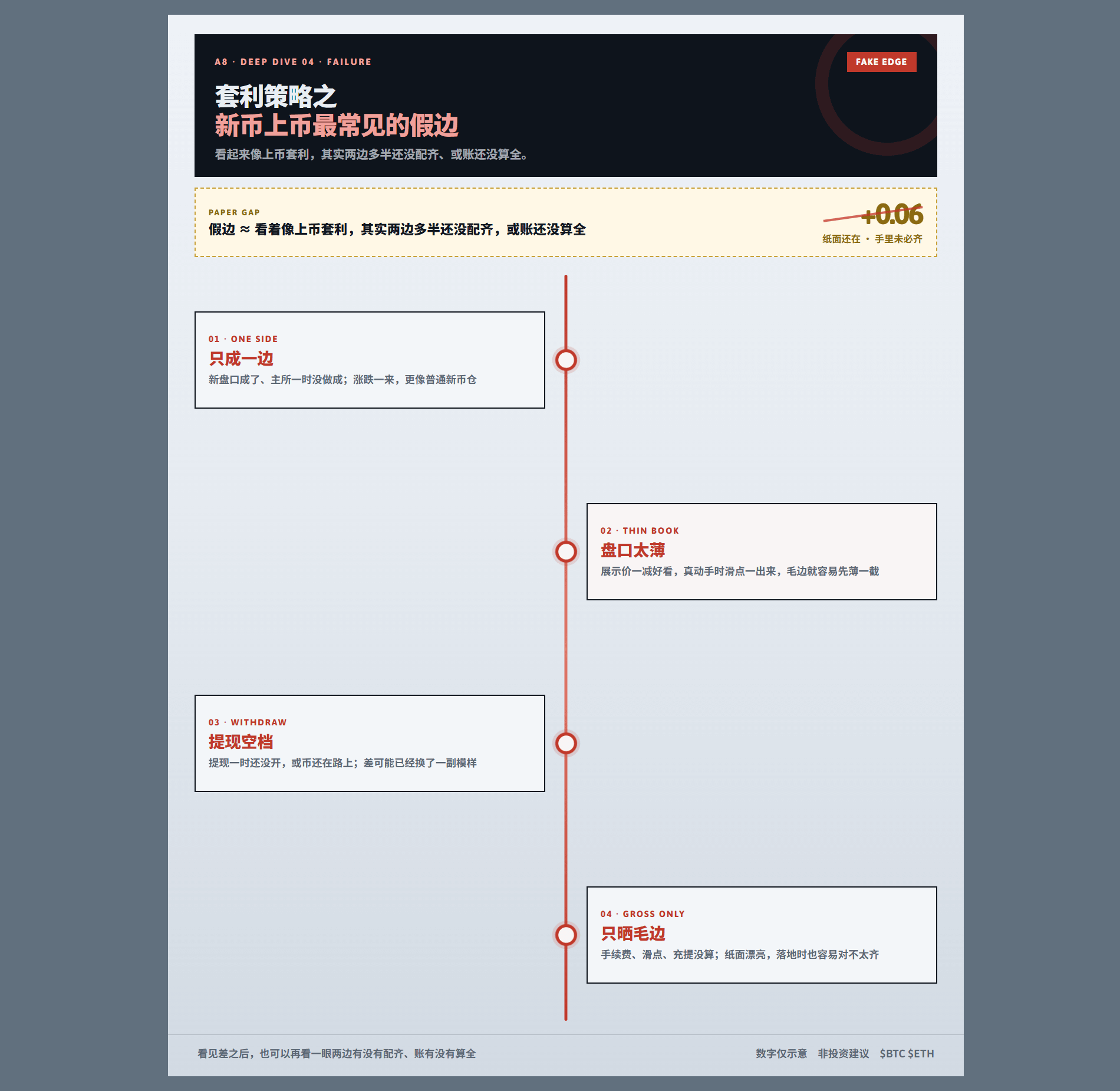
False edge ≈ It looks like listing arbitrage, but the two sides probably aren’t both matched yet, or the numbers aren’t fully accounted for.
One thing to keep in mind:
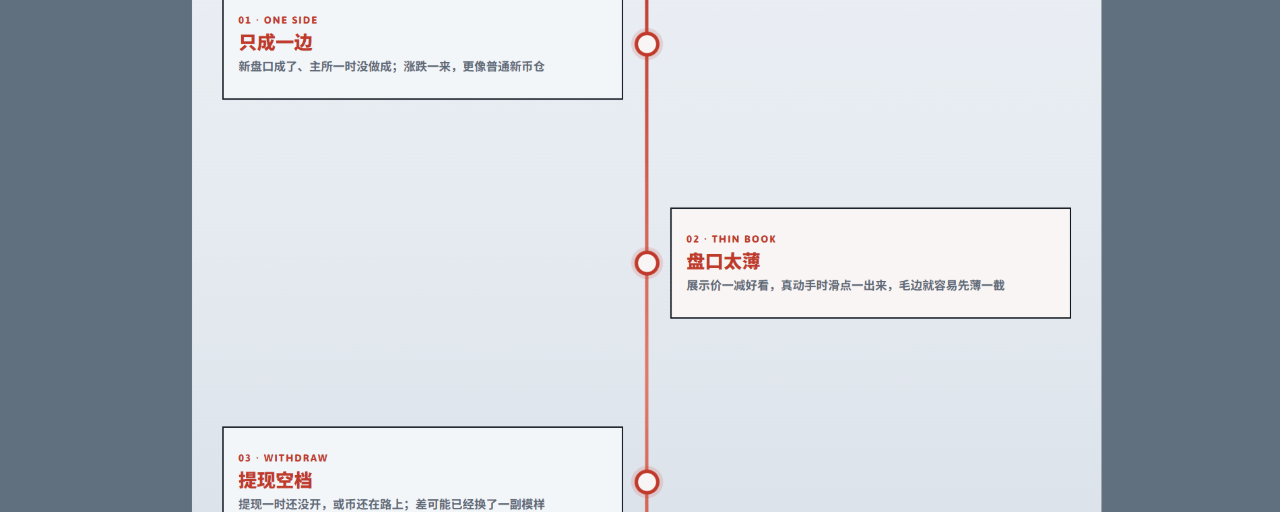
When you spot a listing price gap, it may help to check whether both sides are matched and all the numbers are accounted for; common false edges involve “only one side filled, a thin order book, a withdrawal delay, or showing only the gross edge.”
II. An example
The numbers are illustrative only. The new order book shows about 1.00 and the main exchange about 1.06, making the gap look like +0.06.
Suppose what actually happens is:
• Only the order on the new venue gets filled, while the one on the main exchange doesn’t—or vice versa; or
• You get +0.06 by subtracting the latest prices on both sides, but the new order book may not let you trade at that price; or
• Withdrawals aren’t open yet, the coins are still in transit, and the price on the other side has already converged; or
• Only the gross edge of +0.06 is shown, without accounting for fees, slippage, deposits, or withdrawals
The +0.06 still appears on paper, but you probably don’t yet have a fully matched pair of trades across the two sides of the listing. Once prices move, it looks more like a regular new-coin position; and the “amount left after deductions” is also missing the gap you’d have with both sides fully matched.
III. What the two sides are
You can also compare a false edge against what a “real edge” should look like:
• Real edge: the same new coin, both sides in place, opposite directions, and roughly similar quantities; quotes close to executable prices; and a reasonable understanding of fees, deposits and withdrawals, and the withdrawal window.
• False edge: one or more of the above is missing—especially when only one side fills, the order book is too thin, there’s a withdrawal delay, or only the gross gap is shown.
So for the “two sides” in this article, instead of focusing first on how to place the orders, it may be more useful to ask whether the price gap on paper and the gap after both sides are matched and all costs are included are actually the same thing.
IV. Where the profit comes from
The article on false edges barely discusses “how to make more”; it only notes a few points related to matching and identifying them:
1) Once both sides are truly matched, the listing price gap is what matters more
When both sides are in place and the directions are right, what matters more is how the listing price gap changes, rather than guessing whether the narrative will push prices up or down.
2) When a false edge appears, what you focus on can easily shift
When only one side is filled, price movements matter more again. If you misread the quoting convention or displayed price, it can also be hard to say clearly how much actually matched.
3) A gross edge can look good while still existing mainly on paper
Without accounting for fees, slippage, deposits and withdrawals, the paper result can look great, but the actual result may not match up—this often overlaps with a “false edge.”
V. Risks
These are roughly the most common false edges in new-coin listings.
The two sides aren’t both in place yet
Only one side gets filled
The new venue order book gets filled, but the main exchange order doesn’t—or vice versa. Price movements matter more again; for now, it looks more like a regular new-coin position, so you can pause and see how things develop.
The assets don’t quite match, or withdrawals aren’t open yet
Same-named tokens on different chains or with different contracts, or withdrawals temporarily unavailable on one side—people may still call it listing arbitrage, but the two sides probably don’t match up.
The quantities are too different, or the new order book is too thin
One side is much larger than the other, or the new order book is only deep enough to fill a small portion for now—most likely, the sides aren’t balanced yet.
The direction is opposite to the example
The example calls for a sell, but you end up buying, or the quantity conventions get mixed up. In that case, it can be hard to tell whether you’re actually “hedged” on paper.
The numbers aren’t clear, or the edge thins during the gap
The difference between displayed prices often doesn’t match the prices you can actually trade at
Subtracting the latest prices on both sides can look great, but the order-book prices are usually what you’ll encounter; once slippage kicks in, the gross edge can quickly shrink.
Showing only the gross edge, without fees or deposits and withdrawals
If fees, slippage, deposits, and withdrawals are left out, there may still seem to be an edge, but sometimes little remains after deductions—and the actual result may not match up.
The gap narrows during the withdrawal/transfer window
The coins are still in transit, or withdrawals on one side aren’t open yet, while the price on the other side has already converged or moved away. The paper gap may still look like the original one, but by the time the sides match, things often look quite different.
Too much time between the two trades
One side fills first while the other is still waiting on a withdrawal or order; the listing price gap may already have changed in the meantime.
Simply put: the most common false edges in new-coin listings usually arise when only one side fills, the order book is too thin, there’s a withdrawal delay, or only the gross edge is shown. After spotting a gap, it may help to check whether both sides are matched and all the numbers are accounted for; that gives you a steadier picture.
This article is for explaining the principles only. It does not constitute investment advice, nor does it recommend any specific coins or trading combinations.