#SXT #sxt $SXT @SpaceandTime
Been digging into Space and Time lately, and Virtual Vaults (launched May 2026) is the one product I think people are sleeping on.
Here's the problem: banks lending against crypto get collateral reports that are often stale by the time they land on someone's desk. When real money is on the line, that's a big gap.
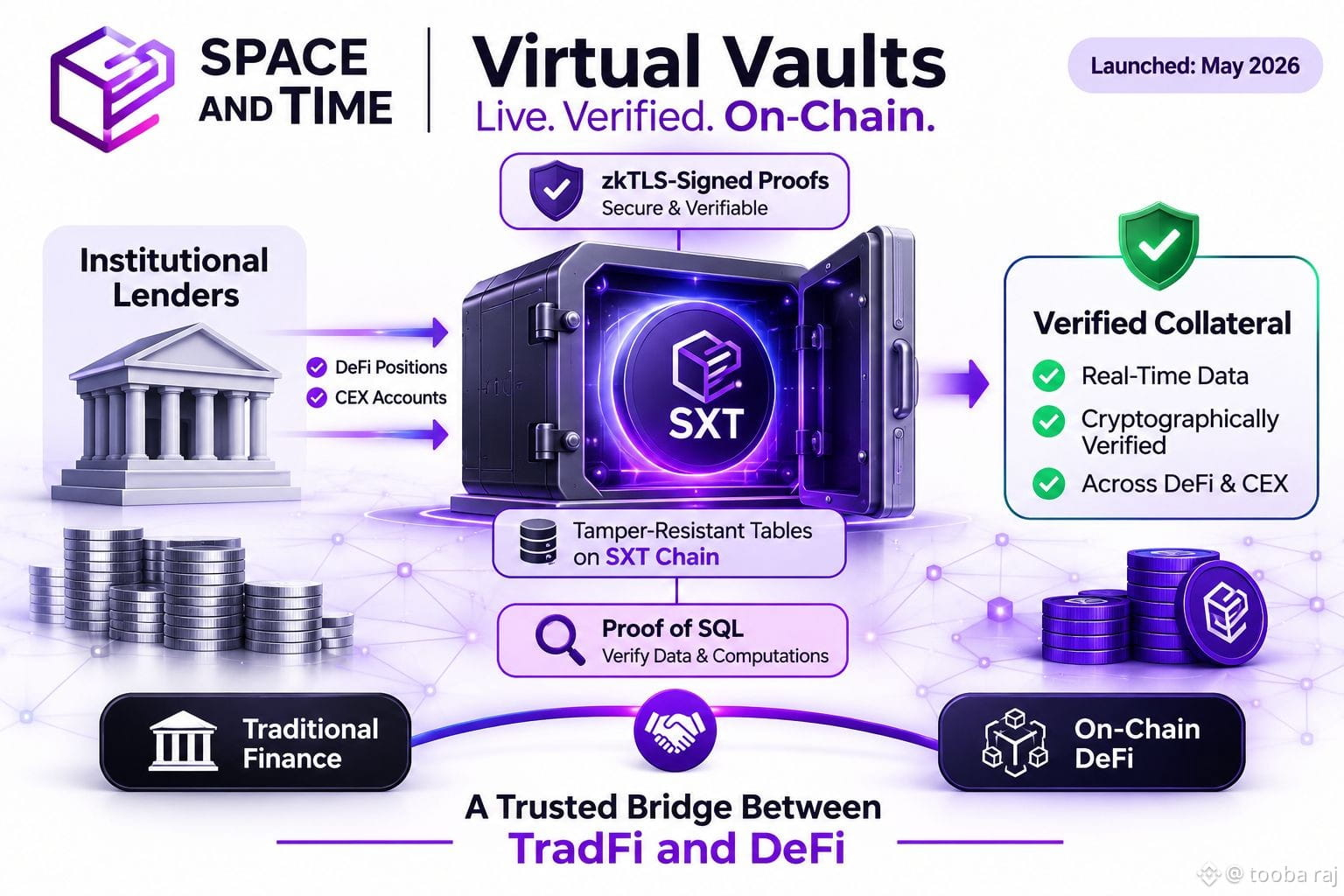
Virtual Vaults tackles it by giving institutions a live, cryptographically verified view of a borrower's collateral, across both DeFi positions and centralized exchange accounts. Under the hood it uses zkTLS-signed proofs, stores the verified data in tamper-resistant tables on SXT Chain, and leans on Proof of SQL to verify the data and the computations on it.
What gets me excited is the bigger picture. Tokenized lending can't scale if institutions still have to trust a report. They need proof that the collateral exists and is still there. That's the bridge Virtual Vaults is trying to build between traditional finance and on-chain infrastructure.
One more thing: writing, reading and verifying in the vaults all use $SXT .
So the question I'm watching is whether institutional adoption turns into steady network activity and real token utility. The tech is only half the story. Actual usage is the other half.
What do you think? Could verifiable collateral become a major driver of institutional DeFi adoption? 👇