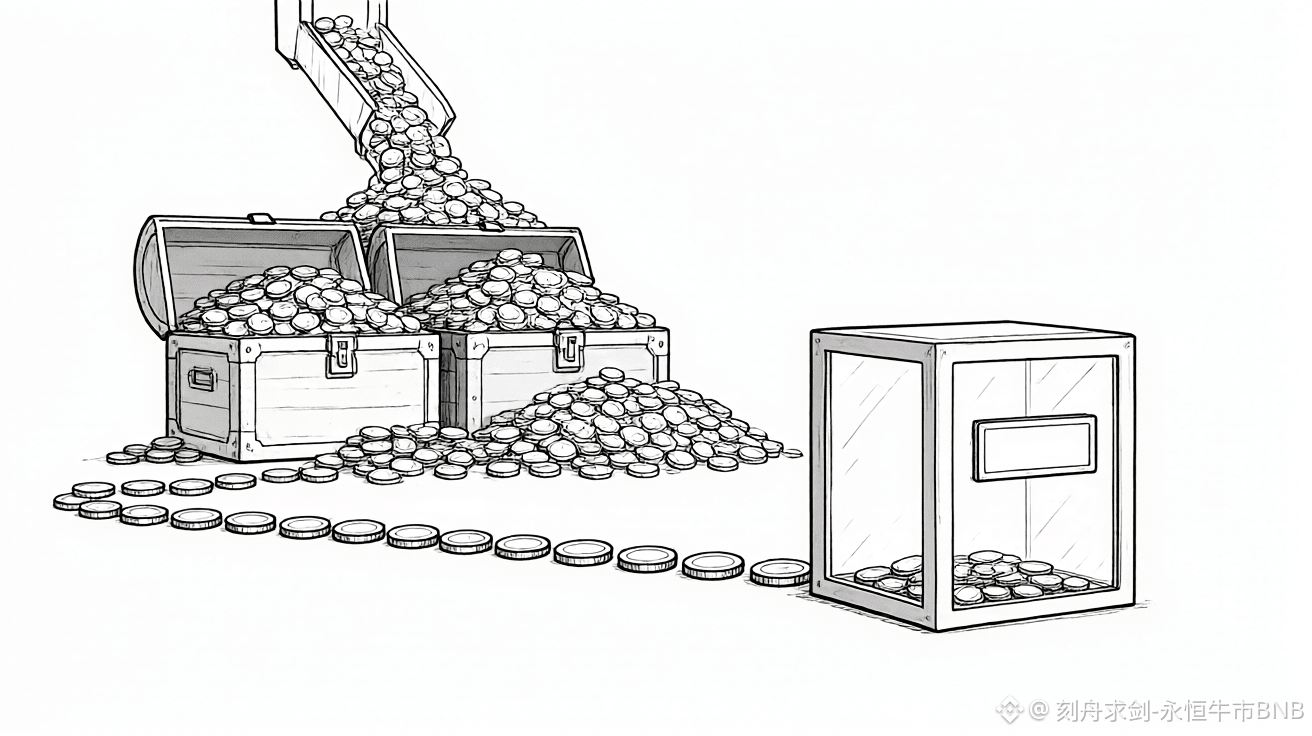
There are only 80,008 shares of this fund on-chain, held in a single wallet, with a net asset value of one dollar each. Yet the minimum investment is listed as one million dollars. Invesco has moved this fund, which lets stablecoin issuers hold reserves, onto a public blockchain. It took effect on November 13, and the first batch was minted on the 16th. $BNB
What it can hold is tightly restricted: cash, short-term U.S. Treasuries with maturities of 93 days or less, and overnight repos. At least 99.5% of the portfolio must be in these assets, the portfolio’s average maturity cannot exceed 60 days, and the assets are held by a clearing bank. Shares can only be transferred within a whitelist, and daily earnings are automatically reinvested by minting new shares. Put simply, it’s a compliant vehicle, not something intended for people to trade. $BTC
The striking detail is the fee line. The management fee is 0.15%; other expenses were originally 0.36%, but the asset manager signed off on waiving 0.16%, bringing them down to 0.20% through the end of 2027. There are 80,000 shares—not even a fraction of the one-million-dollar minimum. $ETH
Its place in the field becomes clear when you look at the bigger picture. Section 4(a)(1)(A) of the GENIUS Act spells out what counts as eligible reserves. In a year, licensed issuers will have to maintain full, one-to-one backing, with a 40% cap on exposure to any single institution. JPMorgan moved a similar fund onto a public blockchain first, in May, starting with $100 million and growing to around $700 million by October. BlackRock’s fund came earlier, reaching $2.2 billion across nine blockchains; in August, it also launched another share class of a similar fund. Invesco’s 80,000 shares are lining up to compete for that position.
The money hasn’t poured in at scale yet. The U.S. dollar stablecoin market was about $295.5 billion in November, roughly flat from a year earlier, while the Treasury Secretary’s prediction of tenfold growth over the next decade remains just that—a forecast. But major issuers have already put more than $60 billion into a single money market fund. The vehicle is in place; now it’s waiting for that 2027 deadline. And the funds will have to compete with one another: the 40% cap means issuers can’t choose just one provider.
Only 80,000 shares, with a one-million-dollar minimum. The gap is the money that hasn’t come in yet.
These are personal views, not investment advice. You are responsible for any gains or losses.
#景顺稳定币储备基金登陆以太坊