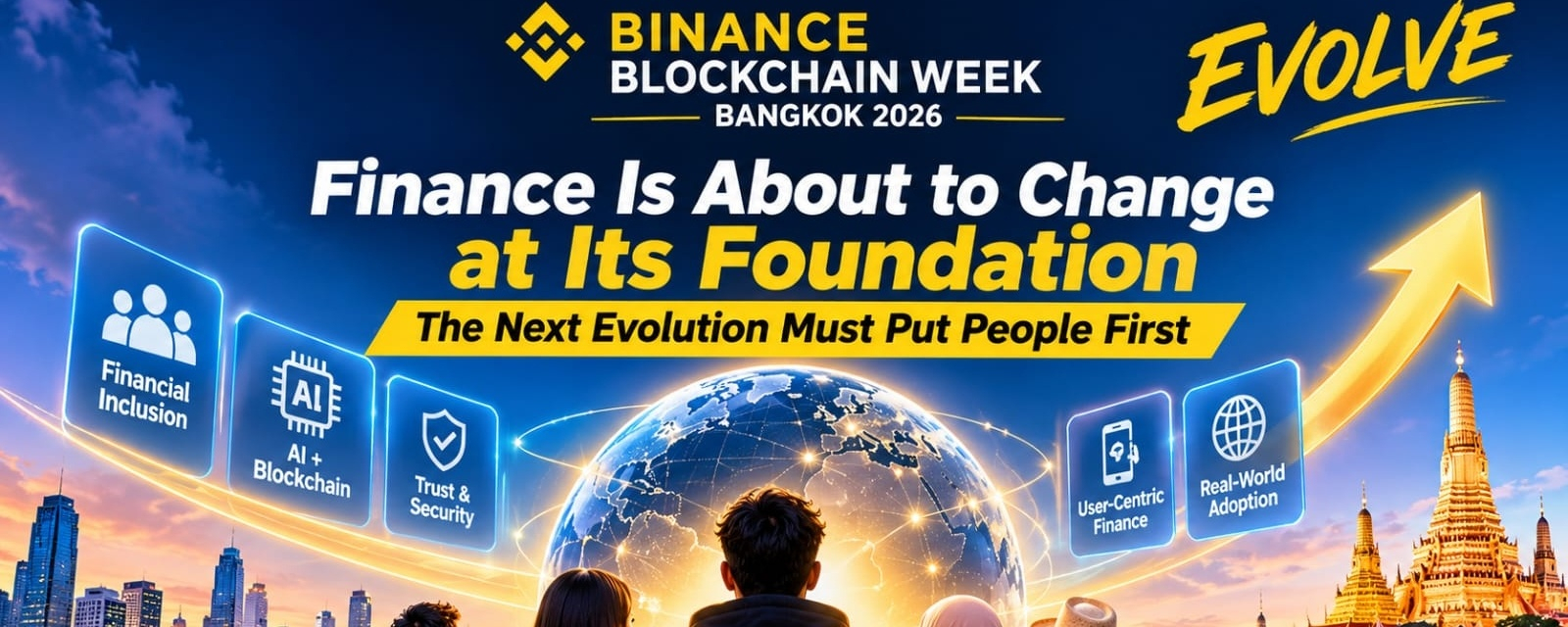


The Future of Money Should Not Depend on Where You Were Born, Which Bank You Use, or How Much Capital You Have.
Every major financial transformation has changed more than the technology behind money. It has changed who gets access to opportunities.
Banking made it possible to store and transfer money without carrying physical cash. The internet brought financial services online. Mobile payments put transactions into people's hands.
But despite all these improvements, one fundamental problem remains: access to finance is still unequal, expensive, fragmented, and often unnecessarily complicated.
As I look ahead to Binance Blockchain Week Bangkok 2026, under the theme EVOLVE, I believe we are approaching another turning point.
My biggest expectation is not simply that blockchain will make transactions faster or that artificial intelligence will make trading smarter.
I believe the next evolution of finance will be about making the financial system more accessible, intelligent, transparent, and genuinely useful to ordinary people.
And there are three major changes that could make this possible.
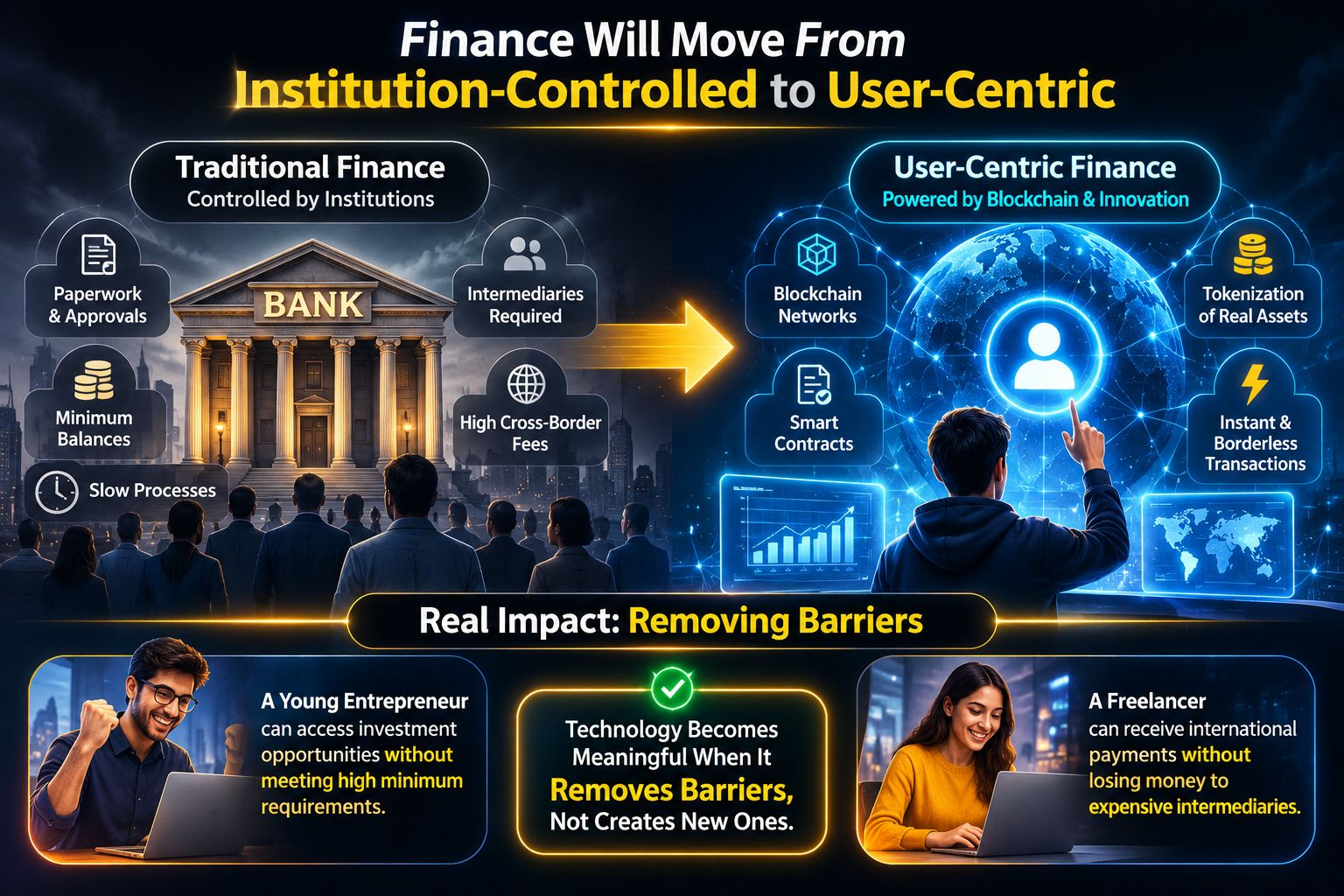
1. Finance Will Move From Institution-Controlled to User-Centric
For generations, financial participation has depended on institutions.
Opening accounts, accessing investment products, transferring money internationally, and managing assets often require intermediaries, paperwork, minimum balances, and approval processes.
Technology is beginning to challenge that structure.
Blockchain introduces a different model in which digital assets can move across networks without relying on the same traditional settlement infrastructure. Smart contracts can automate financial operations, while tokenization can represent ownership of real-world assets digitally.
But I think the most important opportunity is not simply putting traditional assets on a blockchain.
It is reconsidering the barriers that prevent people from participating in financial markets in the first place.
Imagine a young entrepreneur who wants to access investment opportunities but cannot meet the minimum requirements of traditional financial institutions. Or a freelancer who regularly receives international payments and loses money through expensive intermediaries.
The real value of financial innovation will be measured by how much easier it becomes for these people to participate.
Technology becomes meaningful when it removes barriers, not when it creates another complicated product.
2. AI and Blockchain Could Become Finance's Most Important Combination
I am particularly interested in the intersection of artificial intelligence and blockchain.
These technologies solve different problems, but their combination could change how financial services operate.
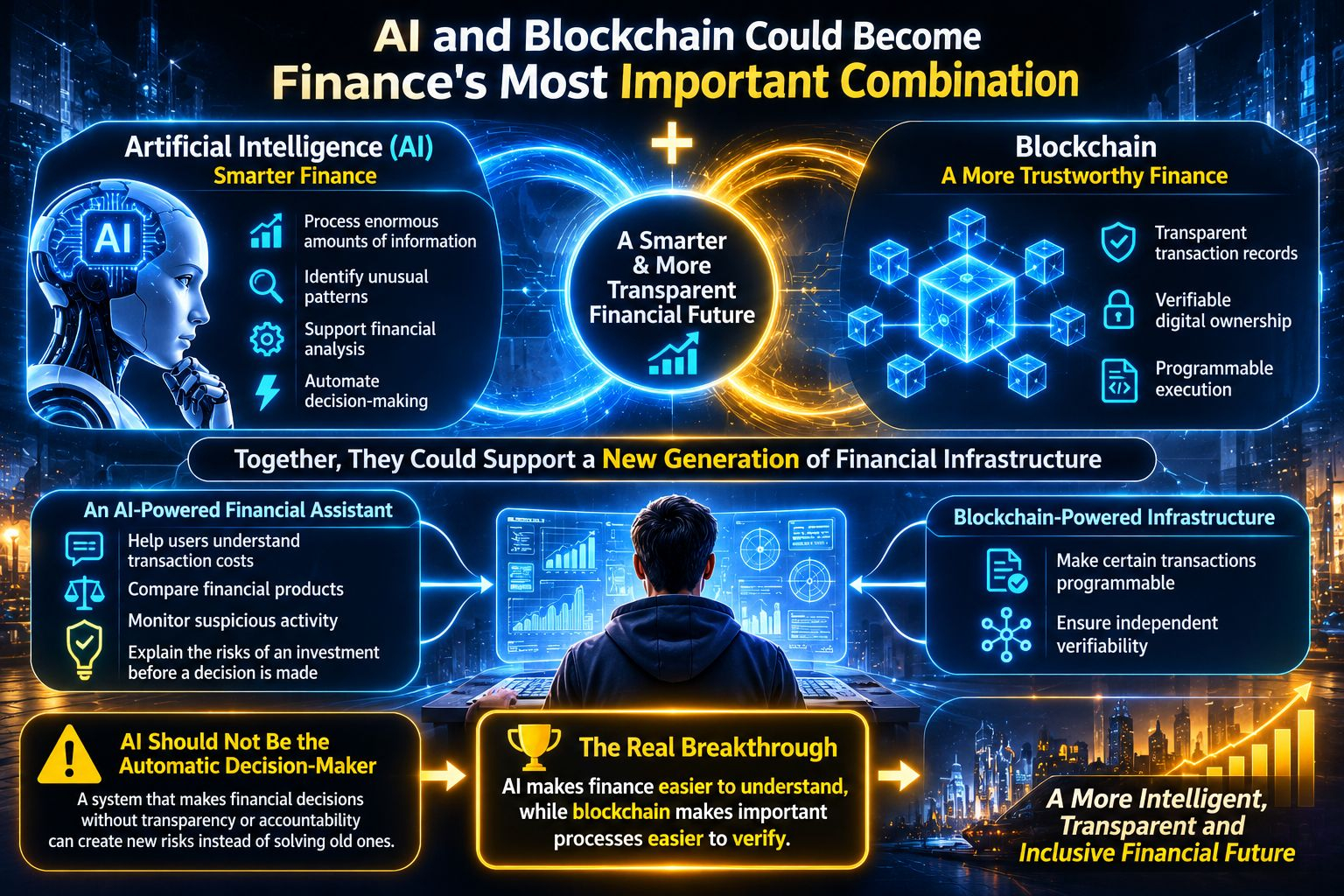
AI can process enormous amounts of information, identify unusual patterns, support financial analysis, and help automate decision-making.
Blockchain can provide transparent transaction records, verifiable digital ownership, and programmable execution.
Together, they could support a new generation of financial infrastructure.
Consider a future where an AI-powered financial assistant helps a user understand transaction costs, compare financial products, monitor suspicious activity, and explain the risks of an investment before a decision is made.
Behind that experience, blockchain-based infrastructure could make certain transactions programmable and independently verifiable.
However, I do not believe AI should automatically become the decision-maker.
A system that makes financial decisions without transparency or accountability can create new risks instead of solving old ones.
The real breakthrough will happen when AI makes finance easier to understand while blockchain makes important processes easier to verify.
3. Trust Will Become More Valuable Than Transaction Speed
There is something the industry needs to recognize.
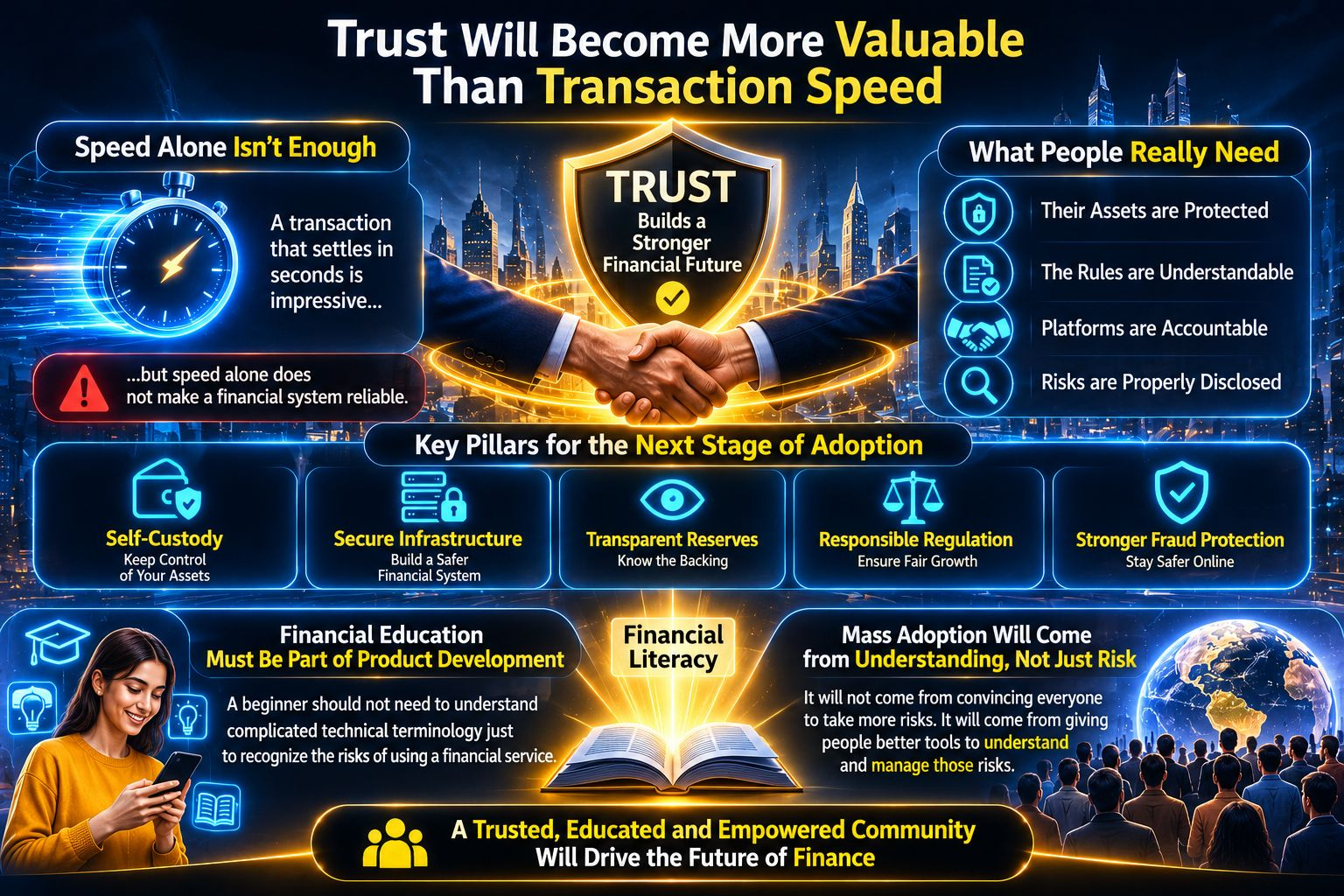
A transaction that settles in seconds is impressive, but speed alone does not make a financial system reliable.
People also need confidence that their assets are protected, the rules are understandable, the platforms are accountable, and the risks are properly disclosed.
This is where the next stage of adoption will be decided.
Self-custody, secure infrastructure, transparent reserves, responsible regulation, and stronger protection against fraud are not secondary features. They are essential foundations.
I also believe financial education must become part of product development.
A beginner should not need to understand complicated technical terminology just to recognize the risks of using a financial service.
If the industry wants billions of people to participate, it must make financial products understandable before making them more sophisticated.
Mass adoption will not come from convincing everyone to take more risks. It will come from giving people better tools to understand and manage those risks.
4. The Biggest Opportunity Is Financial Inclusion
This is the part of the future I care about most.
Financial innovation is often discussed through the perspective of institutions, major investors, and technology companies.
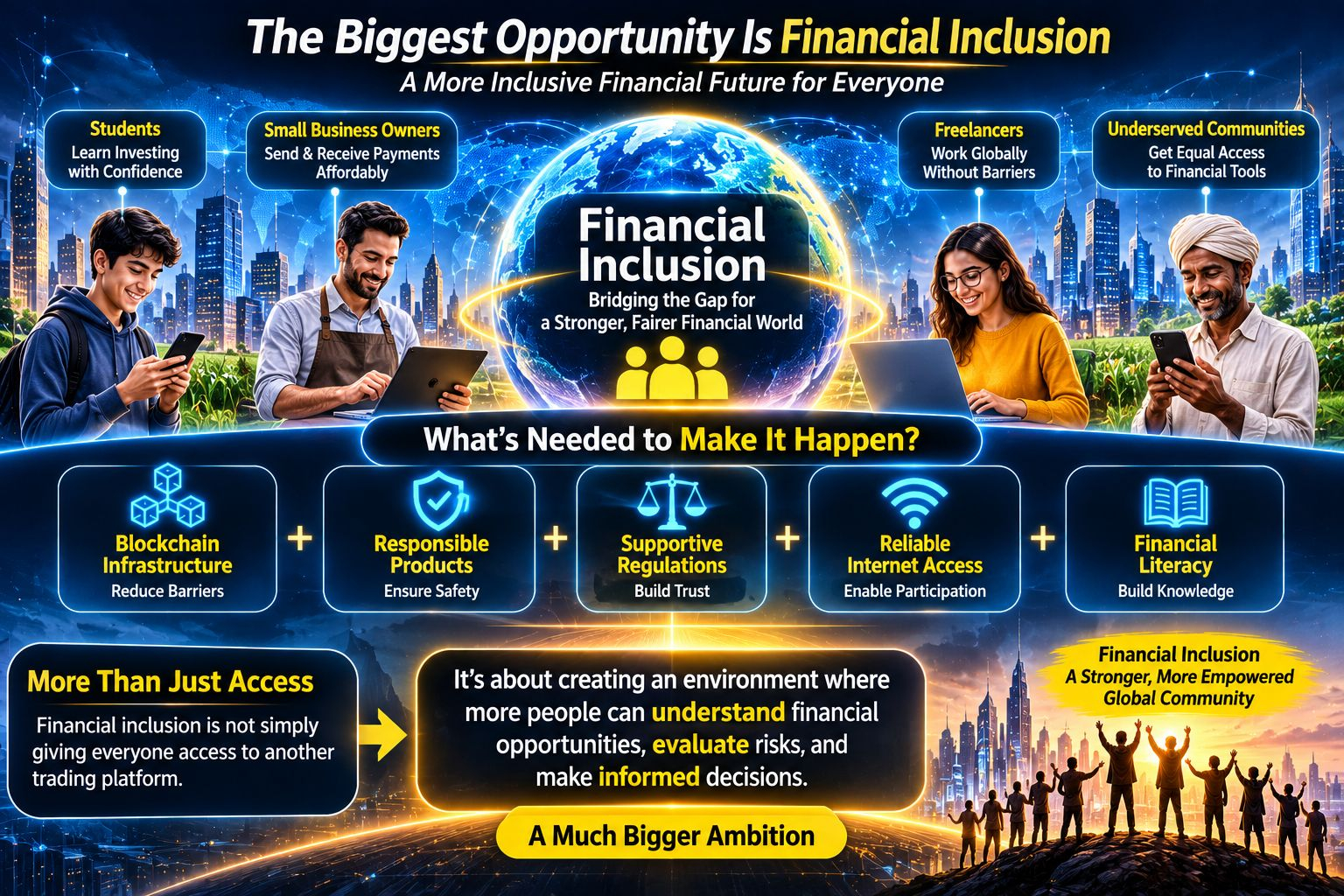
But what about the student who wants to learn investing? The small business owner who needs affordable international payments? The freelancer who works with clients across different countries?
Their financial needs deserve equal attention.
For someone starting with limited resources, access to information, affordable financial services, and understandable tools can make a meaningful difference.
Blockchain-based financial infrastructure could help reduce certain barriers, but accessibility must be supported by responsible products, local regulations, reliable internet access, and financial literacy.
I do not see financial inclusion as simply giving everyone access to another trading platform.
I see it as creating an environment where more people can understand financial opportunities, evaluate risks, and make informed decisions.
That is a much bigger ambition.
5. What I Want to See at Binance Blockchain Week Bangkok 2026
The theme EVOLVE raises an important question for me:
Are we building a more advanced financial system, or are we actually building a better one?
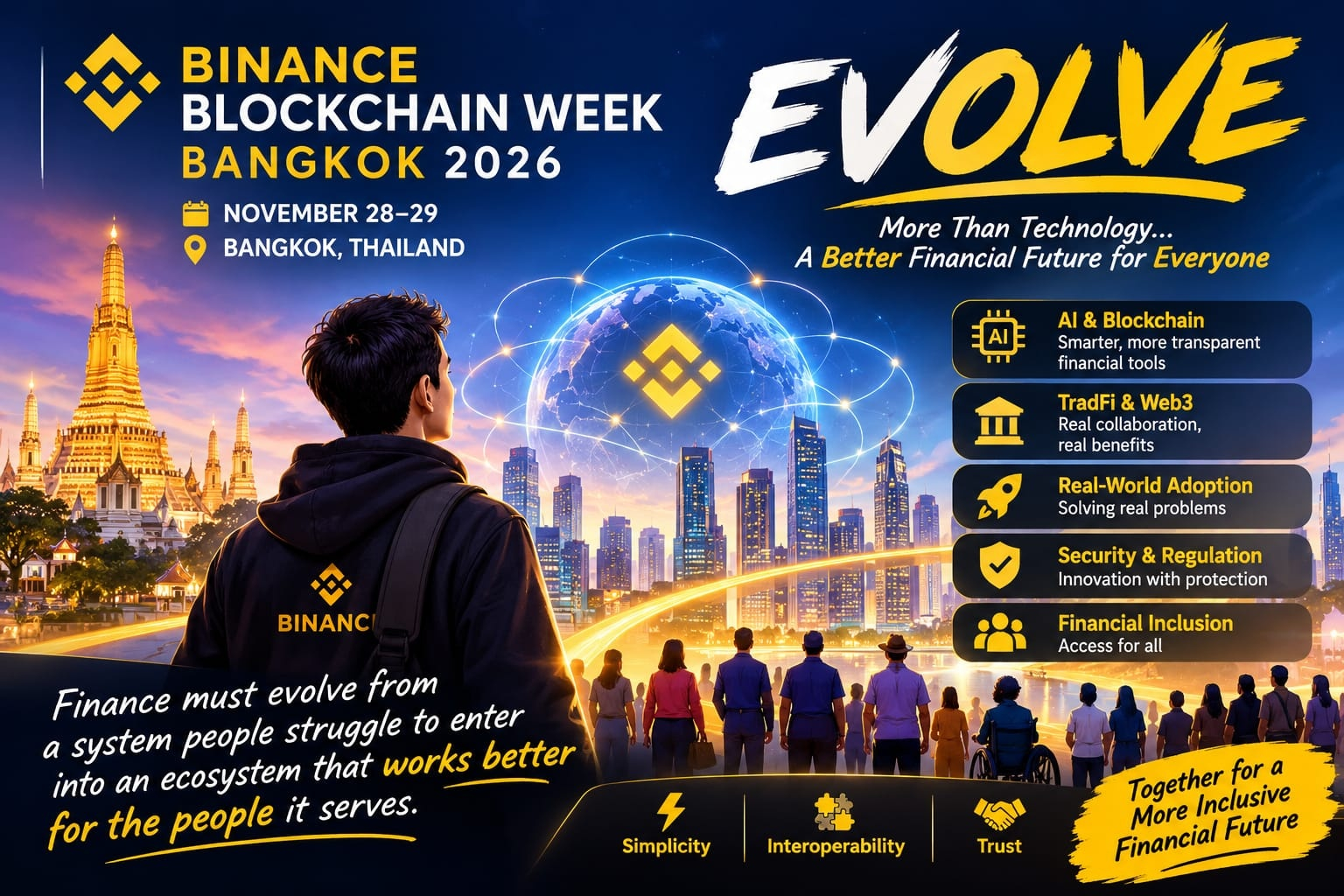
At Binance Blockchain Week Bangkok on November 28–29, I am especially interested in the conversations that connect technology with practical adoption.
Here are the questions I would love to see addressed:
- AI and blockchain: How can intelligent financial tools become more transparent, accountable, and useful for everyday users?
- Traditional finance and Web3: What will meaningful cooperation between banks, blockchain networks, and digital asset platforms look like?
- Real-world adoption: Which blockchain applications are solving existing financial problems rather than creating temporary excitement?
- Security and regulation: How can innovation grow without compromising consumer protection?
- Financial inclusion: What needs to change before someone with limited capital and no technical background can confidently access modern financial services?
I am also interested in how the industry moves beyond individual products toward an interconnected financial experience.
The future should not force users to understand ten different systems just to complete basic financial activities.
Simplicity, interoperability, and trust will matter enormously.
The Challenge: Evolution Must Be Responsible
I am optimistic about the direction of financial technology, but I am not convinced that every innovation will automatically improve the system.
Tokenized assets can still face liquidity challenges. AI can produce incorrect information. Smart contracts can contain vulnerabilities. Digital ownership does not eliminate regulatory or counterparty risks.
And greater accessibility without proper education can expose inexperienced users to new forms of financial loss.
These are not reasons to reject innovation.
They are reasons to build it properly.
The winners of the next financial era will not necessarily be the platforms with the most features or the loudest announcements.
They will be the ones that solve real problems while earning people's trust.
My Final Take: EVOLVE Must Mean More Than Technology
If I could define the next chapter of finance in one sentence, it would be this:
Finance must evolve from a system that people struggle to enter into an ecosystem that works better for the people it serves.
Faster payments are valuable. Tokenization is exciting. AI-powered financial services have enormous potential. But none of these developments will reach their full potential if ordinary people remain excluded or unable to understand the systems they are using.
That is why I am looking beyond announcements and impressive demonstrations at Binance Blockchain Week Bangkok 2026.
I want to see practical ideas, honest conversations, stronger infrastructure, and solutions that can make a difference outside the conference room.
Because the biggest achievement of financial evolution will not be how advanced the technology becomes.
It will be how many more people finally get a meaningful opportunity to participate.
That is the future of finance I want to see. And that is what EVOLVE should stand for.
@Binance Blockchain Week @Binance Academy
@Binance Square Official