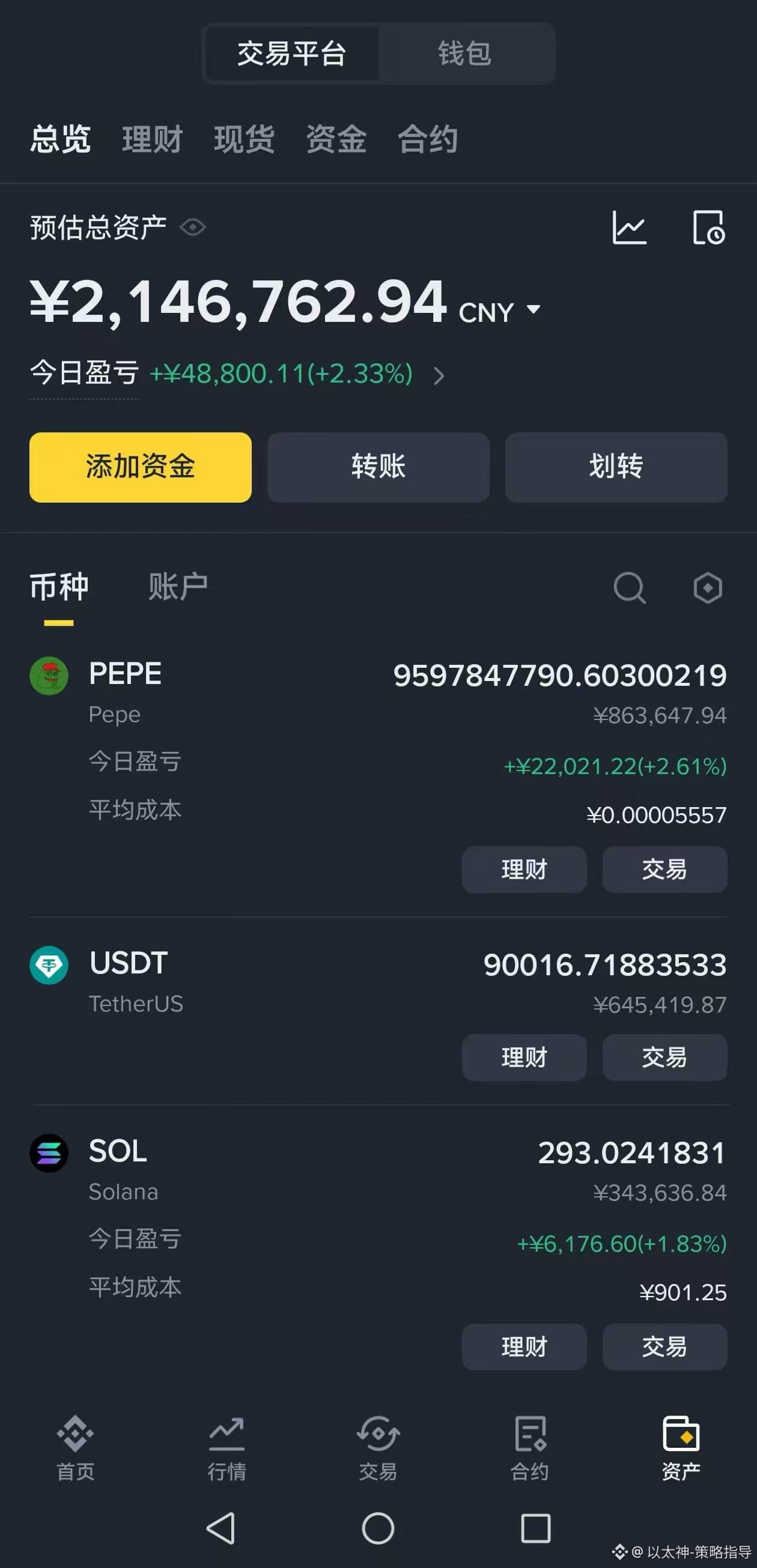
You wake up and find an extra 500,000 in your account. What’s your first reaction?
When it happened to me, I stared at the screen. I didn’t feel overjoyed—instead, I felt strangely empty.
The wealth I’d chased with everything I had turned out to be nothing more than a string of numbers once it was mine.
I’ve been in crypto for eight years, and I’ve seen bull and bear markets, soaring rallies and brutal crashes.
Some people got rich overnight; others watched their principal vanish in the blink of an eye.
Over four years, I gradually grew 50,000 U into 3 million U—not through insider information or luck, but by sticking to a trading strategy that’s almost laughably simple.
For 1,460 days, I treated trading like leveling up in a game: losses were damage taken, stop-losses were a trip back to safety, and reviewing my trades was how I sharpened my skills.
People often ask me what the key to making money is. Today, I’m sharing six hard-and-fast rules.
Understand one, and you’ll avoid losing 100,000; follow three, and you’ll outperform most retail traders.
1. Trading volume is more telling than candlesticks. A fast rise followed by a slow decline often means accumulation.
A true top is often followed by a sharp plunge on heavy volume.
2. A flash crash doesn’t mean the price has bottomed. The slow rebound after a steep drop is often a window for selling. It may look like an opportunity, but it’s really a chance to get fleeced a second time.
3. The biggest danger at a high price is a quiet market. Heavy volume at a high doesn’t necessarily mean an immediate drop, but when volume suddenly dries up and the market goes quiet, a major fall is often just around the corner.
4. A bottom takes time to form. A single bullish candlestick can’t establish one. A prolonged period of low-volume sideways trading, followed by a breakout on heavy volume, is the signal worth watching.
5. Candlesticks show the outcome; trading volume reflects market sentiment. Low volume means the market is quiet; high volume means money is flowing in. Wherever the money goes, the market follows.
6. Skilled traders know how to sit on the sidelines. Don’t chase highs or stubbornly hold on. If there’s no good opportunity, wait patiently.
In the end, the key to trading is letting go of attachment.
Crypto is never short on opportunities. What’s in short supply are people who can keep their hands off the buy button.
Many people don’t fail because they can’t read the market; they just can’t resist jumping in again and again without a plan.
The rules are right there in front of you. Whether you can stick to your principles is up to you.
#BitcoinActiveSupplyInProfitDropsBelow45% $RARE