
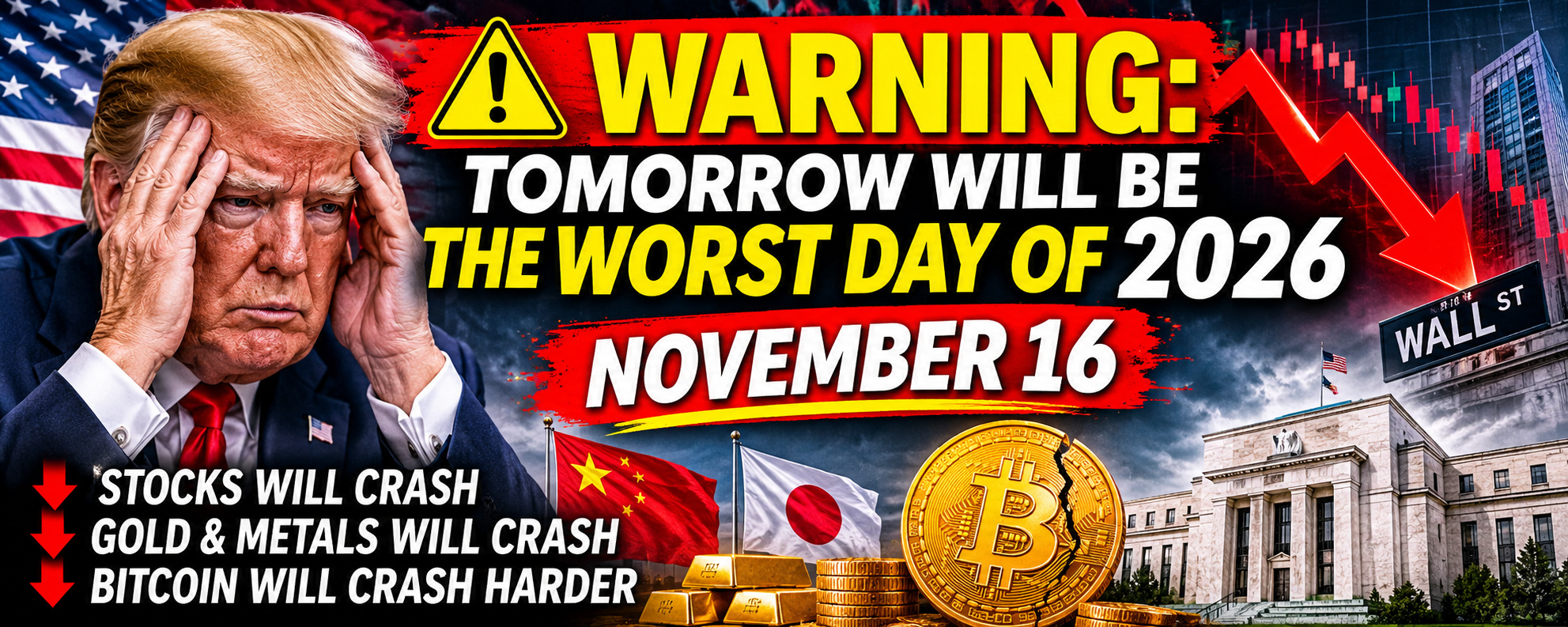

Global financial markets are entering a period of extreme uncertainty as investors face growing concerns over inflation, rising Treasury yields, geopolitical tensions, AI-related market risks, and $Bitcoin’s ongoing volatility.
The biggest concern is not a single event, but the combination of several pressures developing at the same time.
One of the major warning signs is growing pressure in the U.S. Treasury market. Reports of continued foreign selling by major holders such as China and Japan have raised concerns about who will absorb the enormous supply of U.S. government debt. If demand weakens, investors may require higher yields to hold Treasuries.
Higher Treasury yields can create pressure across the entire financial system because they increase borrowing costs and make riskier assets less attractive.
That pressure can extend to stocks, real estate, technology companies and cryptocurrencies such as $Bitcoin.
At the same time, inflation remains a major concern. Persistent inflation can make it more difficult for the Federal Reserve to quickly ease monetary policy. Any combination of higher inflation and elevated yields could create additional stress for financial markets.
Another major risk is the AI sector.
After enormous gains in recent years, investors are increasingly questioning whether valuations in parts of the AI market have moved too far, too quickly. A sharp decline in AI-related stocks could trigger broader risk-off sentiment if investors begin selling other high-risk assets as well.
$Bitcoin could be particularly sensitive to this environment because it often trades as a risk asset during periods of intense market uncertainty. If investors move toward cash and safer assets, cryptocurrencies could experience significant volatility.
Geopolitical risks are adding another layer of uncertainty.
Continued tensions around the Strait of Hormuz and potential disruptions to global energy supplies could keep oil prices elevated. Higher energy costs can increase inflationary pressure and make the outlook for global economies even more complicated.
Meanwhile, the Federal Reserve faces a difficult balancing act.
Providing liquidity can help stabilize financial markets during periods of stress, but policymakers must also remain focused on inflation. Supporting market stability while preventing inflation from becoming persistent is a difficult policy challenge.
This is why investors are watching several indicators at the same time:
→ U.S. Treasury yields
→ Inflation data
→ Federal Reserve liquidity and policy signals
→ Foreign Treasury holdings
→ AI and technology stocks
→ Oil prices and geopolitical developments
→ $Bitcoin and broader crypto-market liquidity
The key point is that these risks do not necessarily mean that stocks, gold, metals or $Bitcoin must crash tomorrow. Markets can react very differently depending on new economic data, central-bank decisions, geopolitical developments and investor positioning.
However, the combination of elevated valuations, inflation concerns, high government debt, rising yields and geopolitical uncertainty means volatility could remain extremely high.
For investors, the most important thing is to watch the underlying signals rather than react emotionally to dramatic predictions.
November 16 could become an important day for market sentiment, but the bigger story is the growing stress across global financial markets and how investors respond to it.
The real question is no longer whether volatility will return — it is how large the next move will be.
#Bitcoin #Crypto #BitcoinCrash #CryptoNews #FinancialMarkets #StockMarket #MarketCrash #Inflation #FederalReserve #Fed #TreasuryYields #USDebt #China #Japan #Gold #Silver #AI #AIBubble #GlobalEconomy