
How should investors in Korean memory stocks, Hong Kong stocks, and A-shares handle the open?
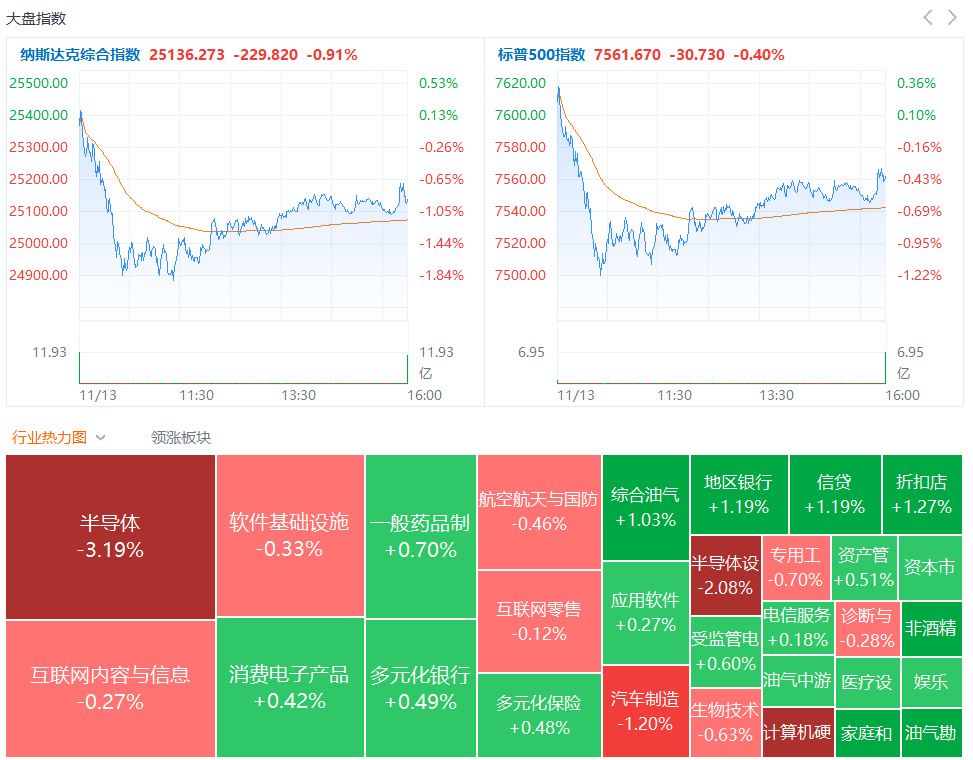
On Friday, the Nasdaq—not the Dow—took the hardest hit among U.S. indexes. The Dow even gained 0.10%, while the Nasdaq slumped 0.91%, with tech stocks leading the declines, down 1.70%.
What does this tell us? The market isn’t simply “falling”—it’s “changing tables”: money is getting up from the AI table and shifting over to consumer staples and energy.
The aftershocks of Nvidia’s CEO resignation haven’t died down, and HSBC has gone straight to a “Hold” rating. Memory chip stocks are caught in the fallout.
It’s even livelier across Asia-Pacific: South Korea’s KOSPI rose 4.56% for the week, but SK Hynix dragged it down 3% on Friday alone. The Hang Seng Index fell 3.45% for the week, with the Hang Seng Tech Index squeezed by volatility in international tech stocks and U.S. interest rates. The Shanghai Composite was down 0.41% for the week, making it look the most resilient, but the correlation between the ChiNext and Korean and Japanese chip stocks is as high as 0.91. Don’t assume it can escape unscathed.
The real weekend risk isn’t the stock market—it’s interest rates.
On Friday morning, Boston Fed President Collins was still saying that “the direction of monetary policy is higher, and additional tightening will come soon.” Waller had already put a “50-basis-point rate hike in December” on the table, and the market-implied probability of a 25-basis-point hike in December has climbed to 87%.
Next week brings a triple whammy: Fed meeting minutes, retail sales data, and Nvidia earnings. If any of them surprise, Korean, Hong Kong, and A-share markets will have to digest U.S. market sentiment first when they open.
As for what to do: Don’t chase a tech rebound at Monday’s open. Lean defensive, and first see how Korean stocks open.
If the KOSPI opens down more than 1% and SK Hynix continues to lead the declines, the Hang Seng Tech Index will likely follow. Don’t rush to buy the dip in A-share tech stocks either; wait for the first wave of panic selling to ease before looking for signs of support.
What’s really worth watching, instead, are low-level defensive plays in A-shares that are decoupled from the AI narrative, along with the direction of northbound funds during the first half hour of trading. If northbound funds don’t sell heavily, A-shares may “open lower and form a base” rather than “open lower and see a panic sell-off.”$KORU $ZHONGJI $UNITREE