
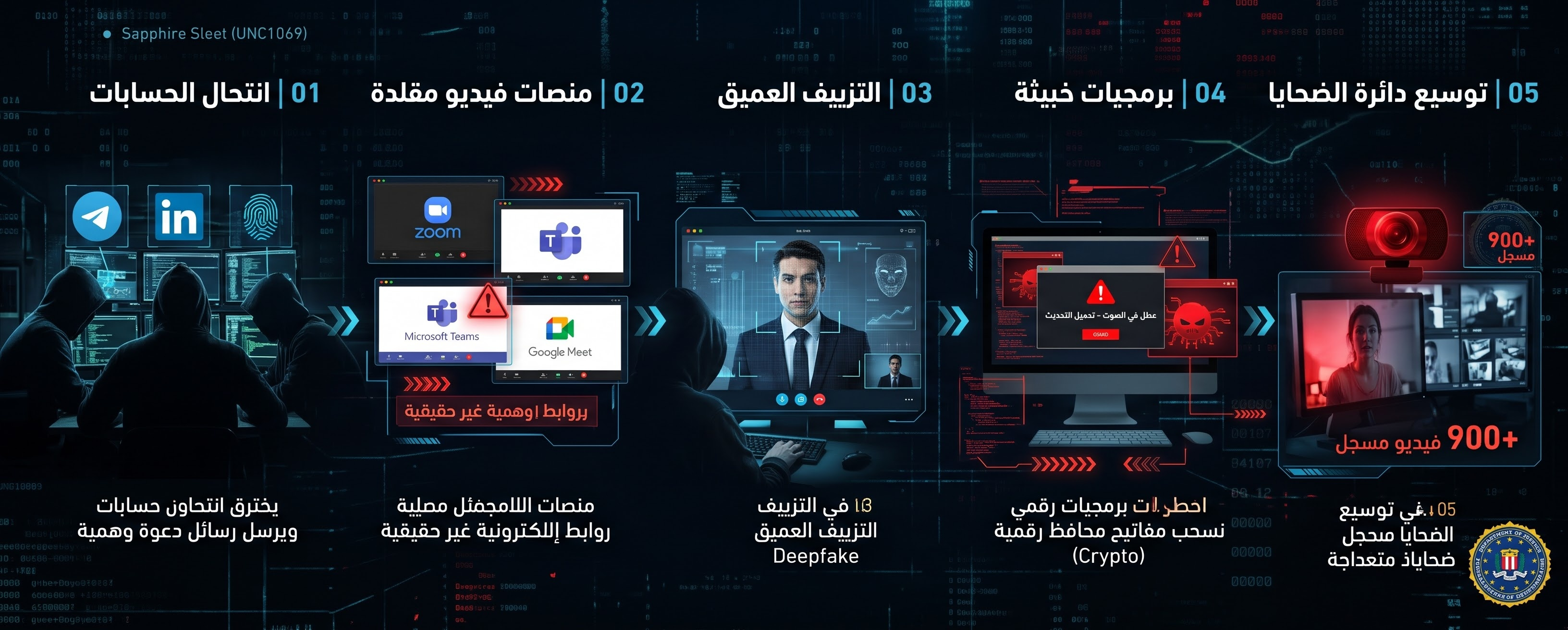





How the "FaceStealer" scheme works
The operation is carried out by a North Korean-backed hacking group known as Sapphire Sleet or UNC1069. The hacking operation goes through four main stages, as reported by Al Arabiya and Asharq News:
• Impersonating trusted accounts. The hackers take control of real accounts belonging to previous victims on social and messaging platforms such as Telegram and LinkedIn, then send video meeting invitations to their acquaintances and colleagues in the industry.
• Fake video conferencing platforms. Targets are lured into links that mimic the interfaces of popular meeting apps such as Zoom, Microsoft Teams, and Google Meet.
• Deepfake clips and stolen recordings. A secretly recorded video of a trusted contact appears on screen, or an AI-generated deepfake video featuring well-known and influential figures in the cryptocurrency sector is used to gain the victim’s trust.
• The audio malfunction ruse and software installation. Attackers fabricate a technical problem with the audio, and a message appears asking the victim to click a link to update the software or fix the audio. This results in malware being installed that steals digital wallet keys and account details.
• Expanding the pool of victims. During the call, hackers secretly record the new victim’s webcam video to use later to deceive their acquaintances. The FBI has seized more than 900 videos of victims who fell for this scheme.
U.S. actions and the link to the Binance hack
This announcement coincided with broader judicial and security measures by U.S. authorities to pursue the stolen assets, according to Euronews and BBC reports:
• Targeting the infrastructure. The U.S. Department of Justice seized the cloud servers used to run the “Face Stealer” campaign, disrupting the group’s activities.
• Distinguishing it from the Binance hack. U.S. authorities clarified that the Sapphire Sleet group is separate from the North Korean military hacking group known as TraderTraitor, which the FBI has attributed with stealing more than $6 billion from the Binance platform in late October 2026.
• Freezing and seizing funds. The Department announced that it had obtained a court order to seize and restrict more than $1.2 billion in funds from the Binance hack. This was part of joint efforts with the private sector that resulted in the freezing of more than $2.7 billion in stolen digital assets.
• Prevention recommendations. The FBI advised users to verify callers’ identities through a separate, independent communication channel before making any financial transactions or downloading any files, and not to comply with requests to update software immediately during calls.