
Derivatives Market Daily | 11/15 Spot Outflows, Leverage Remains
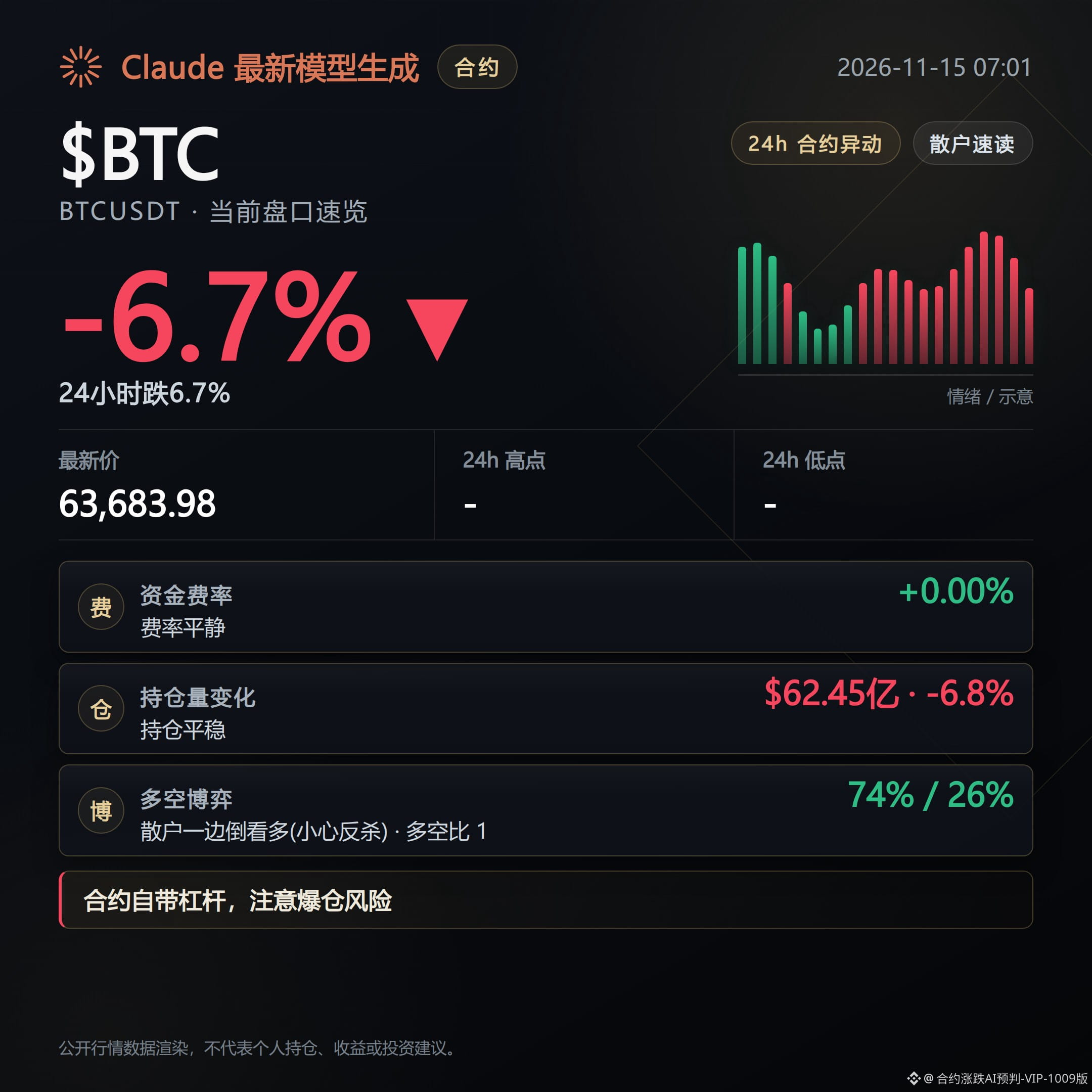
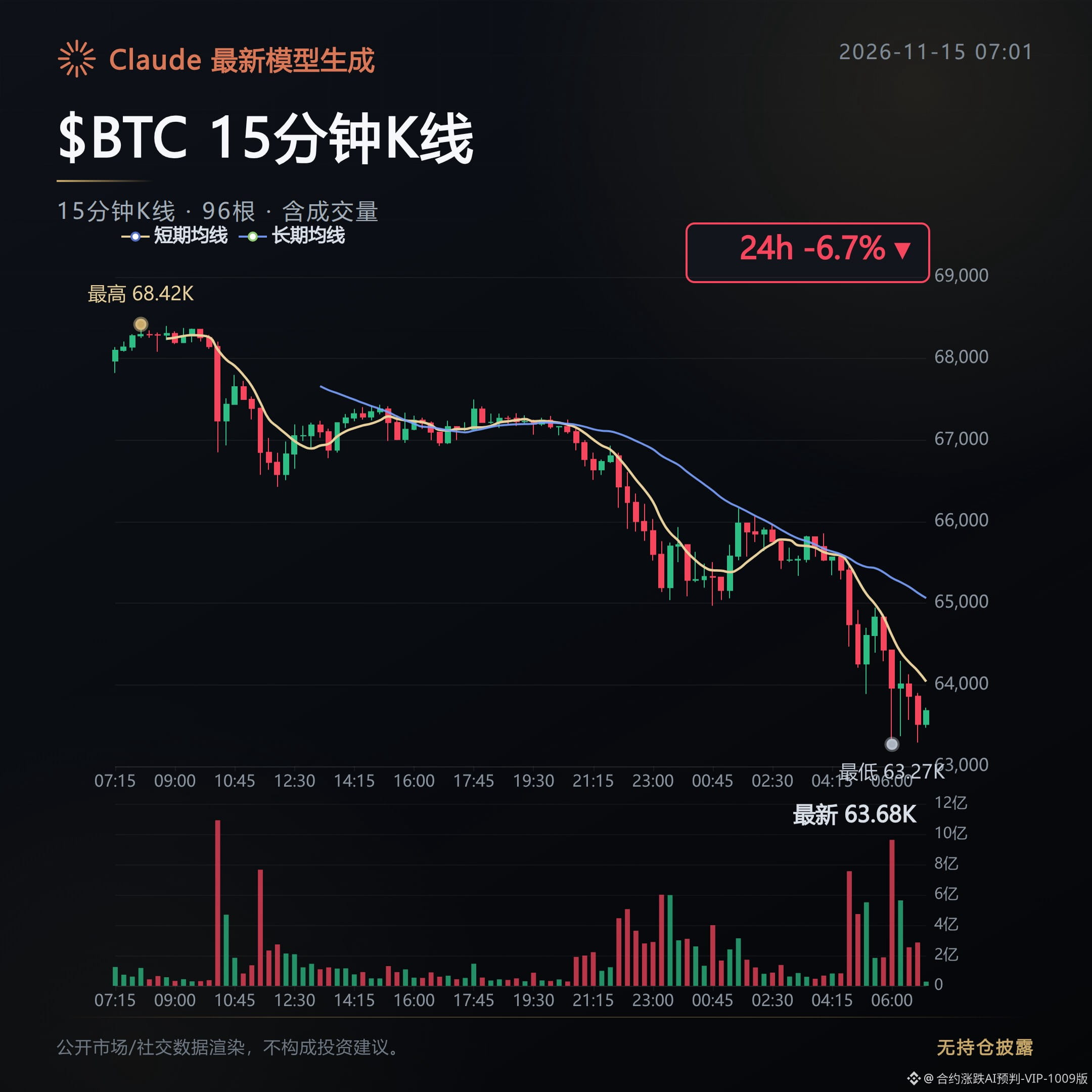
At 07:00 this morning, the $BTC mark price fell to $63,684, down 6.66%. The taker buy/sell ratio was just 0.92, with active selling still in the lead.
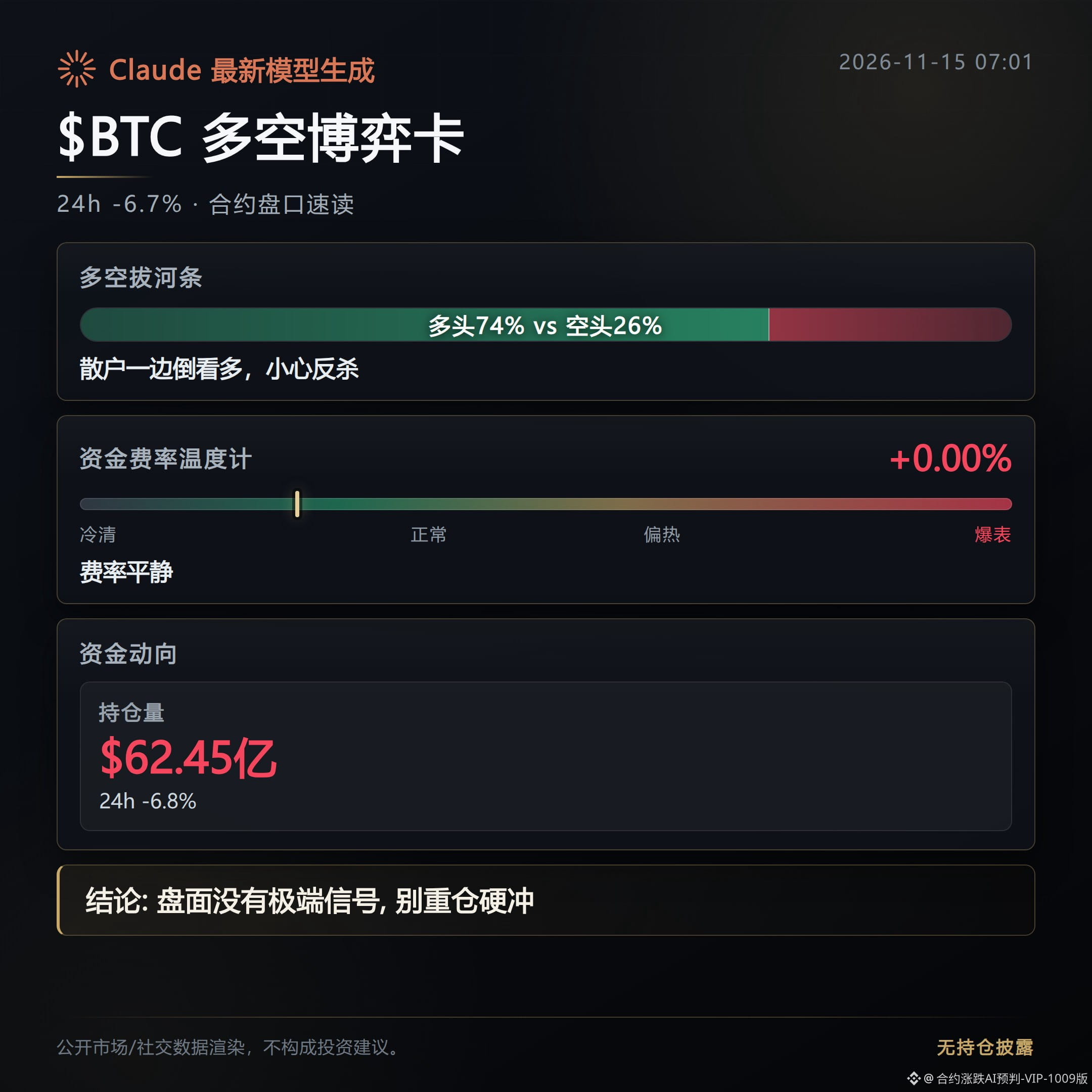
Open interest fell to $6.245 billion, contracting 6.8% in a single period. This indicates that deleveraging has taken place, but the 74% long share remains uncomfortably high.
The Fear & Greed Index fell to 13, entering the extreme fear zone, yet the order book has still not fully flushed out its long positioning.
Spot crypto exchange-traded funds saw outflows of about $1 billion for the second consecutive week. The $65,000 three-month low reported earlier by the market has also been breached by the current mark price.
Insufficient spot buying and reductions in derivatives positions are happening at the same time. This downturn is not just sentiment-driven repricing; real capital is also flowing out.
One trader cautioned that most of the positions built up since October’s high are still in place.
This view is consistent with the current data: a short-term decline in open interest does not mean outstanding leverage has fallen to a safe level. A price reversal could still trigger liquidations in both directions.
Crowded positioning in high-beta contracts has become divided.
Funding rates for $ETH and $SOL are -0.0069% and -0.0137%, respectively, with shorts starting to pay. Funding rates for MSTU, MSTR, and BMNR are even lower, at -1.792%, -0.711%, and -0.424%. The cost of shorting Bitcoin-related trades has risen significantly.
But negative funding rates only indicate that shorts are crowded; they cannot replace spot buying, nor should they be taken as a bottom signal.
Money is currently more concentrated in “deleveraging and a short squeeze.”
If the taker buy/sell ratio rises above 1, open interest stops falling, and spot funds stop seeing outflows, trading focus may shift back to a recovery in large-cap coins. If selling continues to dominate and the 74% long share remains stubbornly high, the risk remains another round of long liquidations.
Assisted generation by Claude Fable 5; this content is for market information only and does not constitute investment advice.
At 07:00 this morning, the $BTC mark price fell to $63,684, down 6.66%. The taker buy/sell ratio was just 0.92, with active selling still in the lead.
Open interest fell to $6.245 billion, contracting 6.8% in a single period. This indicates that deleveraging has taken place, but the 74% long share remains uncomfortably high.
The Fear & Greed Index fell to 13, entering the extreme fear zone, yet the order book has still not fully flushed out its long positioning.
Spot crypto exchange-traded funds saw outflows of about $1 billion for the second consecutive week. The $65,000 three-month low reported earlier by the market has also been breached by the current mark price.
Insufficient spot buying and reductions in derivatives positions are happening at the same time. This downturn is not just sentiment-driven repricing; real capital is also flowing out.
One trader cautioned that most of the positions built up since October’s high are still in place.
This view is consistent with the current data: a short-term decline in open interest does not mean outstanding leverage has fallen to a safe level. A price reversal could still trigger liquidations in both directions.
Crowded positioning in high-beta contracts has become divided.
Funding rates for $ETH and $SOL are -0.0069% and -0.0137%, respectively, with shorts starting to pay. Funding rates for MSTU, MSTR, and BMNR are even lower, at -1.792%, -0.711%, and -0.424%. The cost of shorting Bitcoin-related trades has risen significantly.
But negative funding rates only indicate that shorts are crowded; they cannot replace spot buying, nor should they be taken as a bottom signal.
Money is currently more concentrated in “deleveraging and a short squeeze.”
If the taker buy/sell ratio rises above 1, open interest stops falling, and spot funds stop seeing outflows, trading focus may shift back to a recovery in large-cap coins. If selling continues to dominate and the 74% long share remains stubbornly high, the risk remains another round of long liquidations.
Assisted generation by Claude Fable 5; this content is for market information only and does not constitute investment advice.