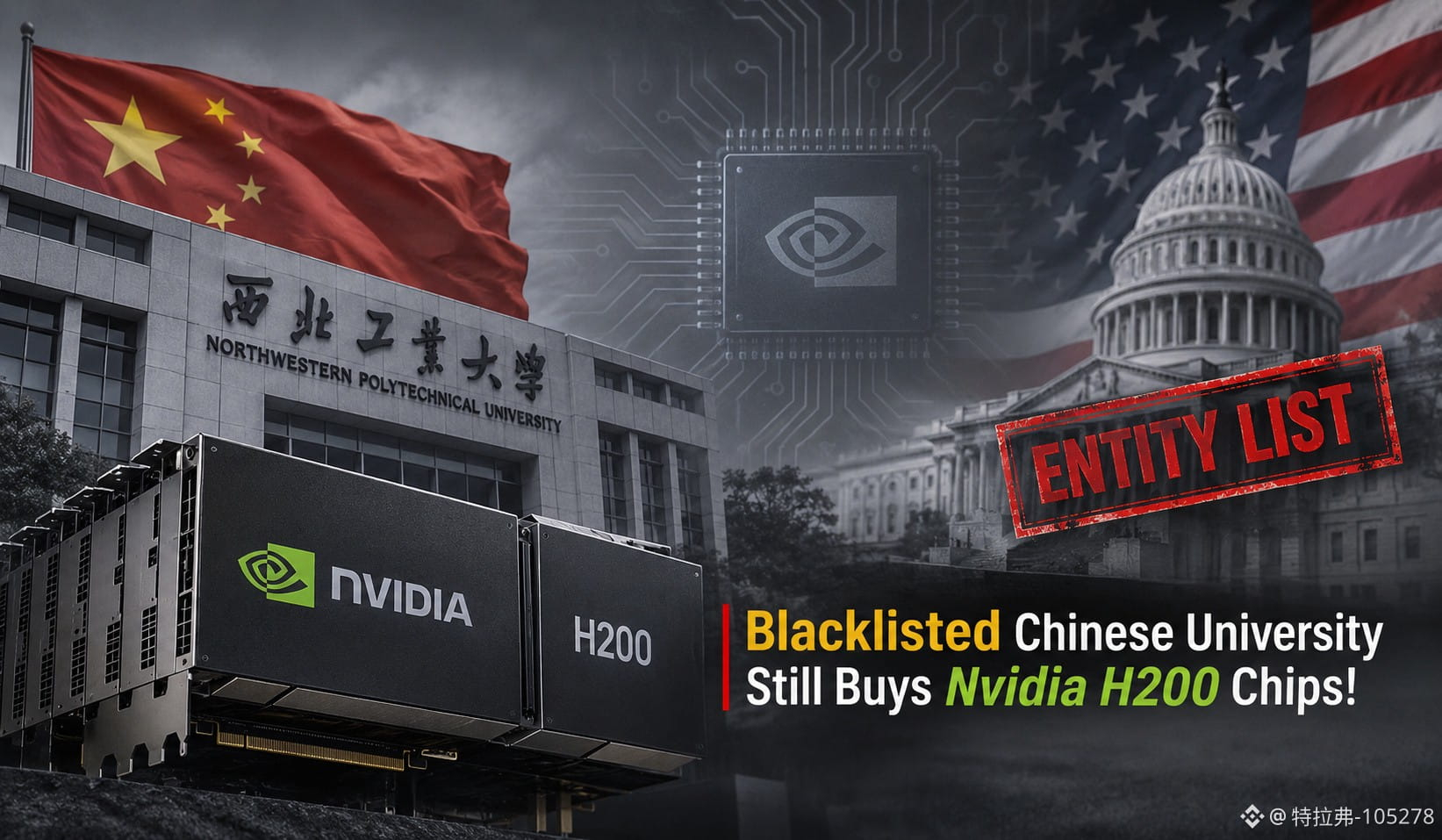
Blacklisted Chinese university reportedly acquires Nvidia H200 AI chips despite U.S. restrictions!
A major development has raised questions about the effectiveness of U.S. semiconductor export controls.
According to procurement records reviewed by Reuters, Northwestern Polytechnical University, a Chinese university with ties to military research, reportedly purchased two Nvidia H200 AI accelerators for a total of 874,700 yuan (about $123,000).
Interestingly, the university is on the U.S. Department of Commerce’s Entity List, which generally means exports of advanced U.S. technology to the institution are restricted.
🔹 How did this happen? The purchase reportedly wasn’t made directly through Nvidia, but through a Chinese intermediary, Shaanxi Bosuan Network Technology Co., Ltd.
🔹 Access to more computing power: The university also reportedly gained access to servers equipped with Nvidia H200, A100, and A800 chips through lease agreements.
🔹 Why does this matter? The case has raised concerns that domestic suppliers and leased computing infrastructure could offer alternative ways to access restricted AI hardware.
My take: This is about much more than two AI chips. The U.S. is trying to limit China’s access to advanced semiconductor technology, but controlling the entire supply chain is becoming increasingly complex.
For Nvidia, this adds another layer of geopolitical and regulatory uncertainty. For the global AI industry, it also underscores just how intense competition between the U.S. and China has become.
The real question is: Can export restrictions really prevent China from accessing advanced AI computing power?
$NVDA
#WhoWillSucceedJensenHuangatNvidia?