


On November 14, 2026, publicly available market and interest rate data showed that the U.S. Dollar Index closed at 103.40 on Friday, its highest level since April 2025, up 0.25%; the 10-year U.S. Treasury yield closed at 5.14%, climbing back above 5.1%. In the same wave of repricing, spot gold fell to around $3,875, down about 4.7% for the week, while major crypto assets also fell below key levels.
The U.S. Dollar Index’s climb to a 19-month high was driven by two forces: rising Treasury yields, with the 10-year yield back above 5.1%, widening the interest rate advantage; and safe-haven funds flowing back into the dollar. U.S. inflation data that came in above expectations and hawkish remarks from Fed officials reignited expectations of “a rate hike next month.”
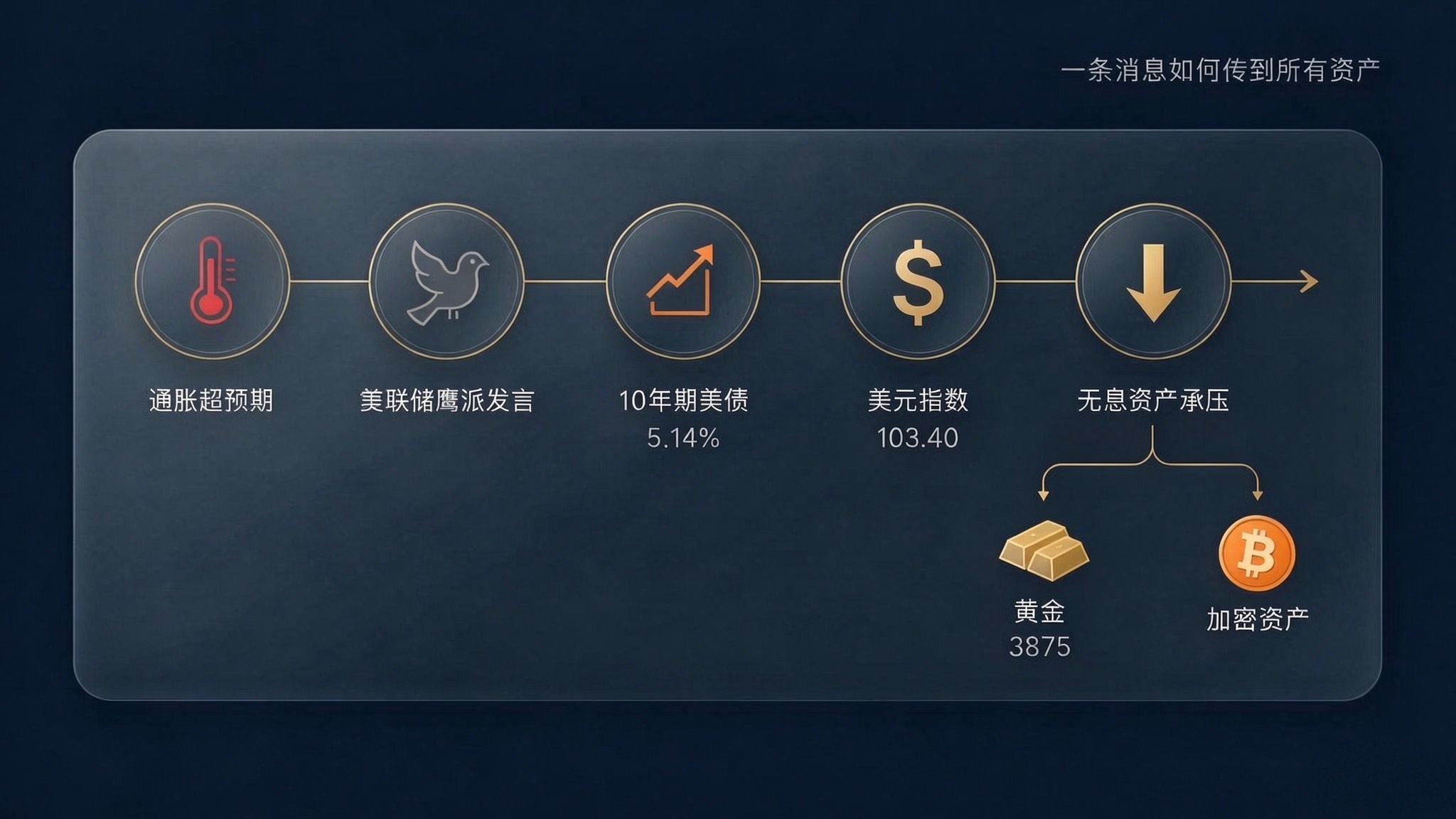
Why are “non-yielding” assets most sensitive to interest rates? Holding things like gold and crypto assets means giving up the interest you could earn by putting that money into interest-bearing assets. When interest rates rise, this opportunity cost becomes clear: for the same amount of money, putting it elsewhere is more worthwhile than holding non-yielding assets, so selling pressure hits them first.
Gold and crypto assets are both under pressure this time—not because of anything specific to either one, but because the same macro switch is being flipped: interest rates are rising and the dollar is strengthening. Understand this connection, and you won’t automatically read a “drop” as “the bear market is here,” or mistake a “rebound” for “a bull-market reversal.” They’re fluctuations in the repricing process, not signals of the endgame.
The most practical takeaway is this: don’t understand assets through a single label. News of an “interest rate hike” travels down the chain, affecting exchange rates, bonds, and the prices of non-yielding assets. If you don’t understand how that transmission works, all you can do is watch your holdings keep shrinking and feel frustrated.$BTC #加密美股齐跌,下轮反弹的驱动力在哪?