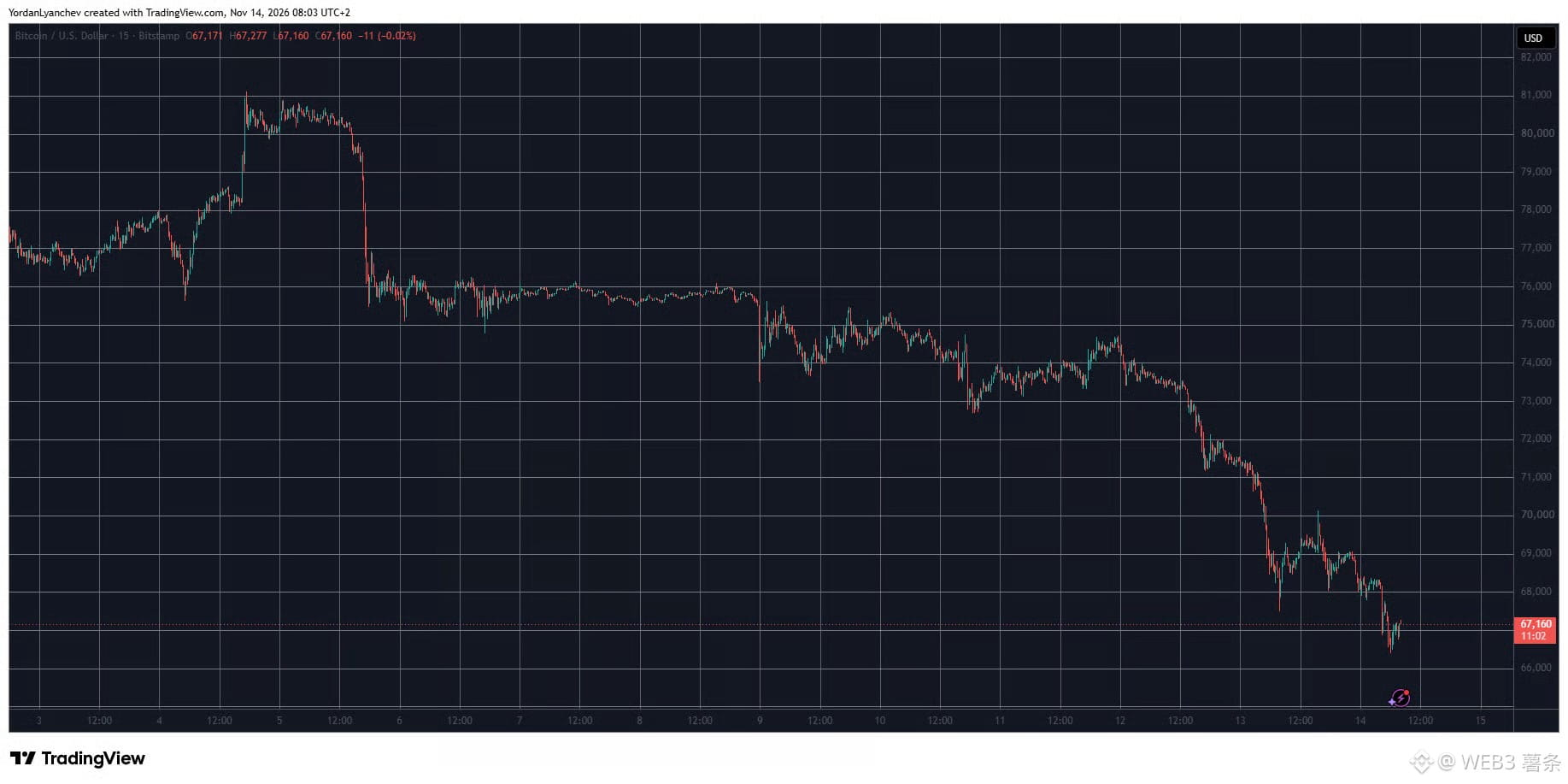
Over the past ten days, #比特币 has experienced sharp fluctuations, with its overall trend continuing to weaken. After the U.S. midterm elections ended, Bitcoin briefly fell below $76,000 before quickly rebounding to $81,000 on November 5. But the rally did not last long, as profit-taking and selling pressure soon sent prices down again.
Last weekend, Bitcoin was relatively stable around $76,000 for a time, but after the new week began, its price once again fell below $74,000. Although bulls tried to defend this level, selling pressure in the market continued to build, and Bitcoin subsequently fell below $73,000.
Meanwhile, U.S. CPI data came in higher than expected, heightening concerns about inflation and interest rates. Investors became more risk-averse, further weighing on the cryptocurrency market.
On Friday, November 13, Bitcoin faced even heavier selling, with its price falling below $68,000 to a multi-month low. Although it briefly rebounded above $70,000 afterward, the rally lacked momentum, and early Saturday it fell again to around $66,500.
The last time Bitcoin fell to this level was in mid-August.
According to CMC data, Bitcoin's total market capitalization has shrunk to around $1.35 trillion, while its market share has also fallen to 59.5%.