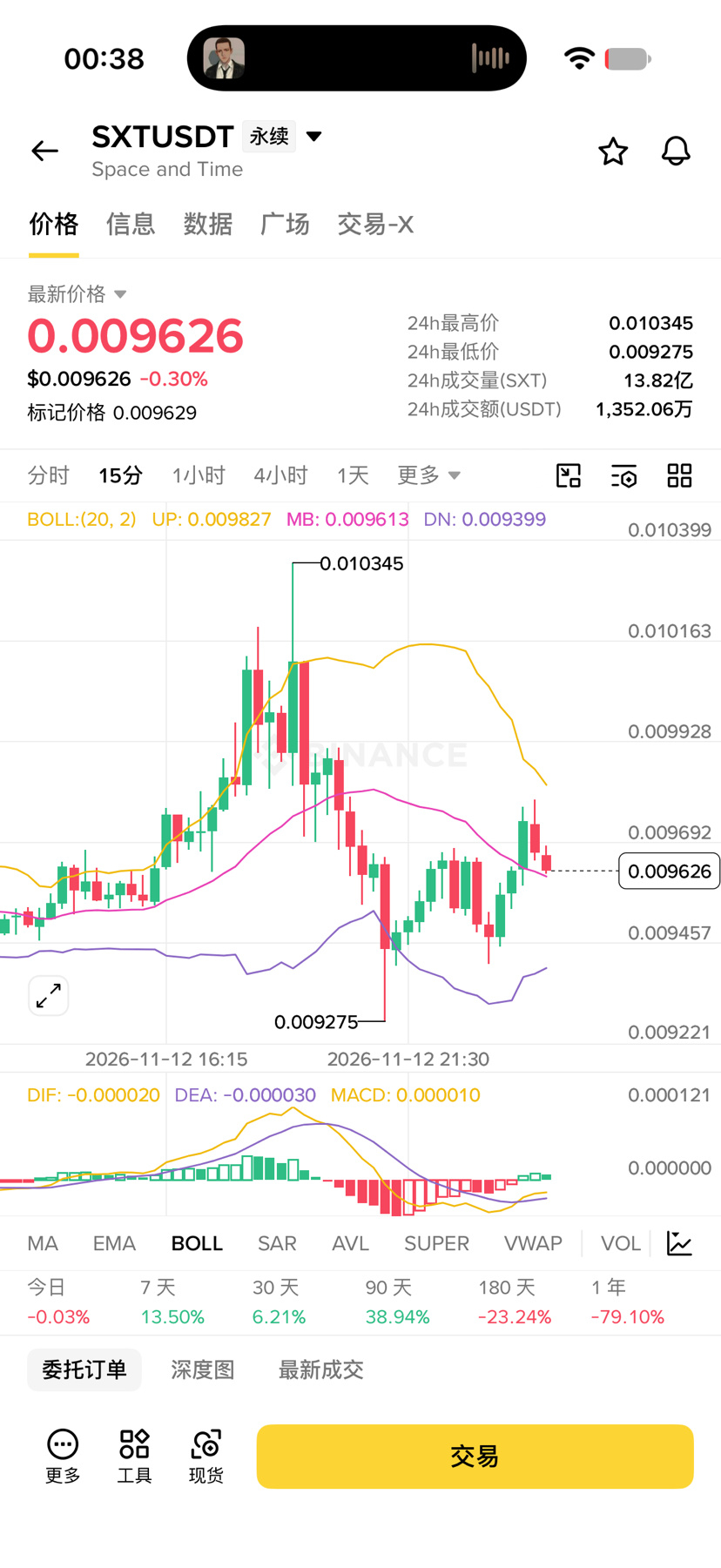
#sxt $SXT @SpaceandTime SXT. What’s truly worth examining about this project isn’t the database, but how it proves that data hasn’t been tampered with.
For example, a DeFi lending protocol might want to adjust a user’s credit limit based on their borrowing and repayment history over the past few months.
Although all these transaction records are on-chain, it would be too costly for a smart contract to go through months of historical data itself. So, a third party usually needs to organize the data in advance and then provide the results to the contract.
But here’s the question: Is the data provided by the third party necessarily accurate? Could it have been altered along the way? And how can the contract tell?
That’s what Space and Time does.
It can organize historical on-chain transactions into data tables that can be queried using SQL. The queries and calculations are performed off-chain, and then a cryptographic proof is generated using Proof of SQL.
Once the contract receives the result, it doesn’t need to recalculate everything. It can verify whether the query was correct and whether the data matches the records that have already been confirmed.
Here’s an important detail: it doesn’t simply tell you that the result is trustworthy—it lets you verify it yourself.
This isn’t just for DeFi.
For example, if AI Agents really do start managing funds in the future, they’ll need data to query account balances, calculate changes in assets, and execute trades. If query results can come with proofs, that could at least reduce reliance on trust in data providers.
Similarly, with RWA asset tokenization, off-chain asset data needs to be checked against on-chain transaction records. Space and Time can also play a role in querying and verifying that data.
Of course, Proof of SQL proves data integrity and the correctness of query computations. It doesn’t mean that every piece of original information entered off-chain is inherently true.
I think this is what makes SXT worth paying attention to. AI, DeFi, and RWA may seem like three separate areas, but for all of them to achieve large-scale adoption, they’ll have to address the same question: Can the data actually be verified?