


On November 11, 2026, MSCI officially announced that it would remove Strategy (formerly MicroStrategy) from the MSCI USA Index, effective after the market close on November 30. Following the announcement, MSTR fell in after-hours trading, with its premarket losses at one point widening to more than 6%. This is more than a simple index adjustment—it is a liquidity stress test for the biggest leveraged experiment in crypto finance history: “issuing shares to buy crypto.”
The impact of this removal can be broken down into a brutal formula: impact = forced selling + premium compression + slower crypto purchases. These are all figures that have already materialized—no speculation, just reality unfolding.
First: Forced selling—the sword of Damocles hanging overhead
Passive fund rebalancing is mechanical and emotionless.
- Size of the selling: JPMorgan estimates that funds tracking the MSCI indexes could sell about $2.8 billion worth of MSTR shares. Strategy itself disclosed that funds tracking the MSCI indexes hold about 13 million shares, or roughly 3.1% of basic shares outstanding. At the November 11 closing price of $122.35, that stake was worth about $1.59 billion.
- Timing: Regardless of which figure you use, index funds must adjust their holdings to match the new index before the November 30 close. The selling is mandatory—not “possible,” but “required.”
- Potential risk: The bigger question mark is December. If index providers such as Nasdaq and S&P adopt the same “non-operating company” rule, JPMorgan estimates the upper limit at $8.8 billion. MSCI fired the first shot. Whether others follow will become clear in December.
Second: Premium compression—the fuel tank is almost empty
The core premise of Strategy’s “issue shares to buy BTC” playbook is that its share price must be above net asset value (mNAV > 1). The premium is the fuel; without it, the flywheel can’t turn.
- Current holdings: As of November 8, Strategy held 850,364 BTC, acquired at a total cost of $64.16 billion, for an average price of $75,456 per BTC.
- Pressure from unrealized losses: BTC is hovering around $73,000 (as of November 12), putting the holdings’ market value at about $62 billion and leaving them with roughly $2 billion in unrealized losses.
- Premium fading: The company’s website puts mNAV at 1.08—its share price is only 8% above net asset value. This premarket drop will make the premium even thinner. MSTR closed at $122.35 on November 11, down 9.79% over five trading days and 19.87% over a month. It has fallen by more than half from its 52-week high of $249.96.
- The logic is reversing: mNAV has compressed from several times last year to 1.08, and the fuel tank is almost empty. Index demand was once part of the premium; removing it will squeeze the premium further. Once it drops below 1, the share price will be cheaper than net asset value, completely reversing the flywheel logic: issuing shares to buy BTC becomes “selling shares cheaply to buy BTC,” which is pure dilution for existing shareholders.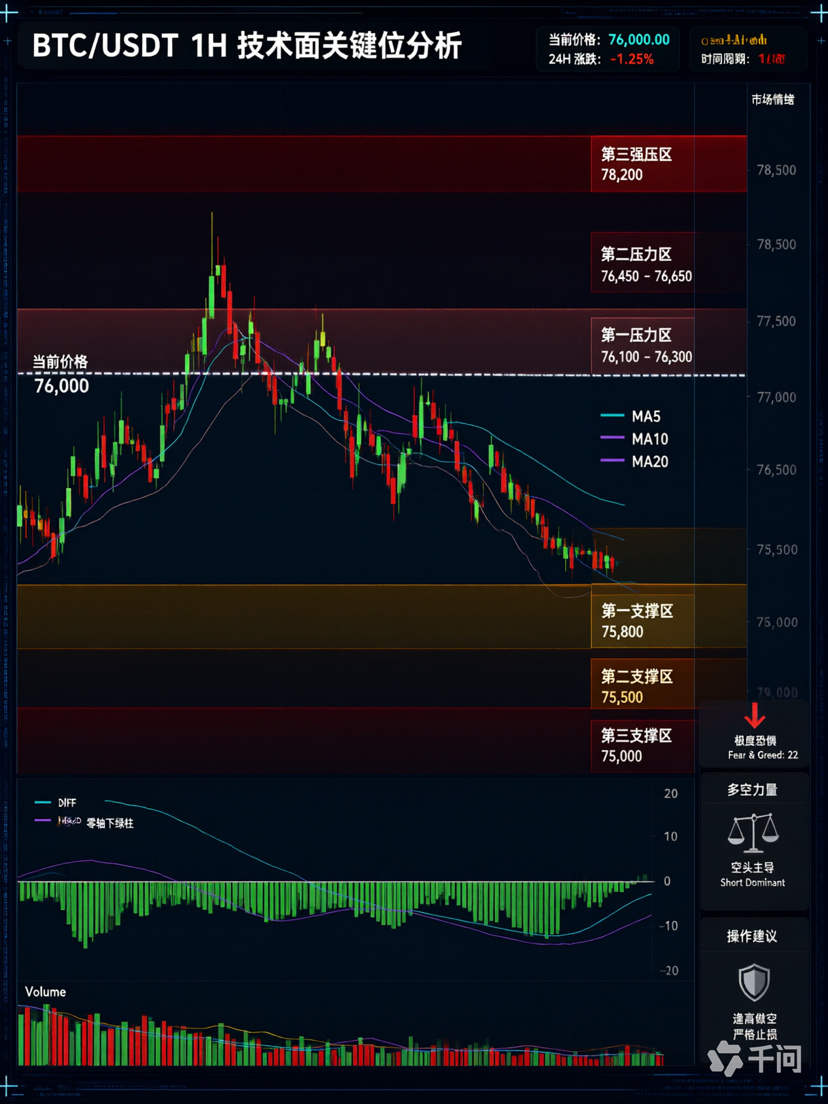
Third: Slowing BTC purchases—the biggest buyer taps the brakes
Strategy is one of the largest corporate buyers this year. When it slows down, one of BTC’s major sources of new demand dries up.
- Slower BTC buying: Last week (through November 8), it bought just 1,036 BTC for $81.9 million. Compared with previous purchases of several thousand BTC at a time, this machine is clearly slowing down.
- Selling BTC to pay dividends: In the third quarter, Strategy sold about $432 million worth of BTC to pay preferred stock dividends and buy back STRC. STRC preferred shares have fallen below their $100 par value, signaling wavering market confidence in this financing structure.
- Technical breakdown: BTC also fell below its 50-week moving average of $75,153 today, erasing the bullish signal from September’s rally.
In-depth analysis: This isn’t the end of the world, but the flywheel is losing momentum
This didn’t come out of nowhere today. It has been a year-long back-and-forth:
- October 2025: MSCI first proposed directly excluding companies with digital assets accounting for more than half of their total assets from its indexes.
- Early 2026: MSCI withdrew this version, which directly singled out the crypto sector, and instead launched a broader consultation in August—without mentioning Bitcoin, focusing only on “non-operating companies.”
- October 15, 2026: The new rule was approved.
- November 11, 2026: Strategy was removed from the MSCI USA Index, as well as the MSCI World Index and ACWI; Japan’s Metaplanet was removed from the MSCI Japan Small Cap Index; four other companies (Yellow Cake, Skel, Agronomics, and Upexi) were also deleted, while 19 companies remained on the watch list.
One key point needs to be clear: the exclusion does not force Strategy to sell BTC. None of its 850,364 BTC will be forced onto the market as a result, and MSTR will continue trading normally on Nasdaq. The damage is to passive demand for the stock and its financing premium, not to BTC itself.
Practical advice for readers
For MSTR holders:
- November 30 is a hard deadline. Rebalancing-related selling will be concentrated in the final few days, amplifying volatility.
- Keep an eye on mNAV. A drop below 1 means the share price is cheaper than net asset value, completely reversing the flywheel logic.
- My view: Bearish in the short term, but not the end of the world. The $2.8 billion in selling is real, mNAV is hovering around 1, and it will only get more expensive for Saylor to issue shares to buy BTC, so the pace of purchases will probably continue to slow. That’s the first layer, and it’s bearish. The second layer, though, is that MSCI is removing index eligibility, not the underlying business; the 850,364 BTC are still there, Nasdaq hasn’t weighed in yet, and SharpLink remains on the watch list this time around, showing that the rule isn’t a blanket measure.
For BTC holders:
- A marginal headwind in the short term: one of the largest buyers is slowing down, but this is not a signal of a sell-off.
- The real turning point is in December. Watch to see whether Nasdaq follows suit.
- Timeline: Takes effect at the November 30 close; the new index goes live on December 1; Strategy discloses how much BTC it bought the previous week every Monday. The next disclosure will show whether its purchases have rebounded.
What would change my view:
- If Nasdaq follows suit in December, or mNAV falls below 1, the flywheel enters a contraction phase, leaving MSTR as nothing more than a “discounted BTC holdings vehicle.”
- Conversely, if Nasdaq explicitly declines to follow suit and BTC purchases rebound to over 2,000 next week, then the $2.8 billion impact will be a one-off shock that will pass once it is absorbed.
I wouldn’t try to catch the falling knife in MSTR at this price, but I’ll definitely be watching trading volume on November 30.
What do you think: after November 30, will MSTR have fallen enough to present an opportunity, or is the premium compression only just getting started?
I’ll keep following the fallout from the index exclusion, whether Nasdaq follows suit, and Strategy’s weekly BTC purchases. This isn’t over—November 30 is the key date. Let’s check the results together then.#黄仁勋辞任CEO,英伟达战略走向受关注 #英伟达突发换帅,美国芯片股跌幅扩大 #Anthropic拒绝延期IPO,本周路演估值几何? #Bitmine2026财年净亏损63亿美元 #CoreWeave营收增长168%股价涨10% $BTC


