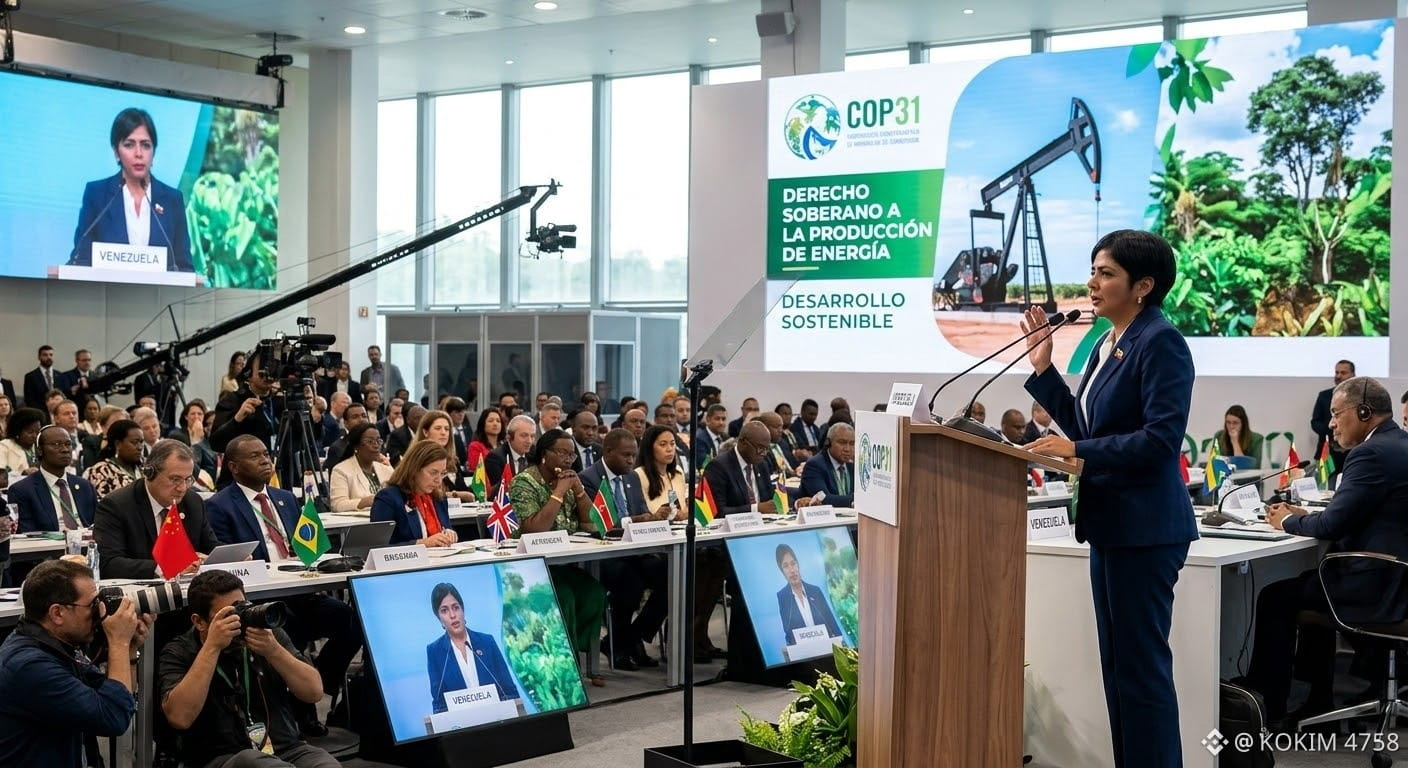

The geopolitics of energy has just gained an ironic chapter at COP31 in Turkey. In the midst of the climate conference, Venezuela’s interim president, Delcy Rodríguez, said the country has the “sovereign right” to expand its oil production and that this is fully compatible with environmental preservation.
The statement runs counter to global targets for phasing out fossil fuels, but it has a clear audience: the market. With the US seeking to attract billions to rebuild Venezuela’s oil industry and Brazil negotiating a resumption of investment in the region, Caracas is making it clear that the need for cash outweighs green rhetoric. For global markets, more oil supply in the Western Hemisphere means pressure on energy prices and a direct impact on inflation and interest rates—factors that always shape risk appetite in financial and crypto markets.
In my opinion, the energy transition narrative runs up against economic reality: when billions are on the table, oil remains king, and geopolitics always trumps climate rhetoric.
$ERA $MBL $NIGHT
#Geopolitics
#venezuela
#oil
#MacroEconomia