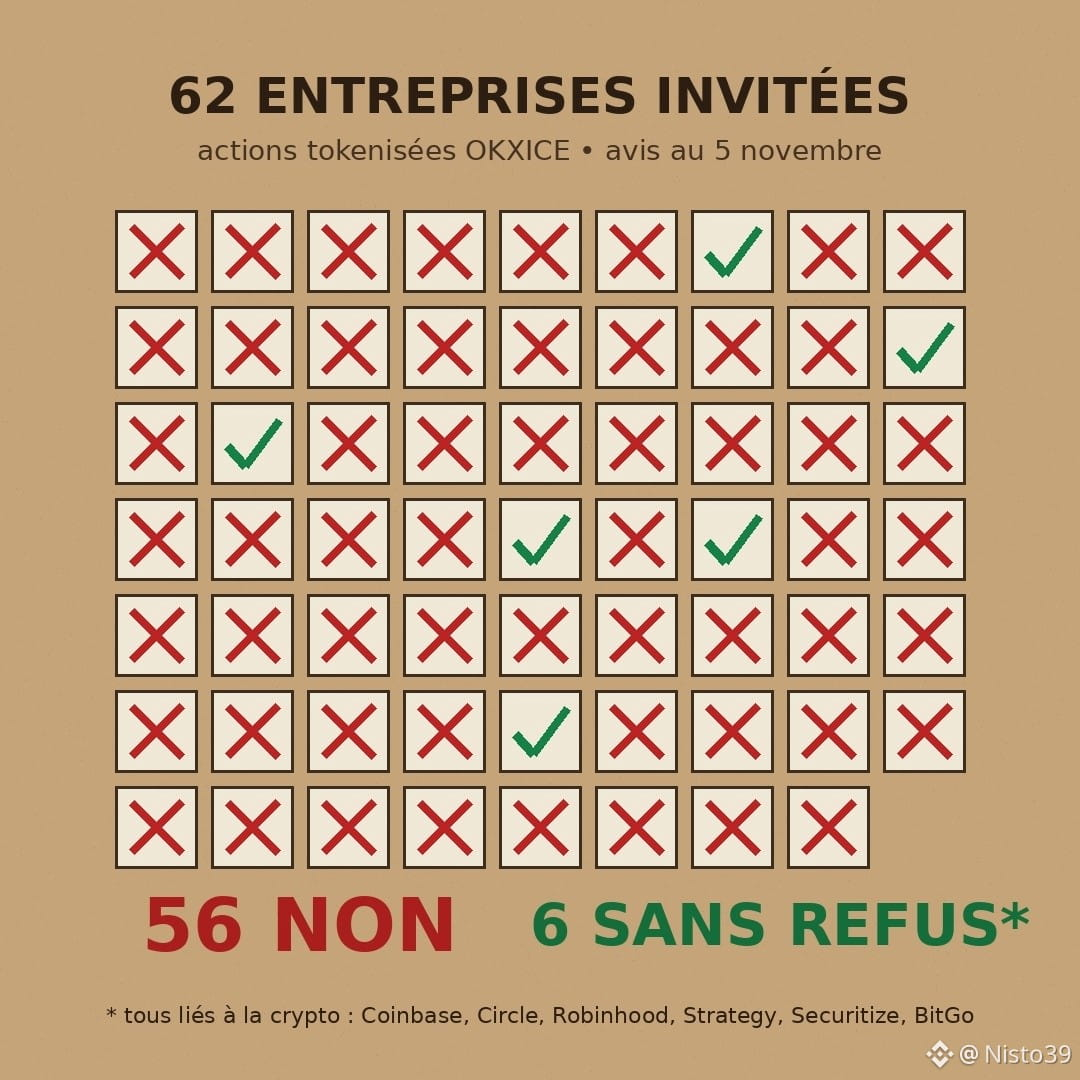
Of the 62 companies that OKX and the parent company of the New York Stock Exchange wanted to offer as tokenized stocks, 56 said no.
Apple, Amazon, Tesla, Nvidia, Microsoft, JPMorgan, Coca-Cola, McDonald's... A total of 67 objections had been filed by November 5, compared with 50 at the end of October.
And the 6 that didn't object? Coinbase, Circle, Robinhood, Strategy, Securitize, BitGo. All companies connected to crypto.
A tokenized stock is a token on a blockchain backed by a real share held by an authorized intermediary. The SEC's new exemption allows them to be traded without a company's consent, unless it objects in writing within 30 days. Many have done so.
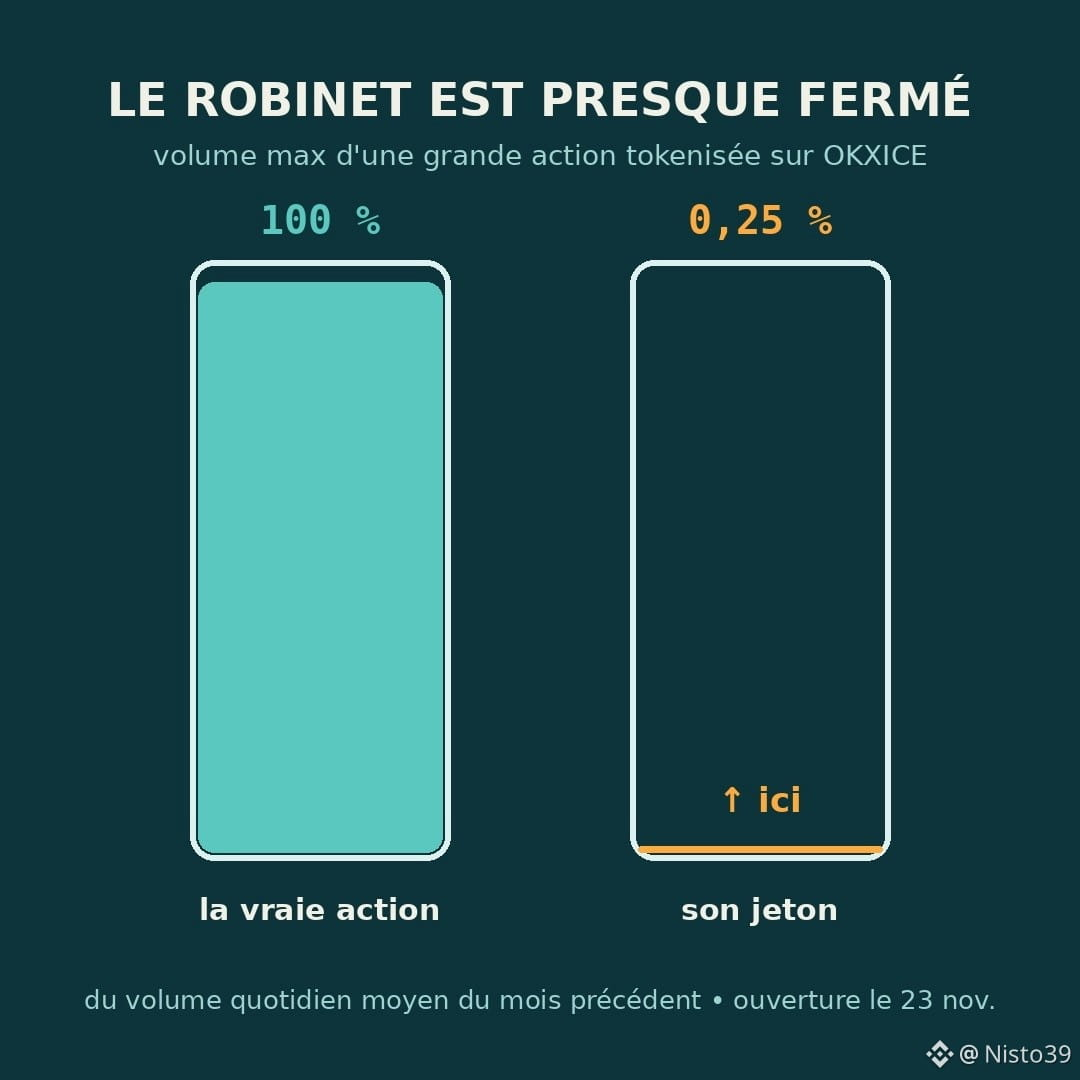
OKXICE is opening anyway on November 23: more than 70 assets, including 59 Direxion ETFs, available 24/7 through Uniswap v4 pools (the protocol behind $UNI ) on X Layer, OKX's layer-2 network built on $ETH . Payments are made in stablecoins. Only verified U.S. customers can access it. The volume of any major tokenized stock will be capped at 0.25% of the real stock's average daily volume.
My take: an objection isn't necessarily a rejection of the technology. JPMorgan says it's in favor of tokenization, just not this particular project for now. Another company explained that it was concerned investors might think it had authorized the offering. The real battle is about this question: who has the right to put your stock on a blockchain?
By the way, Binance's bStocks, now available to buy in 49 currencies, provide price exposure, not direct ownership of the stock.
If a company objects to its stock being tokenized, do you see that as caution or fear of losing control?
#Tokenisation #Actions #DeFi #Regulation #Crypto