$BTC
Bitcoin (BTC): Long-Term Analysis 📊
Bitcoin’s long-term outlook depends on more than short-term price movements. Its fundamentals, adoption, market demand, and global economic conditions all play important roles.
1. Fundamental Strength
- Limited Supply: Bitcoin has a maximum supply of 21 million BTC under its current protocol rules.
- Decentralization: Bitcoin operates without a central bank or single controlling authority.
- Halving: Approximately every four years, the mining reward is reduced, slowing the rate at which new BTC enters circulation.
- Network Security: Bitcoin uses Proof of Work to secure its blockchain.
2. Long-Term Bullish Factors
- Increasing institutional interest and adoption.
- Growing awareness of Bitcoin as a digital asset.
- Its limited supply.
- Continued development of the Bitcoin ecosystem.
3. Important Risks
- High price volatility.
- Changes in government regulations.
- Global economic uncertainty.
- Sudden changes in market demand and investor sentiment.
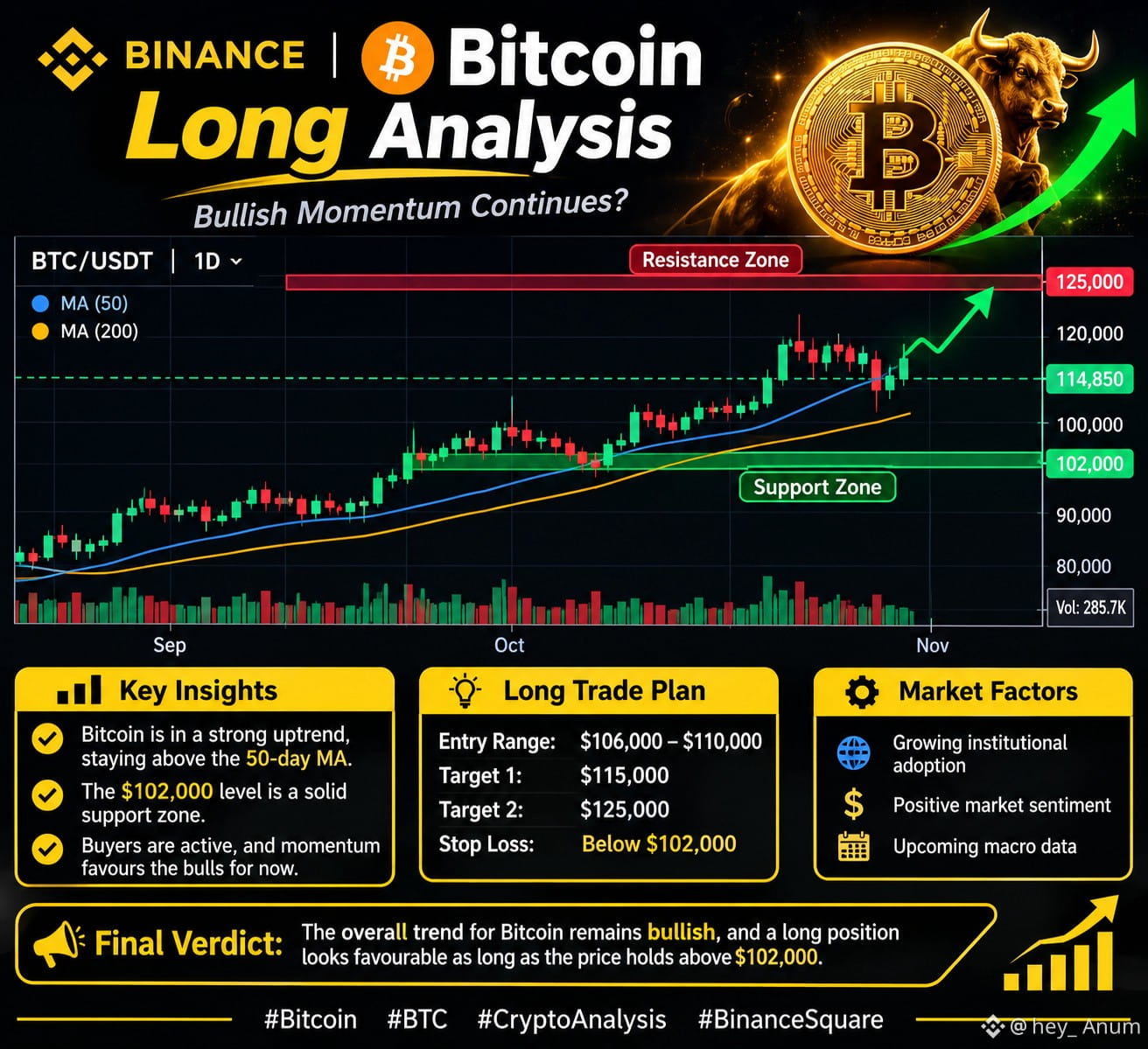
4. Technical Analysis
For a long-term view, weekly and monthly charts are more useful than focusing only on short-term movements.
Analysts commonly monitor:
- Support: Areas where buying interest may increase.
- Resistance: Areas where selling pressure may appear.
- Moving Averages: Tools used to study the broader market trend.
- Trading Volume: Helps assess the strength of price movements.
5. Long-Term Outlook
Bitcoin has strong underlying features, but its future performance is uncertain. Continued adoption and demand could support its long-term growth, while economic and regulatory challenges may create significant corrections.
Final Thoughts: Bitcoin remains one of the most closely followed digital assets. Understanding its fundamentals and risks is essential before forming a market opinion.
#BTC #CryptoAnalysis" #cryptoeducation
#AnthropicRejectsIPODelayValuationinQuestion #HotCPIDecemberHikePriced