
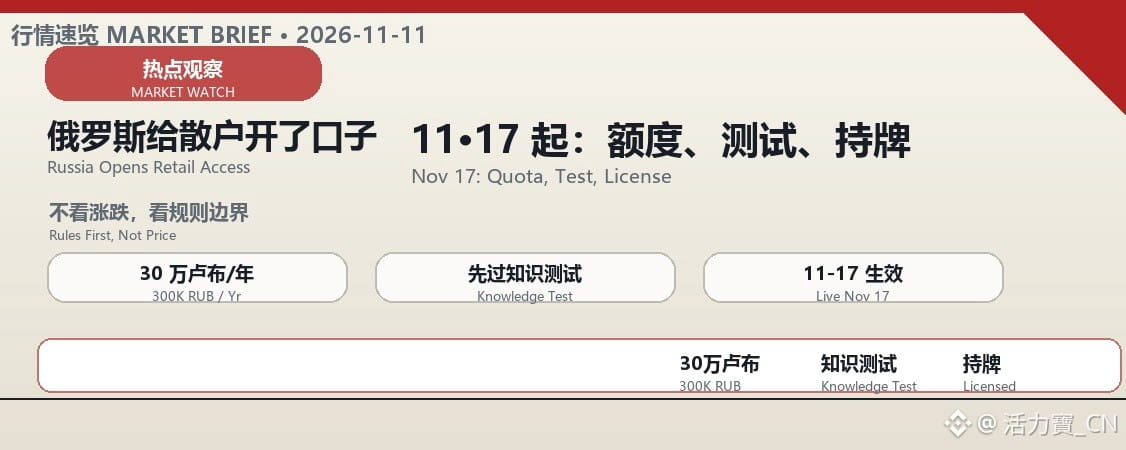

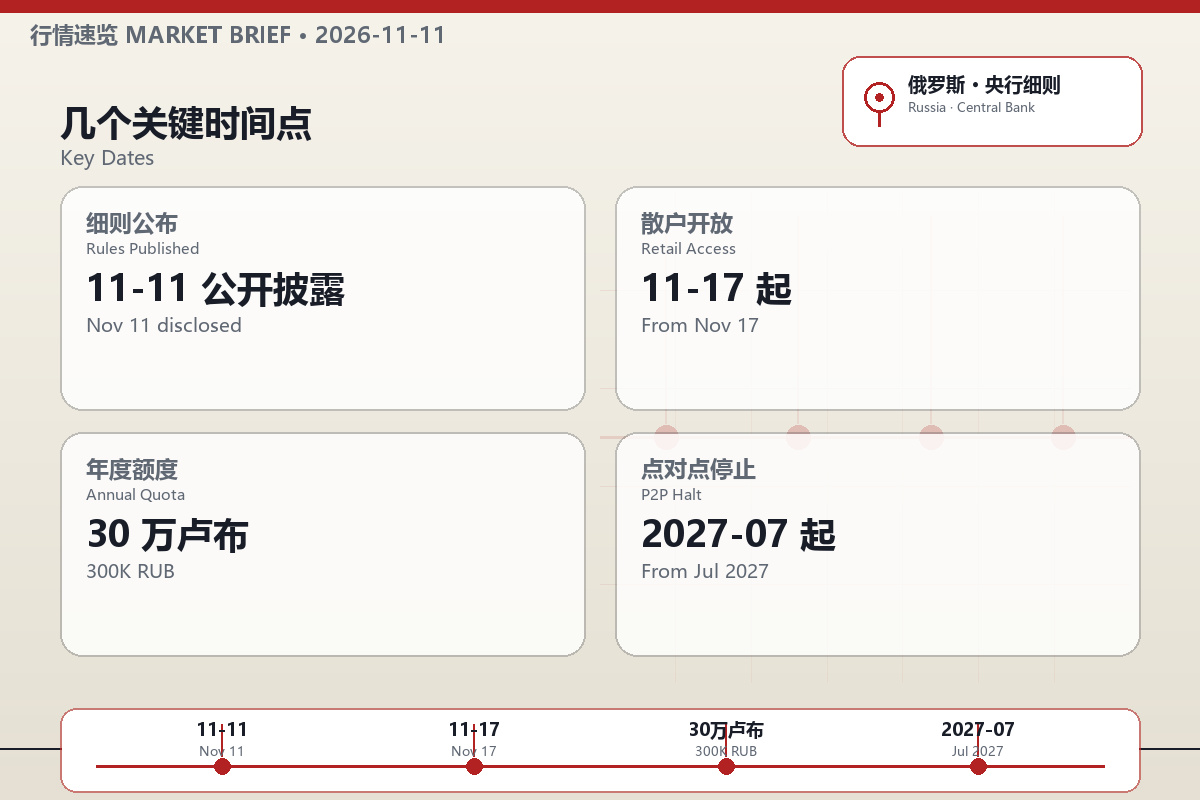
On November 11, media outlets including Sina Finance reported that the Russian central bank had officially published detailed rules for regulating crypto-asset trading: starting November 17, licensed institutions may offer ordinary investors access to trading in three major crypto assets. The door has been opened, but its dimensions have been set in stone.
Three hurdles, taken together: retail investors face an annual trading limit of 300,000 rubles; they must pass a crypto-risk knowledge test before gaining access; and all trades must go through licensed institutions. The limit controls exposure, the test addresses understanding, and the license governs access—each has its own role.
A timeline has also been set out. The rules state that, starting in July 2027, all person-to-person transactions by individuals will cease, with trading routed through licensed institutions; crypto assets will still be prohibited for everyday domestic payments and settlements. What is allowed and what is not is written down, rather than left to interpretation.
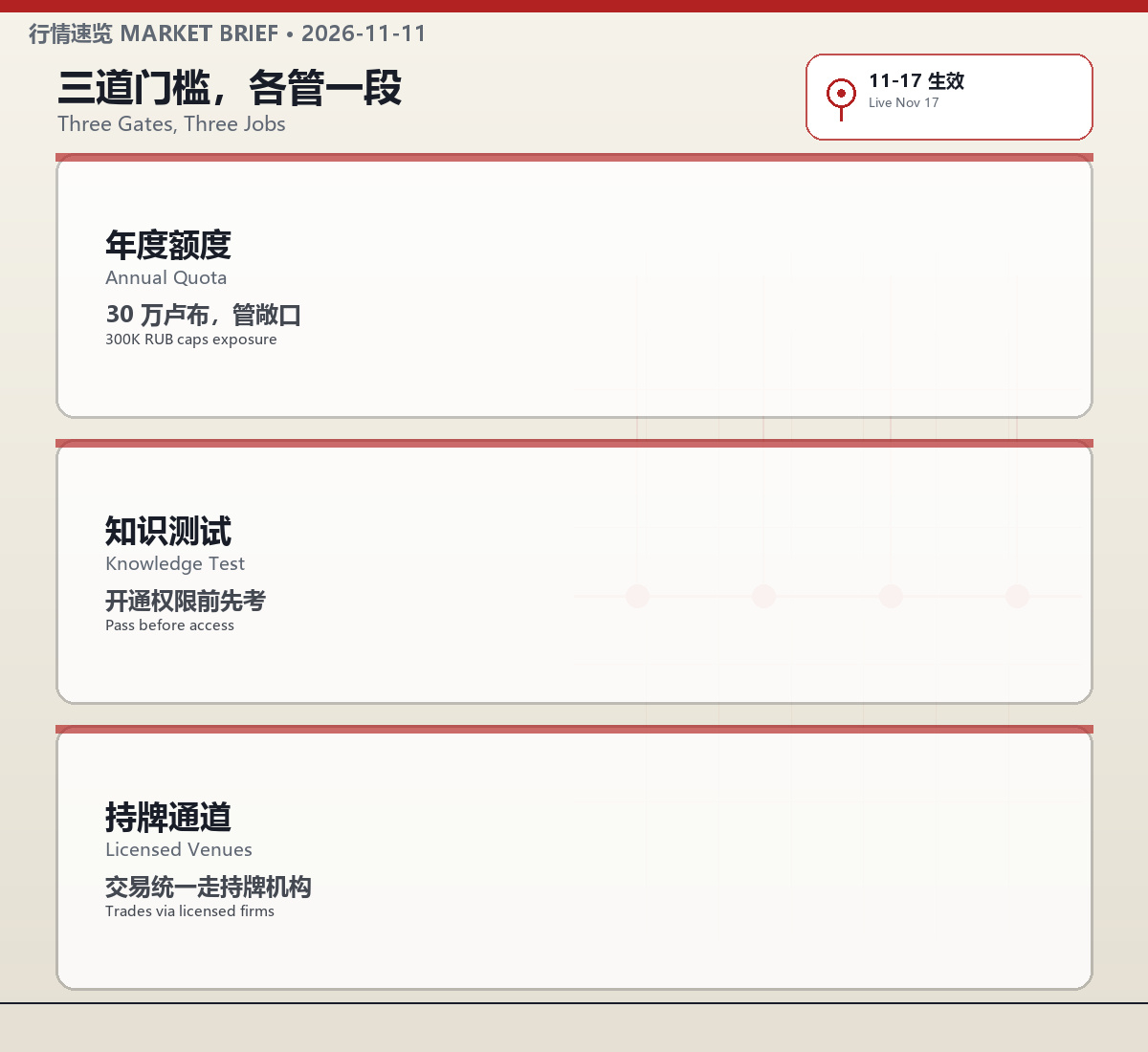
Putting the knowledge test before granting access is an order worth examining closely. In many places, people are let in first, and risk warnings are added after something goes wrong; these rules do the opposite, turning “Do you understand?” into a gate. Passing a test doesn’t mean you understand, but it shifts the threshold from money to people.
You can assess the crypto rules in any region by asking four questions: Who can sell? Who can they sell to? What are the limits? And who is responsible if something goes wrong? Only when all four are clear can you tell whether the rules are opening things up or simply changing how they’re managed.#CPI高于预期,美股与BTC再度承压 #加密监管 $BTC #英伟达Q3财报将至:能否化解市场疑虑?