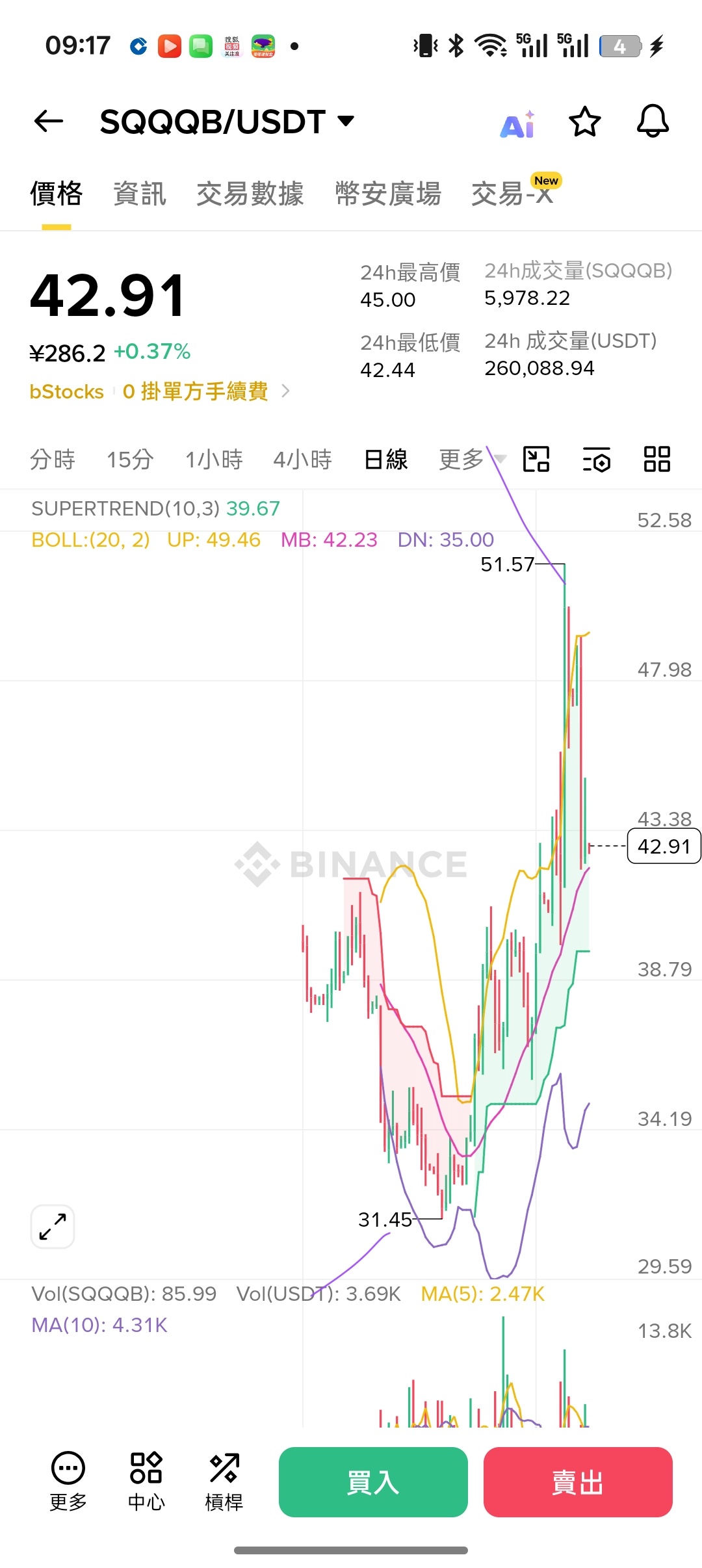
A friendly reminder: don’t recklessly chase shorts in U.S. stocks that are already deeply oversold. My indicators have detected strong buy signals on the daily charts of many stocks. Before these signals appeared, there had already been a lot of accumulated buying volume. I’ve shared a dollar-cost averaging plan for the Nasdaq before, covering the typical intra-year decline during a bear market in an ordinary year, as well as the decline in an extreme bear market. A 70% consecutive gain in SQQQ would already be the upper limit for a bear market in a normal year. Only an extreme bear market would go further. Look at the percentage move on SQQQ’s chart: this current run is already at 69%. It’s highly likely that U.S. stocks will crash, and it’s also highly likely that they haven’t bottomed yet. The question is whether the market might form a consolidation range in between. A U.S. bear market could take the form of a sharp, intermittent decline: fall for a while until rate cuts end, rebound, then fall again. The Nasdaq has now produced a strong buy signal on the daily chart—it appeared a few days ago. When the Nasdaq gets a strong buy signal accompanied by a buildup of volume, the rebound is usually quite strong; it won’t drag on for ages like the A-shares market. My feeling is that the market may move sideways in a consolidation range through the end of the year, with a possible further decline in the second half of the move next year rather than this year. If you chase shorts at such low levels, you may find it very painful and difficult to manage your risk.